Era 4 · Covenant and WildernessLeviticus
Blessings and Warnings
"I will walk among you, and will be your God"
"If ye walk in my statutes, and keep my commandments… Then I will give you rain in due season, and the land shall yield her increase." Peace, safety, victory, children. "And I will set my tabernacle among you… And I will walk among you, and will be your God, and ye shall be my people. I am the LORD your God, which brought you forth out of the land of Egypt… and I have broken the bands of your yoke, and made you go upright."
"But if ye will not hearken unto me…" Five times the warnings grow: fever and terror; heaven like iron and earth like brass; wild beasts; the sword, plague and siege, ten women baking bread in one oven; and finally ruined cities, desolate sanctuaries, and scattering among the nations. "Then shall the land enjoy her sabbaths, as long as it lieth desolate, and ye be in your enemies' land."
"If they shall confess their iniquity… if then their uncircumcised hearts be humbled… Then will I remember my covenant with Jacob, and also my covenant with Isaac, and also my covenant with Abraham will I remember; and I will remember the land… I will not cast them away… to destroy them utterly, and to break my covenant with them: for I am the LORD their God."
Blessings and curses in treaties
Ancient treaties ended with blessings for keeping them and curses for breaking them. The Assyrian Succession Treaty of Esarhaddon (672 BC) curses violators with heavens of bronze and earth of iron, so that no rain falls (compare 26:19 and Deuteronomy 28:23), with famine so severe that parents eat their children (compare 26:29), and with plague and exile. Hittite treaties of the Late Bronze Age also end with blessings and curses, though in shorter form. Leviticus 26 places Israel's covenant in this world.
When the warnings came true
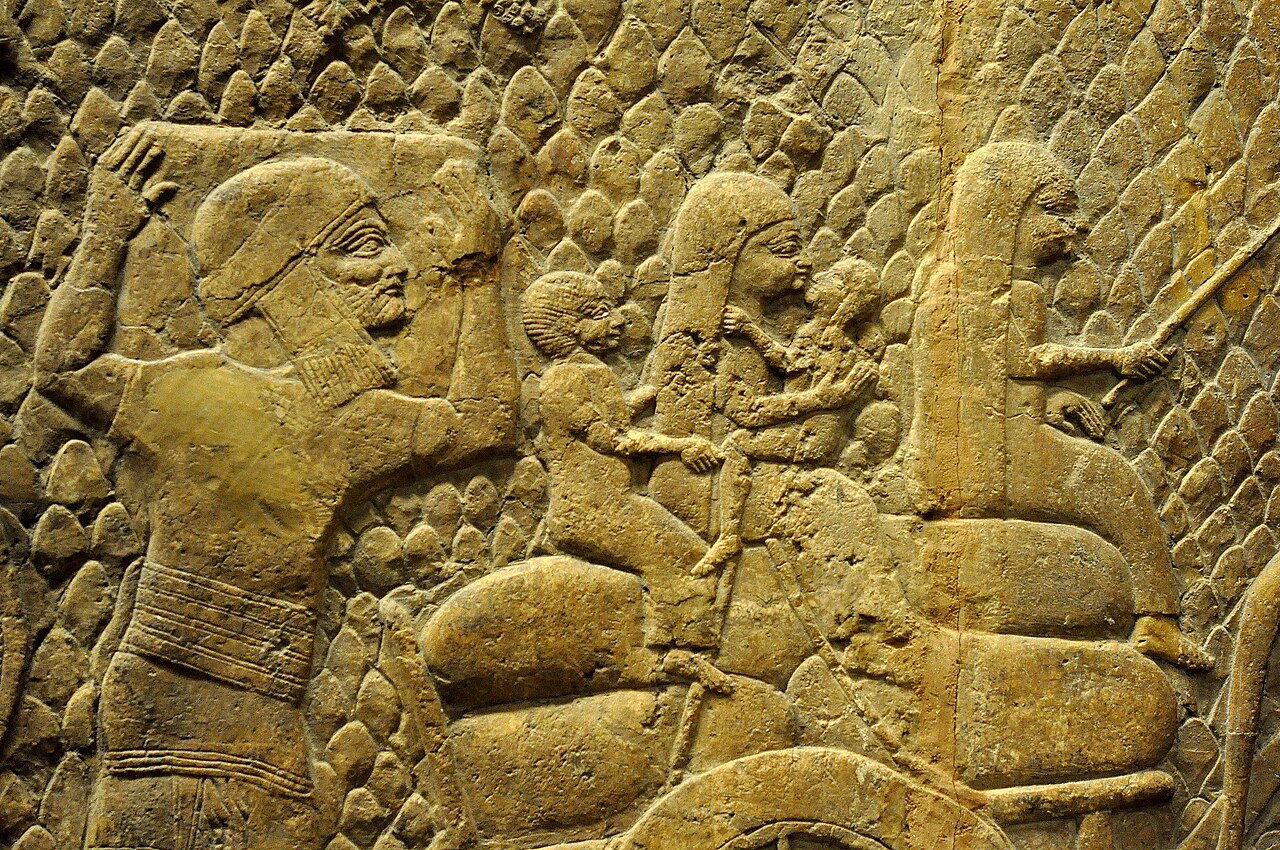
Assyria destroyed Samaria and exiled the northern kingdom in 722 BC; Sennacherib besieged Lachish in 701 BC, and his palace reliefs at Nineveh show its people led away. Babylon destroyed Jerusalem and the Temple in 586 BC and deported much of Judah. These events are documented in Assyrian and Babylonian records and in archaeology. The Bible's historians read them through the covenant warnings: 2 Chronicles 36:21 says the exile lasted "until the land had enjoyed her sabbaths," quoting Leviticus 26:34.
The Case for the Biblical Account
Scripture's account
Covenant blessings and escalating warnings ending in exile, with the promise of restoration after confession (Leviticus 26).
What evidence would we expect?
Treaty blessings and curses in Israel's world; the historical exiles of Israel and Judah; later Jewish reflection on them.
The discoveries
Hittite and Assyrian treaty curses; the Assyrian and Babylonian conquests documented in annals, chronicles and reliefs; Daniel 9 and Chronicles interpreting the exile through Leviticus 26.
Testing the discoveries
The exiles happened. Whether Leviticus 26 was written before them as a warning or shaped after them in reflection cannot be settled by their occurrence alone; it depends on the dating of the text.
The strongest reconstruction
Leviticus 26 uses the treaty form of its world and became the framework through which Israel interpreted its greatest catastrophes and its hope of return.
What remains possible
That it was revealed at Sinai as Scripture says; that it was written in the late monarchy as the threat loomed; or that it was shaped in the exile.
What the evidence shows
- Esarhaddon's treaty curses closely resemble Leviticus 26 and Deuteronomy 28.Source: S. Parpola and K. Watanabe, Neo-Assyrian Treaties and Loyalty Oaths, SAA 2 (1988)
- Assyria exiled Israel (722 BC) and Babylon exiled Judah (586 BC).
- 2 Chronicles 36:21 interprets the exile with Leviticus 26:34.
- Leviticus 26 was written after the exile.
- "I will walk among you, and will be your God."
Continue the journey
Connected elsewhere in ScriptureThe Blessings and the CursesDeuteronomy 28–30: The blessings and curses of Deuteronomy.More from this lesson
Why this matters to the rest of Scripture
- The blessings and curses of Deuteronomy.
- "Until the land had enjoyed her sabbaths."
- Daniel's confession in exile.
- Paul quotes 26:12: "I will dwell in them, and walk in them."
- "They shall be his people, and God himself shall be with them."
- Genesis 2:8; 3:8God walking in the garden.