"If a woman have conceived seed, and born a man child: then she shall be unclean seven days." The boy is circumcised on the eighth day, and the mother continues "in the blood of her purifying three and thirty days; she shall touch no hallowed thing, nor come into the sanctuary." For a daughter, the times are doubled: two weeks and sixty-six days.
Then she brings a lamb for a burnt offering and a pigeon or turtledove for a purification offering. "And if she be not able to bring a lamb, then she shall bring two turtles, or two young pigeons."
Leviticus 15 deals with discharges: a man's chronic discharge, a seminal emission, a woman's monthly period, and a woman's prolonged bleeding. Each makes a person unclean for a time; washing, waiting, and in the abnormal cases an offering, restore them. Anything they lie or sit on becomes unclean too.
The purpose: "Thus shall ye separate the children of Israel from their uncleanness; that they die not in their uncleanness, when they defile my tabernacle that is among them."
Three different things
| Moral wrongdoing | Ritual impurity | Illness | |
|---|---|---|---|
| What it is | Disobedience or injustice | A temporary status affecting contact with holy things | A physical condition |
| Examples | Theft, lying, idolatry | Childbirth, menstruation, touching a corpse | Fever, a wound |
| Is it sin? | Yes | No (though deliberately ignoring the rules is) | No |
| Remedy | Repentance, restitution, offering | Washing, waiting, sometimes an offering | Healing |
Some categories overlap: tzara'at is both a physical condition and a ritual impurity. But Leviticus never says a mother sinned by giving birth. Her "sin offering" is, as many scholars translate it, a purification offering.
Why the different periods for a son and a daughter?
The text does not say. Suggestions include: the boy's circumcision on the eighth day ends the first stage early; a girl is a future mother, so the purification is doubled; or the difference reflects ancient beliefs about birth. Some modern readers see it as reflecting a lower status for women; others note that the offering is identical for both. We report the views without pretending to know the reason.
Mikveh: ritual baths
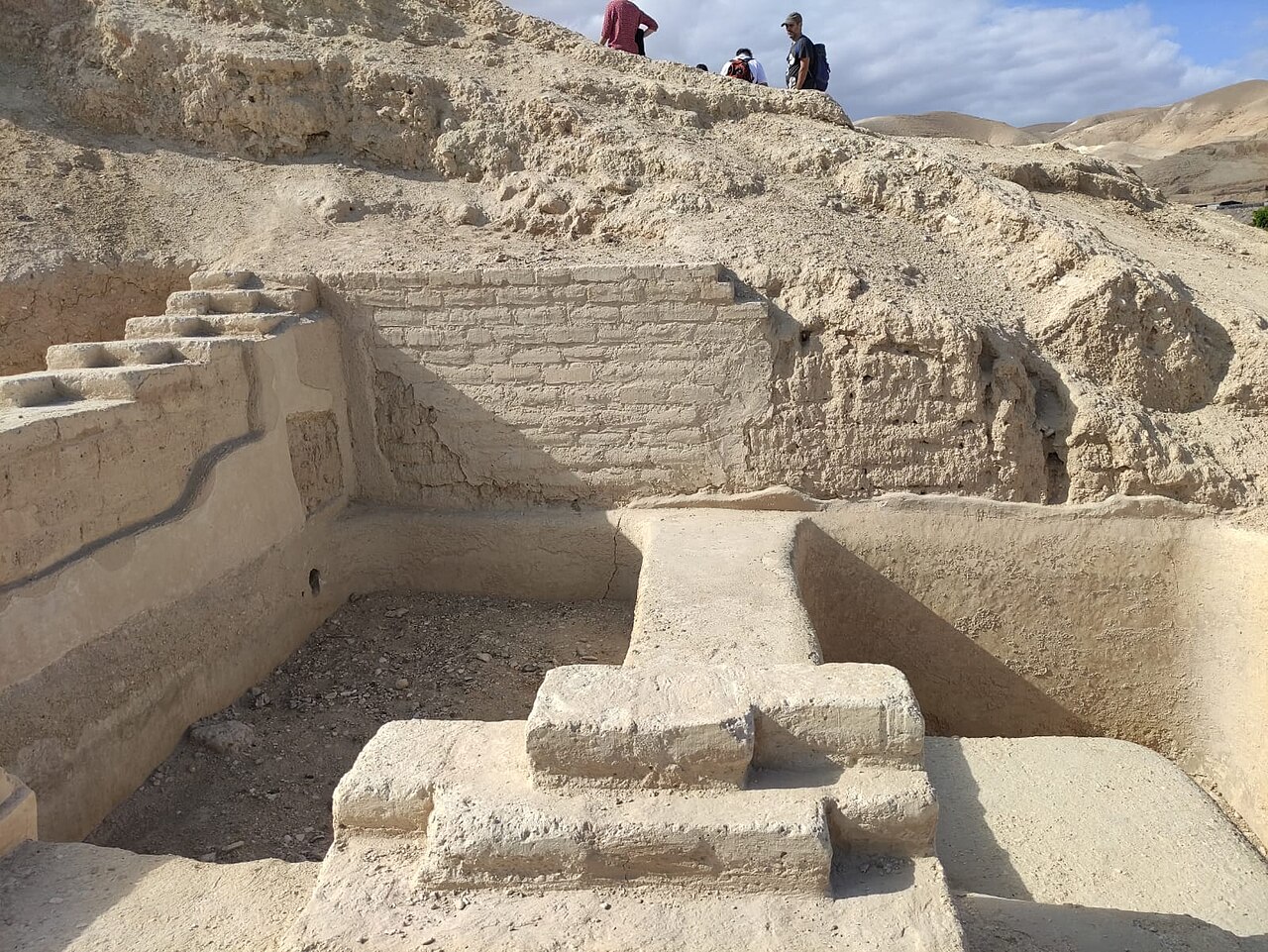
Washing in water restored purity. By the 1st century BC, Jews built stepped ritual baths (mikva'ot) cut into rock, and hundreds have been found in Jerusalem, near the Temple Mount, at Qumran, Masada, Sepphoris and in Galilean villages. They are some of the clearest archaeological evidence of purity laws being kept, from the Hasmonean period onward.
The Case for the Biblical Account
Scripture's account
Purification after childbirth and bodily discharges (Leviticus 12; 15).
What evidence would we expect?
Ritual baths; texts and practices of purification; similar purity rules in neighboring cultures.
The discoveries
Hundreds of stepped mikva'ot from the 1st century BC to the 2nd century AD; Hittite and Mesopotamian purity rules around sanctuaries; Luke 2's account of Mary's purification; detailed rules in the Mishnah and Qumran texts.
Testing the discoveries
Mikva'ot appear in the late Second Temple period; earlier washing left no distinctive installations. Neighboring rules show such concerns were widespread.
The strongest reconstruction
Purity rules for the body are ancient in concept and are archaeologically visible as an everyday Jewish practice from about 100 BC.
What remains possible
How and when the rules were kept before then remains uncertain.
Then and Later
Purity, then and later
- SinaiLeviticus 12 and 15. Purification after birth and discharges.
- c. 100 BCMikva'ot. Stepped ritual baths spread through Judea and Galilee.
- 4 BCMary's purification. Mary and Joseph bring the poor family's offering of two birds.
- c. AD 30The woman who touched Jesus. After twelve years of bleeding, a woman touches Jesus' garment and is healed; He calls her "daughter."
- c. AD 200The Mishnah. An entire order, Tohorot ("Purities"), develops the laws in detail.
- TodayFamily purity. Observant Jewish women immerse in a mikveh monthly; Christian churches long kept a "churching" blessing for mothers.
What the evidence shows
- Hundreds of Jewish ritual baths survive from the late Second Temple period.Source: Y. Adler, The Origins of Judaism: An Archaeological-Historical Reappraisal (Yale, 2022)
- Ritual impurity in Leviticus is not the same as sin.Source: J. Klawans, Impurity and Sin in Ancient Judaism (2000)
- The reason for the longer purification after a daughter's birth is known.
- God's presence among His people required separating the holy from the impure.
Continue the journey
Connected elsewhere in ScriptureGod's Covenant with AbrahamGenesis 17:12: Circumcision on the eighth day.More from this lesson
Why this matters to the rest of Scripture
- Mary's purification.
- The woman with the issue of blood.
- Circumcision on the eighth day.
- "The blood of Christ… purge your conscience."
- "Wash me, and I shall be whiter than snow."