Era 4 · Covenant and WildernessLeviticus
Vows and Dedicated Things
"All the tithe of the land… is the LORD's"
"When a man shall make a singular vow, the persons shall be for the LORD by thy estimation." A man aged twenty to sixty is valued at fifty shekels of silver, a woman at thirty; younger and older people at less; "but if he be poorer than thy estimation," the priest values him according to what he can afford.
An animal vowed may not be exchanged. A house or field dedicated to the LORD may be bought back for its value plus a fifth. A field is valued by the seed it takes to sow and the years left to the Jubilee. Things "devoted" (cherem) are most holy and cannot be redeemed.
"And all the tithe of the land, whether of the seed of the land, or of the fruit of the tree, is the LORD's: it is holy unto the LORD." Every tenth animal that passes under the shepherd's rod is holy.
The book ends: "These are the commandments, which the LORD commanded Moses for the children of Israel in mount Sinai."
What the prices tell us
Kenneth Kitchen compared slave prices across the ancient Near East: about 20 shekels in the early 2nd millennium BC (compare Joseph, sold for twenty, Genesis 37:28), about 30 shekels in the later 2nd millennium (compare Exodus 21:32), and 50 shekels or more in the 1st millennium. The fifty shekels of Leviticus 27 are a vow value, not a slave price, but the scale reflects the economic value placed on labor by age and sex, not personal worth.
Holy to the priests
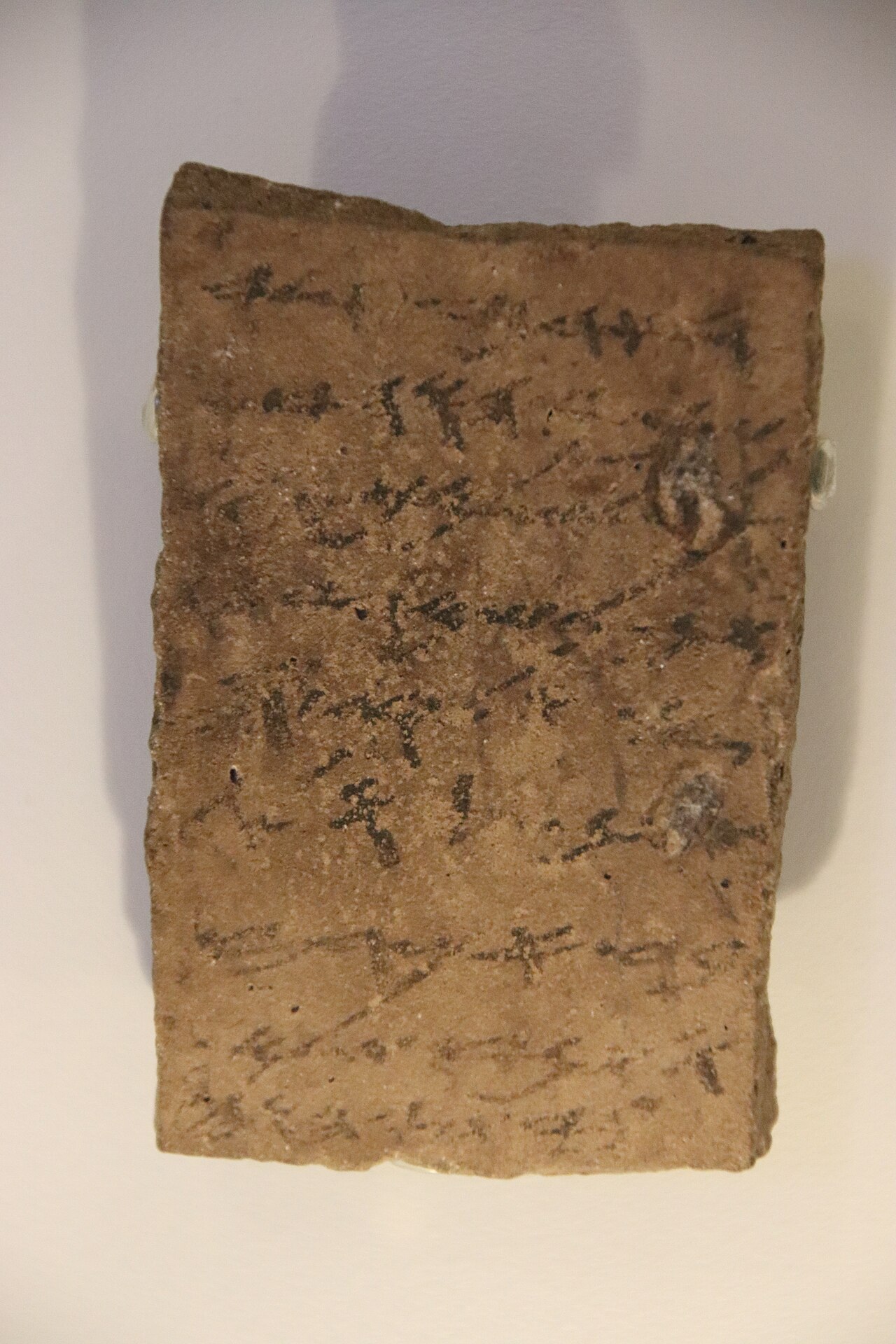
At Arad and other sites, bowls have been found inscribed qof-kaf, probably short for qodesh kohanim, "holy to the priests," marking offerings set aside for priestly use. Other inscriptions mark vessels or goods as qodesh, "holy," or belonging to a temple.
Why end with vows?
Leviticus 26 sounds like a conclusion, and many scholars think chapter 27 was added later as an appendix. Others see a deliberate ending: after blessings and warnings, the book closes with voluntary devotion, and with tithes that will support the priests and Levites of Numbers 18.
The Case for the Biblical Account
Scripture's account
Rules for valuing and redeeming vowed persons, animals, houses and fields; devoted things; tithes (Leviticus 27).
What evidence would we expect?
Temple economies with vows and dedications; silver prices for labor; inscriptions marking holy offerings.
The discoveries
Mesopotamian temple archives of dedicated persons (oblates) and goods; slave price data; Arad bowls marked for the priests; tithe records in temple archives.
Testing the discoveries
These show the economic world of the chapter. Its specific valuations are not documented outside the Bible.
The strongest reconstruction
Leviticus 27 regulates temple vows and dedications in a way that is economically realistic and protects the poor.
What remains possible
Whether the chapter is an original conclusion or a later appendix.
What the evidence shows
- Ancient slave prices rose from about 20 to 50+ shekels from the early 2nd to the 1st millennium BC.Source: K. A. Kitchen, On the Reliability of the Old Testament (2003), pp. 344–345: slave prices in the ancient Near East
- Bowls at Arad were marked as holy to the priests.Source: Y. Aharoni, Arad Inscriptions (1981): ostraca 18 ("the house of YHWH") and 49
- Leviticus 27 was added after chapter 26.
- "It is holy unto the LORD."
Continue the journey
Connected elsewhere in ScriptureHannah at Shiloh1 Samuel 1:11, 24–28: Hannah vows Samuel to the LORD.More from this lesson
Why this matters to the rest of Scripture
- 1 Samuel 1:11, 24–28Hannah vows Samuel to the LORD.
- Jephthah's rash vow.
- "Bring ye all the tithes into the storehouse."
- Jesus criticizes using "Corban" to avoid caring for parents.
- "Better is it that thou shouldest not vow, than that thou shouldest vow and not pay."