Era 4 · Covenant and WildernessLeviticus
The Lamp, the Bread, and the Blasphemer
"Ye shall have one manner of law, as well for the stranger, as for one of your own country"
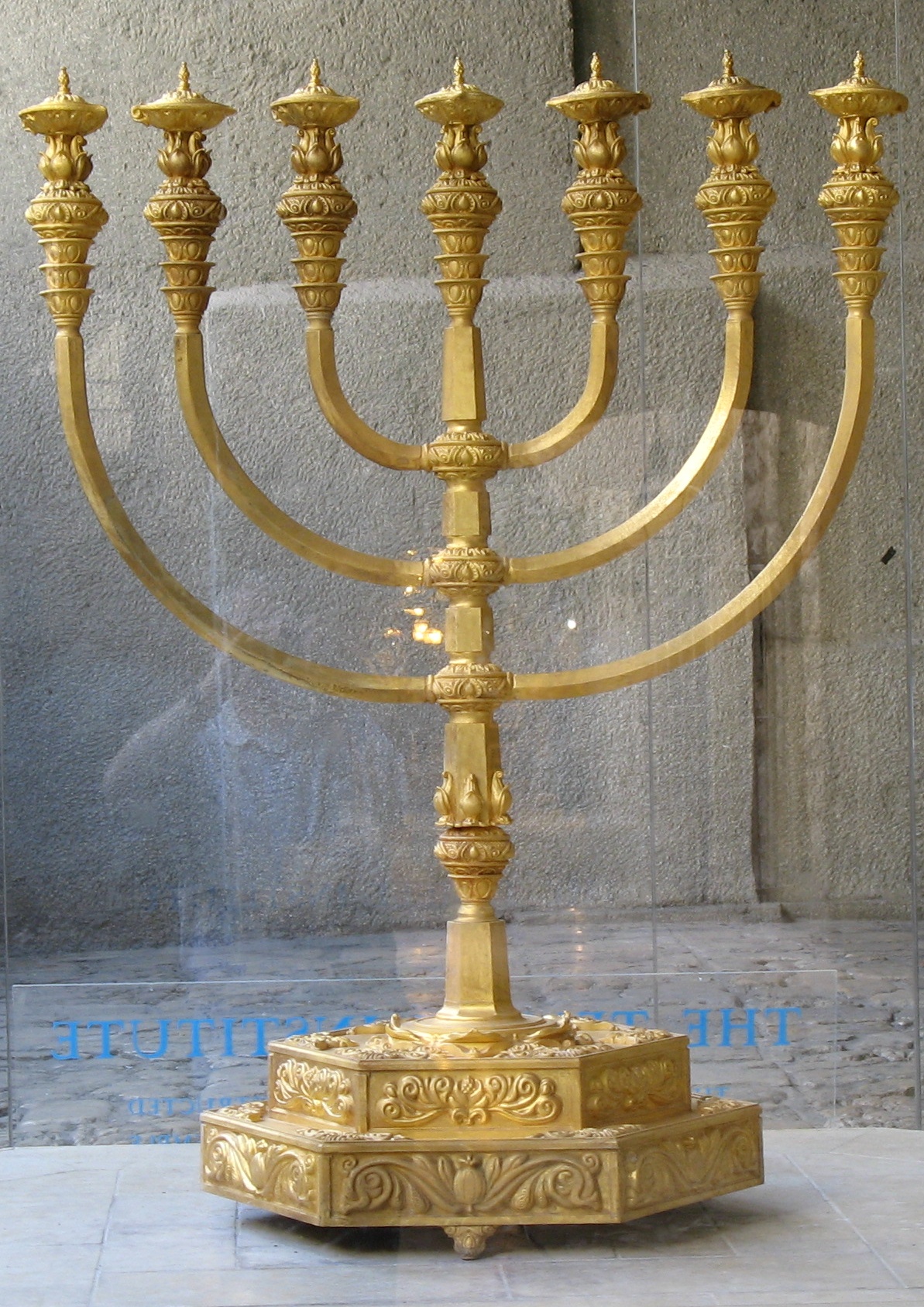
"Command the children of Israel, that they bring unto thee pure oil olive beaten for the light, to cause the lamps to burn continually." Aaron tends the lamps on the golden lampstand from evening to morning.
Twelve loaves, each of two tenths of an ephah of fine flour, are set in two rows on the pure gold table with frankincense, renewed every Sabbath, "an everlasting covenant." The priests eat the old loaves in the holy place.
The son of an Israelite woman, Shelomith daughter of Dibri of the tribe of Dan, and of an Egyptian father, fights with an Israelite in the camp and "blasphemed the name of the LORD, and cursed." He is held "that the mind of the LORD might be shewed them."
God's answer: the man is taken outside the camp; those who heard him lay their hands on his head, and the congregation stones him. Then the general law: "whosoever curseth his God shall bear his sin." "He that killeth any man shall surely be put to death… Breach for breach, eye for eye, tooth for tooth… Ye shall have one manner of law, as well for the stranger, as for one of your own country: for I am the LORD your God."
The bread of the Presence
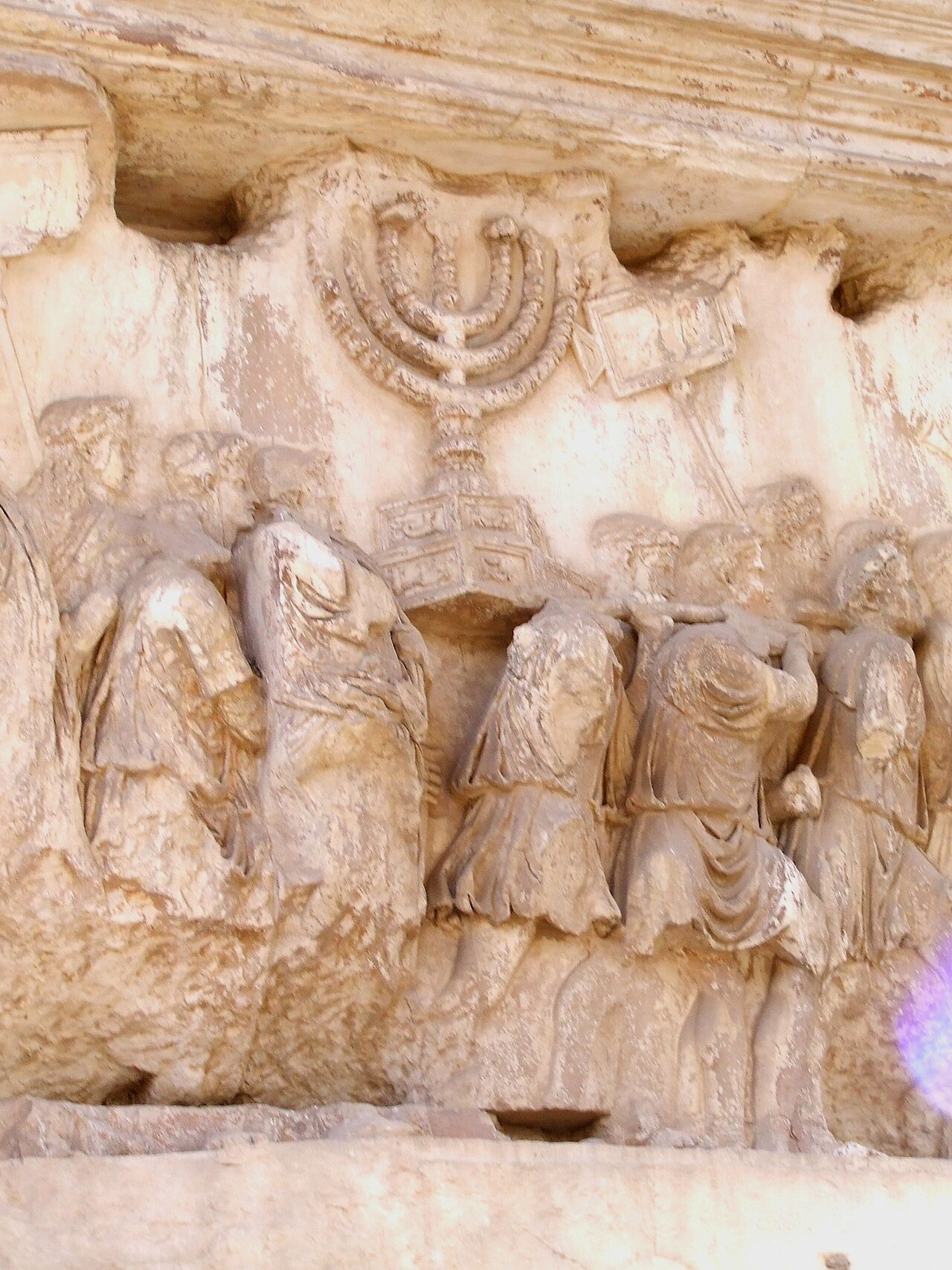
Called "the bread of the face" (lechem panim), it was always before God. David's men ate it at Nob when they were hungry (1 Samuel 21:1–6), and Jesus cited that story: "The sabbath was made for man" (Mark 2:25–27). The table and the lampstand were carried off from the Herodian Temple by Rome in AD 70 and are shown on the Arch of Titus in Rome.
Beaten olive oil
The finest oil came from olives crushed lightly and allowed to drip, not pressed. Olive presses are among the most common finds at Israelite sites; at Ekron (Tel Miqne) archaeologists found more than a hundred, an industrial center of the 7th century BC.
Eye for eye, again
Leviticus 24:19–22 repeats the principle of Exodus 21:23–25 and adds that it applies equally to the native and the foreigner. In Hammurabi's laws, penalties differed by class; here they are the same for all.
The Case for the Biblical Account
Scripture's account
The continual lamp and bread; the case of the blasphemer and the law of equal justice (Leviticus 24).
What evidence would we expect?
Lamps, tables and offerings of bread in ancient temples; legal procedures for unclear cases; principles of equal penalties.
The discoveries
Bread offered before the gods in Mesopotamian and Egyptian temples; the Arch of Titus relief of the Temple table and menorah; the Temple menorah depicted on coins and in graffiti; olive oil industry at Ekron.
Testing the discoveries
The Arch of Titus shows the Second Temple's furnishings. The blasphemy case is known only from Leviticus.
The strongest reconstruction
The lamp and bread fit ancient temple practice, without the idea of feeding the god; the narrative illustrates how hard cases were referred to God.
What remains possible
That the case preserves a real early ruling, or serves to teach a principle.
What the evidence shows
- The Arch of Titus in Rome shows the table and menorah taken from the Jerusalem Temple in AD 70.
- Ekron had a major olive oil industry in the 7th century BC.
- "Ye shall have one manner of law."
Continue the journey
Connected elsewhere in ScriptureThe Tabernacle and the ArkExodus 25:23–40: The table and the lampstand commanded.More from this lesson
Why this matters to the rest of Scripture
- The table and the lampstand commanded.
- David and the holy bread.
- Jesus on David and the bread.
- Another hard case referred to God.
- Jesus on "an eye for an eye."
- "I am the light of the world."