Era 4 · Covenant and WildernessLeviticus
Love Your Neighbor
"Thou shalt love thy neighbour as thyself: I am the LORD"
"Ye shall be holy: for I the LORD your God am holy. Ye shall fear every man his mother, and his father, and keep my sabbaths."
"And when ye reap the harvest of your land, thou shalt not wholly reap the corners of thy field, neither shalt thou gather the gleanings of thy harvest… thou shalt leave them for the poor and stranger." "Ye shall not steal, neither deal falsely, neither lie one to another." "The wages of him that is hired shall not abide with thee all night until the morning. Thou shalt not curse the deaf, nor put a stumblingblock before the blind."
"Ye shall do no unrighteousness in judgment: thou shalt not respect the person of the poor, nor honour the person of the mighty." "Thou shalt not hate thy brother in thine heart: thou shalt in any wise rebuke thy neighbour… Thou shalt not avenge, nor bear any grudge against the children of thy people, but thou shalt love thy neighbour as thyself: I am the LORD."
"Thou shalt rise up before the hoary head." "And if a stranger sojourn with thee in your land, ye shall not vex him. But the stranger that dwelleth with you shall be unto you as one born among you, and thou shalt love him as thyself; for ye were strangers in the land of Egypt." "Just balances, just weights… shall ye have: I am the LORD your God, which brought you out of the land of Egypt."
A harvester's complaint
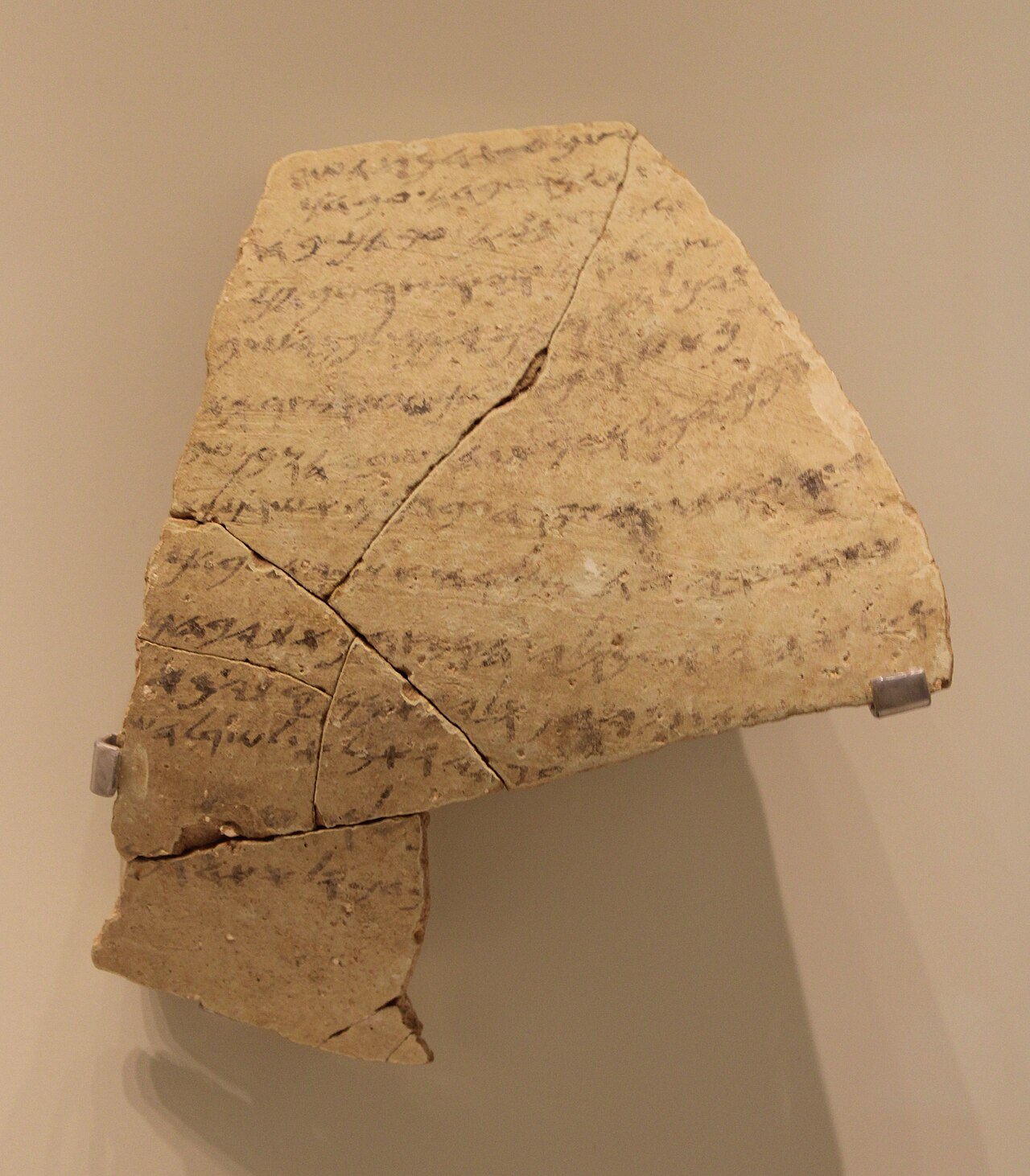
In 1960 an ostracon was found at Mesad Hashavyahu, a small fortress near Yavneh-Yam on the coast, from the late 7th century BC. In Hebrew, a field worker appeals to an official: after he had finished his quota of harvesting and storing, an overseer named Hoshayahu took his garment. "All my companions will testify for me… Please return my garment." It is a real Judahite laborer asking for the justice that the Torah's laws on workers and pledged garments required (Exodus 22:26–27; Deuteronomy 24:12–15; Leviticus 19:13).
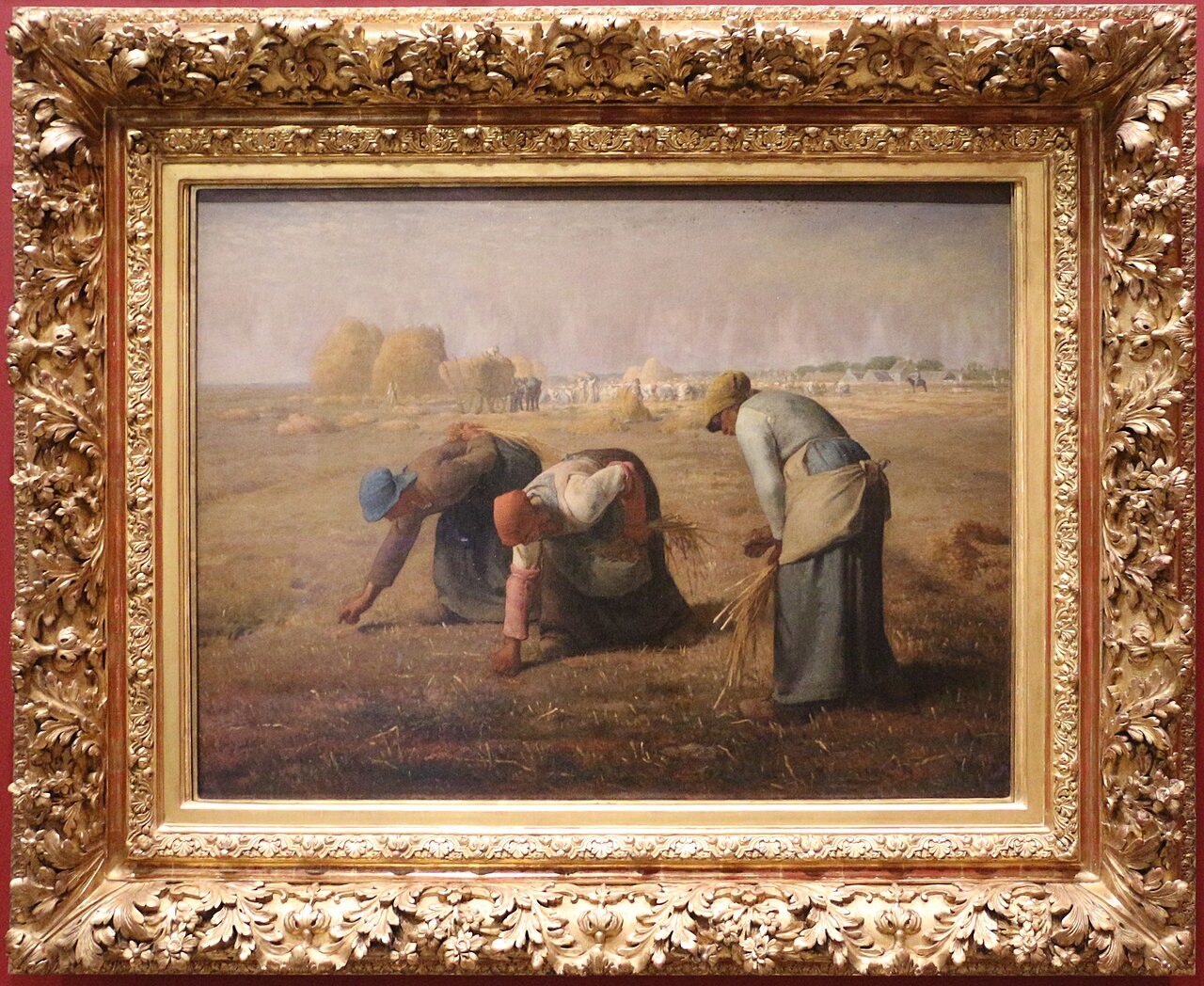
Gleaning
Ancient reapers cut grain by hand with sickles and missed stalks; gleaners followed to gather them. Leviticus 19 and 23 make leaving the corners and the gleanings a duty, for the poor and the foreigner. The book of Ruth shows the law at work: a Moabite widow gleans in Boaz's field at Bethlehem, and he tells his men to drop extra stalks for her (Ruth 2).
Honest weights
Dozens of inscribed limestone shekel weights from 8th–7th-century Judah have been found, marked with a symbol and numbers. Their small variations show why the law insisted on just weights; prophets condemned "the bag of deceitful weights" (Micah 6:11). Weights stamped pym, a two-thirds shekel, explain a once obscure word in 1 Samuel 13:21.
The Case for the Biblical Account
Scripture's account
Holiness expressed in worship and in ethics, culminating in "love thy neighbour as thyself" (Leviticus 19).
What evidence would we expect?
Evidence of Israelite labor relations, weights and measures, and care for the poor; comparable ethical teaching elsewhere.
The discoveries
The Mesad Hashavyahu ostracon; inscribed Judahite shekel weights; Ruth's gleaning narrative; Egyptian and Mesopotamian wisdom urging care for the poor and honest weights (Amenemope, Hammurabi's prologue).
Testing the discoveries
These show the social realities behind the laws, not the laws' origin. Leviticus 19:18 and 19:34 (love of the foreigner) have no exact parallel in ancient law codes.
The strongest reconstruction
Leviticus 19 addresses the everyday injustices of an agrarian society, grounding ethics in God's holiness and Israel's own history as strangers.
What remains possible
When this chapter took written form is debated with the rest of the Holiness Code.
Then and Later
Love your neighbor, then and later
- SinaiLeviticus 19:18, 34. Love the neighbor and the stranger as yourself.
- Judges periodRuth. Boaz lets a foreign widow glean.
- c. 20 BCHillel. Asked to teach the Torah standing on one foot: "What is hateful to you, do not do to your neighbor. That is the whole Torah; the rest is commentary."
- c. AD 30Jesus. The second great commandment; the parable of the Good Samaritan answers "who is my neighbour?"
- 1st centuryPaul and James. "All the law is fulfilled in one word"; "the royal law."
- 2nd centuryRabbi Akiva. "Love your neighbor as yourself: this is a great principle of the Torah" (Sifra).
- TodayA shared heritage. The verse remains central to Jewish ethics and to Christian teaching, and is often quoted beyond both.
What the evidence shows
- A late 7th-century BC Hebrew ostracon records a field worker's appeal for his confiscated garment.Source: The Mesad Hashavyahu (Yavneh-Yam) ostracon, late 7th century BC, Israel Museum; J. Naveh, IEJ 10 (1960)
- Hillel and Akiva treated Leviticus 19:18 as a summary principle of the Torah.Source: Babylonian Talmud, Shabbat 31a (Hillel); Sifra Kedoshim 4:12 (Rabbi Akiva)
- Leviticus 19:34 commands love for the foreign resident.
- "Thou shalt love thy neighbour as thyself: I am the LORD."
Continue the journey
Echoes Across CivilizationsThe widow in the fieldDid other ancient peoples protect the poor, widows and strangers at harvest time?More from this lesson
Echoes Across Civilizations
Optional: how other ancient peoples told similar stories. Open one to compare, then come back to the lesson.
The widow in the fieldEgyptian · Judahite · Babylonian
Did other ancient peoples protect the poor, widows and strangers at harvest time?
- Egyptian: The Instruction of Amenemope, chapter 28 Possible historical contact
- Judahite: The Mesad Hashavyahu (Yavneh-Yam) ostracon Possible historical contact
- Babylonian: Royal claims to protect the widow and orphan Shared literary world
Why this matters to the rest of Scripture
- The two great commandments.
- The Good Samaritan.
- "Love is the fulfilling of the law."
- "The royal law"; no respect of persons.
- Gleaning in Boaz's field.
- "Love ye therefore the stranger."