Amnon becomes obsessed with his half-sister Tamar. His cousin Jonadab suggests he pretend to be ill and ask for Tamar to bring him food. David sends her. Amnon sends everyone out and seizes her. Tamar pleads with him, pointing out the shame, the folly and that he could ask the king for her. He overpowers and rapes her, then hates her and has her thrown out and the door bolted.
Tamar puts ashes on her head, tears her royal robe and goes away crying aloud. Absalom takes her into his house: "hold now thy peace." "So Tamar remained desolate in her brother Absalom's house." David is very angry, but does nothing. Two years later, at a sheep-shearing feast, Absalom's servants kill Amnon. Absalom flees to his grandfather, the king of Geshur, for three years.
"Absalom the son of David had a fair sister, whose name was Tamar; and Amnon the son of David loved her… and Amnon was so vexed, that he fell sick for his sister Tamar; for she was a virgin." Jonadab, "a very subtil man," advises: "Lay thee down on thy bed, and make thyself sick."
Tamar bakes cakes in his sight. "Have out all men from me." "Come lie with me, my sister." "Nay, my brother, do not force me; for no such thing ought to be done in Israel: do not thou this folly. And I, whither shall I cause my shame to go? and as for thee, thou shalt be as one of the fools in Israel. Now therefore, I pray thee, speak unto the king; for he will not withhold me from thee. Howbeit he would not hearken unto her voice: but, being stronger than she, forced her, and lay with her."
"Then Amnon hated her exceedingly… Arise, be gone." "There is no cause: this evil in sending me away is greater than the other." He calls his servant: "Put now this woman out from me, and bolt the door after her." She wore "a garment of divers colours," the dress of the king's virgin daughters. "Tamar put ashes on her head, and rent her garment… and laid her hand on her head, and went on crying."
Tamar's voice
Tamar has more words than any other woman in 2 Samuel. She names the act as "folly" (nevalah), the word used of the outrages at Shechem (Genesis 34:7) and Gibeah (Judges 19:23; 20:6). Scholars such as Juliana Claassens and Ilse Müllner read the chapter through trauma and the politics of the royal household; Phyllis Trible counted it among the "texts of terror." The narrative does not present it as a seduction.
David's silence
"When king David heard of all these things, he was very wroth" (13:21). The library's Greek adds (checked), and 4QSam-a is reported to add: "but he did not grieve the spirit of Amnon his son, because he loved him, for he was his firstborn." The plus explains, and exposes, David's failure to act.
Geshur
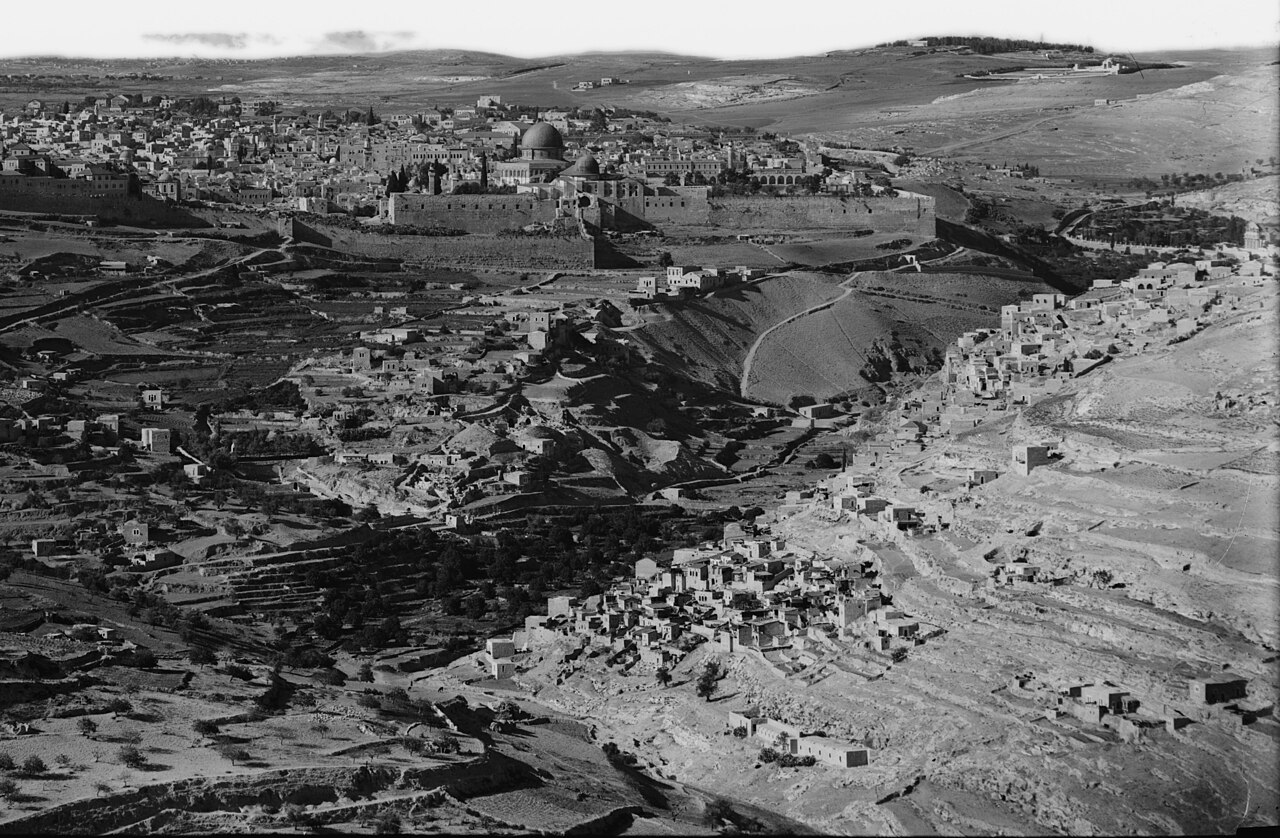
Absalom's mother Maacah was daughter of Talmai king of Geshur (3:3), a small Aramean kingdom northeast of the Sea of Galilee; et-Tell (Bethsaida) is proposed as its capital. The atlas marks it as a region.
The Case for the Biblical Account
Scripture's account
Amnon's rape of Tamar and Absalom's revenge (2 Samuel 13).
What evidence would we expect?
Royal households with half-siblings; laws on incest and rape; a kingdom of Geshur.
The discoveries
Leviticus 18:9 and 20:17 forbid a half-sister; Iron Age remains at et-Tell (Bethsaida) and other Golan sites.
Testing the discoveries
The setting is plausible; the events are known only from Samuel.
The strongest reconstruction
The beginning of the succession narrative's account of violence in David's house.
What remains possible
The original wording of 13:21.
What the evidence shows
- The narrative presents Tamar's experience as rape.Source: L. J. M. Claassens, "Trauma and Recovery: A New Hermeneutical Framework for the Rape of Tamar" ↗; I. Müllner, "Tamar and Amnon and Their Relationship with David," Oxford Handbook of King David (2026) ↗
- The library's Greek has a longer 13:21. Giguet: "but he did not grieve Amnon, for he loved him, because he was his firstborn." 4QSam-a reported to agree.
- Et-Tell was the capital of Geshur.
Continue the journey
Echoes Across CivilizationsWomen who save and women who sufferHow do other ancient traditions portray women as deliverers and as victims of war?More from this lesson
Echoes Across Civilizations
Optional: how other ancient peoples told similar stories. Open one to compare, then come back to the lesson.
Women who save and women who sufferJewish (Hellenistic) · Egyptian and Ugaritic · Greek
How do other ancient traditions portray women as deliverers and as victims of war?
- Jewish (Hellenistic): Judith Shared literary world
- Egyptian and Ugaritic: Warrior goddesses Anat and Astarte Resemblance only
- Greek: Trojan Women Similar human experience
Why this matters to the rest of Scripture
- Dinah.
- The woman of Gibeah.
- The half-sister.
- "The sword shall never depart from thine house."