"Shall I go up into any of the cities of Judah?" "Go up." "Whither?" "Unto Hebron." The men of Judah anoint David king. He thanks the men of Jabesh-gilead for burying Saul.
"But Abner the son of Ner, captain of Saul's host, took Ishbosheth the son of Saul… and made him king over Gilead… and over all Israel." Ish-bosheth reigns two years; David in Hebron seven years and six months. At the pool of Gibeon Abner proposes that the young men "play before us": twelve from each side seize one another by the head and "thrust his sword in his fellow's side; so they fell down together."
Asahel, "as light of foot as a wild roe," chases Abner. "Turn thee aside… wherefore should I smite thee to the ground?" Asahel refuses; Abner strikes him with the butt of his spear. At evening Abner calls to Joab: "Shall the sword devour for ever? knowest thou not that it will be bitterness in the latter end?" Joab sounds the trumpet.
Hebron
Hebron (Tel Rumeida) was the chief town of Judah, the burial place of the patriarchs. David's seven and a half years there are given by the text; no independent record dates them.
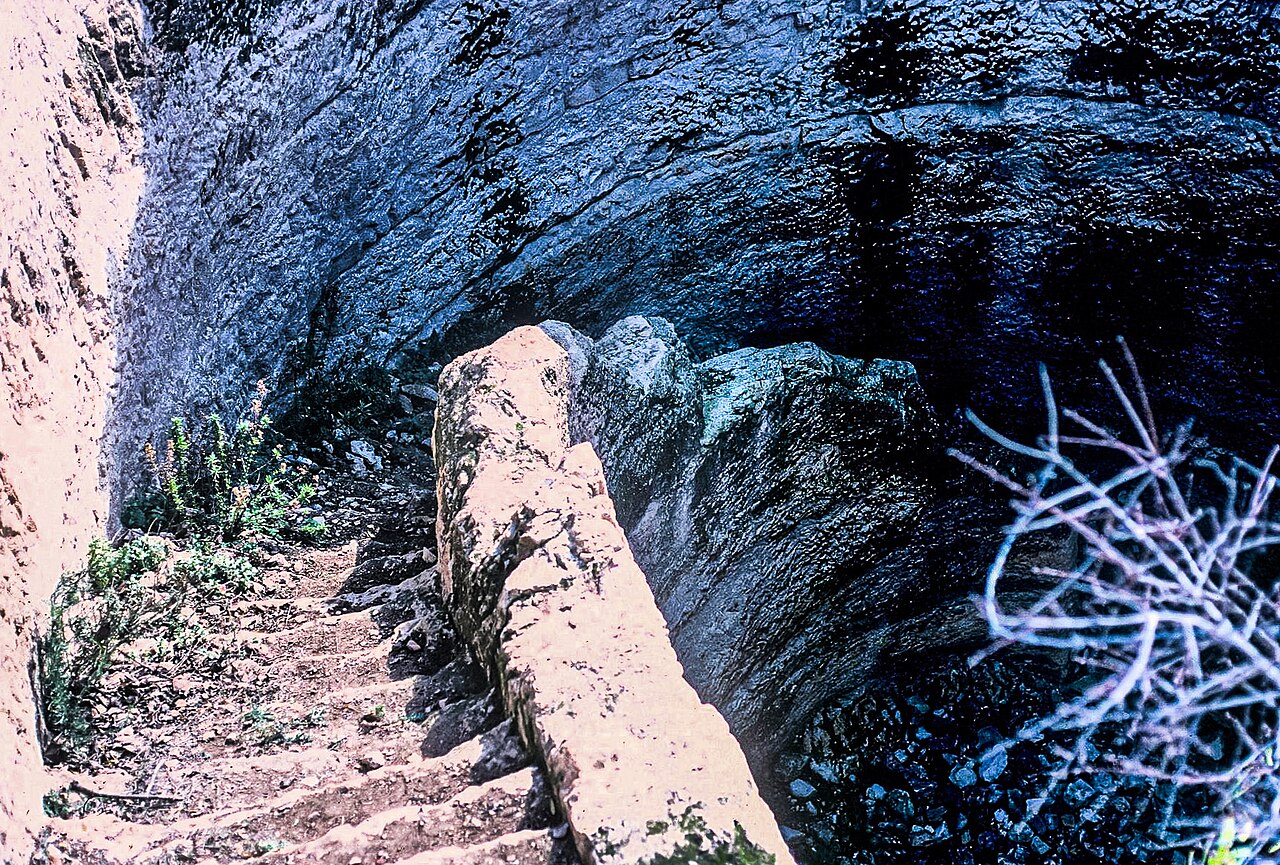
The pool of Gibeon
At el-Jib, James Pritchard (1956–1962) excavated a great rock-cut pool about 11 m across with a spiral staircase descending some 25 m to water, and jar handles inscribed "Gibeon." The pool is real; its date (often placed in the Iron Age, perhaps later than David) and its connection with this event are debated.
Ish-bosheth or Eshbaal?
Chronicles calls Saul's son Eshbaal ("man of Baal" or "Baal exists"); Samuel calls him Ish-bosheth ("man of shame"). Many think scribes replaced baal (here meaning "lord") with bosheth ("shame"); others note that the pattern is not consistent. The Khirbet Qeiyafa jar shows the name Eshbaal in use around 1000 BC.
The Case for the Biblical Account
Scripture's account
Rival kingdoms and the battle at Gibeon (2 Samuel 2).
What evidence would we expect?
Hebron and Gibeon as towns; north–south tension.
The discoveries
The Gibeon pool and inscribed handles; Hebron's Iron Age remains; the Eshbaal name at Qeiyafa.
Testing the discoveries
Places are real; events are known only from the Bible.
The strongest reconstruction
A memory of rivalry between Judah and Saul's house after Gilboa.
What remains possible
How the two reigns (two years; seven and a half) fit together.
What the evidence shows
- El-Jib is Gibeon.
- The excavated pool is the pool of 2:13.
- "Bosheth" replaced "baal" deliberately.
Continue the journey
Echoes Across CivilizationsSingle combat between championsDid other ancient peoples settle battles by a duel between two champions?More from this lesson
Echoes Across Civilizations
Optional: how other ancient peoples told similar stories. Open one to compare, then come back to the lesson.
Single combat between championsEgyptian · Greek · Israelite
Did other ancient peoples settle battles by a duel between two champions?
- Egyptian: The Story of Sinuhe Shared literary world
- Greek: The Iliad: Paris and Menelaus, Hector and Ajax Resemblance only
- Israelite: Twelve against twelve Possible historical contact
Why this matters to the rest of Scripture
- Eshbaal son of Saul.
- "The great waters that are in Gibeon."
- Hebron and Machpelah.