David divides his army under Joab, Abishai and Ittai, and commands: "Deal gently for my sake with the young man, even with Absalom." The battle is in the wood of Ephraim; twenty thousand fall, "and the wood devoured more people that day than the sword devoured."
"And Absalom rode upon a mule, and the mule went under the thick boughs of a great oak, and his head caught hold of the oak, and he was taken up between the heaven and the earth." A soldier tells Joab, but will not kill the king's son. Joab takes three darts "and thrust them through the heart of Absalom, while he was yet alive in the midst of the oak." They throw him into a great pit and pile stones over him.
Absalom had set up a pillar for himself in the King's Dale: "I have no son to keep my name in remembrance." Ahimaaz and a Cushite run with the news. "Is the young man Absalom safe?" The Cushite: "The enemies of my lord the king… be as that young man is." "And the king was much moved, and went up to the chamber over the gate, and wept: and as he went, thus he said, O my son Absalom, my son, my son Absalom! would God I had died for thee, O Absalom, my son, my son!"
Head, not hair
The text says Absalom's head was caught in the oak. Popular art and retellings (including Josephus and the Talmud) say his famous hair was caught. The hair is a natural inference from 14:26, but the text does not say it.
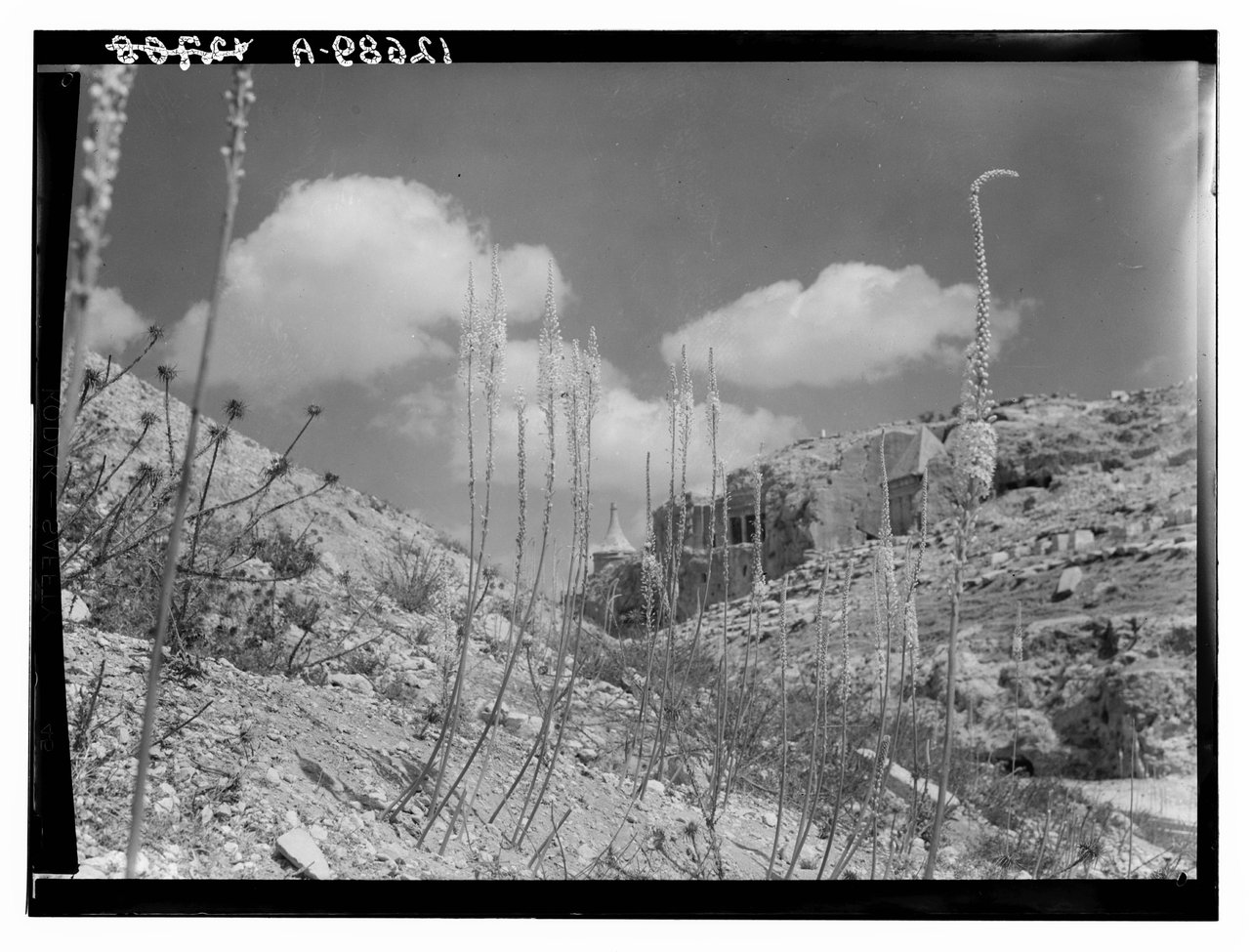
"Absalom's Tomb"
The monument called "Absalom's Pillar" (Yad Avshalom) in the Kidron Valley is a rock-cut tomb of the 1st century BC or AD, built about a thousand years after Absalom. It is named for the pillar of 18:18 by later tradition; it is not Absalom's grave, which the text places under a heap of stones in the forest. For centuries passers-by threw stones at it as a rebuke to a rebellious son.
The forest of Ephraim
Since the armies were near Mahanaim, the "wood of Ephraim" was probably east of the Jordan, perhaps in Gilead; it is not located.
The Case for the Biblical Account
Scripture's account
Absalom's death and David's grief (2 Samuel 18).
What evidence would we expect?
Forested hill country in Gilead; memorial pillars.
The discoveries
Standing stones as memorials; the later Kidron Valley tomb.
Testing the discoveries
The Kidron monument is much later; the battle is known only from Samuel.
The strongest reconstruction
The climax of the succession narrative.
What remains possible
The location of the battle.
What the evidence shows
- The text says Absalom's head was caught.
- The Kidron "Absalom's Pillar" is Absalom's tomb. It dates to the 1st century BC or AD.
- The forest of Ephraim has been located.
Continue the journey
Echoes Across CivilizationsLaments for fallen heroesDid other ancient peoples compose laments for fallen warriors and friends?More from this lesson
On the map
Location securely identified Probable identification Proposed or debated location Biblical route (roads schematic) Scholarly proposal
- David's flight from Absalom. Illustrative. Jerusalem → the Kidron and Mount of Olives → Bahurim (unlocated) → the Jordan fords near Jericho → Mahanaim (proposed). The forest of Ephraim is not located.
Echoes Across Civilizations
Optional: how other ancient peoples told similar stories. Open one to compare, then come back to the lesson.
Laments for fallen heroesMesopotamian · Greek · Sumerian
Did other ancient peoples compose laments for fallen warriors and friends?
- Mesopotamian: Gilgamesh mourns Enkidu Shared literary world
- Greek: Achilles mourns Patroclus Resemblance only
- Sumerian: City laments Shared literary world
Why this matters to the rest of Scripture
- Absalom's hair.
- "He that is hanged is accursed of God."
- Jacob mourns Joseph.
- The father runs to his son.