Era 6 · The First Kings2 Samuel
The Davidic Covenant
"Thine house and thy kingdom shall be established for ever"
"See now, I dwell in an house of cedar, but the ark of God dwelleth within curtains." Nathan: "Go, do all that is in thine heart." That night the word of the LORD comes to Nathan: "Shalt thou build me an house for me to dwell in? Whereas I have not dwelt in any house since… I brought up the children of Israel out of Egypt."
"I took thee from the sheepcote… Also the LORD telleth thee that he will make thee an house… I will set up thy seed after thee… He shall build an house for my name, and I will stablish the throne of his kingdom for ever. I will be his father, and he shall be my son. If he commit iniquity, I will chasten him with the rod of men… But my mercy [ḥesed] shall not depart away from him, as I took it from Saul… And thine house and thy kingdom shall be established for ever before thee."
"Then went king David in, and sat before the LORD, and he said, Who am I, O Lord GOD? and what is my house, that thou hast brought me hitherto?… what one nation in the earth is like thy people…? And now, O LORD God, the word that thou hast spoken concerning thy servant, and concerning his house, establish it for ever."
House, house and house
| Verse | Bayit means |
|---|---|
| 7:2 | A building: David's palace of cedar |
| 7:5, 13 | A temple: a house for God's name |
| 7:11, 16 | A dynasty: David's royal house |
Conditional or unconditional?
The promise is unconditional for the dynasty ("my mercy shall not depart") but individual kings will be disciplined. Psalm 89 holds God to the promise after disaster; Psalm 132 and 1 Kings 2:4 make it conditional on obedience. Scholars compare it with ancient royal land grants to loyal servants (Moshe Weinfeld); others point out real structural differences. The comparison is debated, not settled.
Then and later
Then and Later
The promise to David, then and later
- 2 Samuel 7Nathan's oracle A house, a son, a throne forever.
- PsalmsRoyal psalms "Thou art my Son"; the oath to David.
- ProphetsA shoot from Jesse Hope for a future Davidic king.
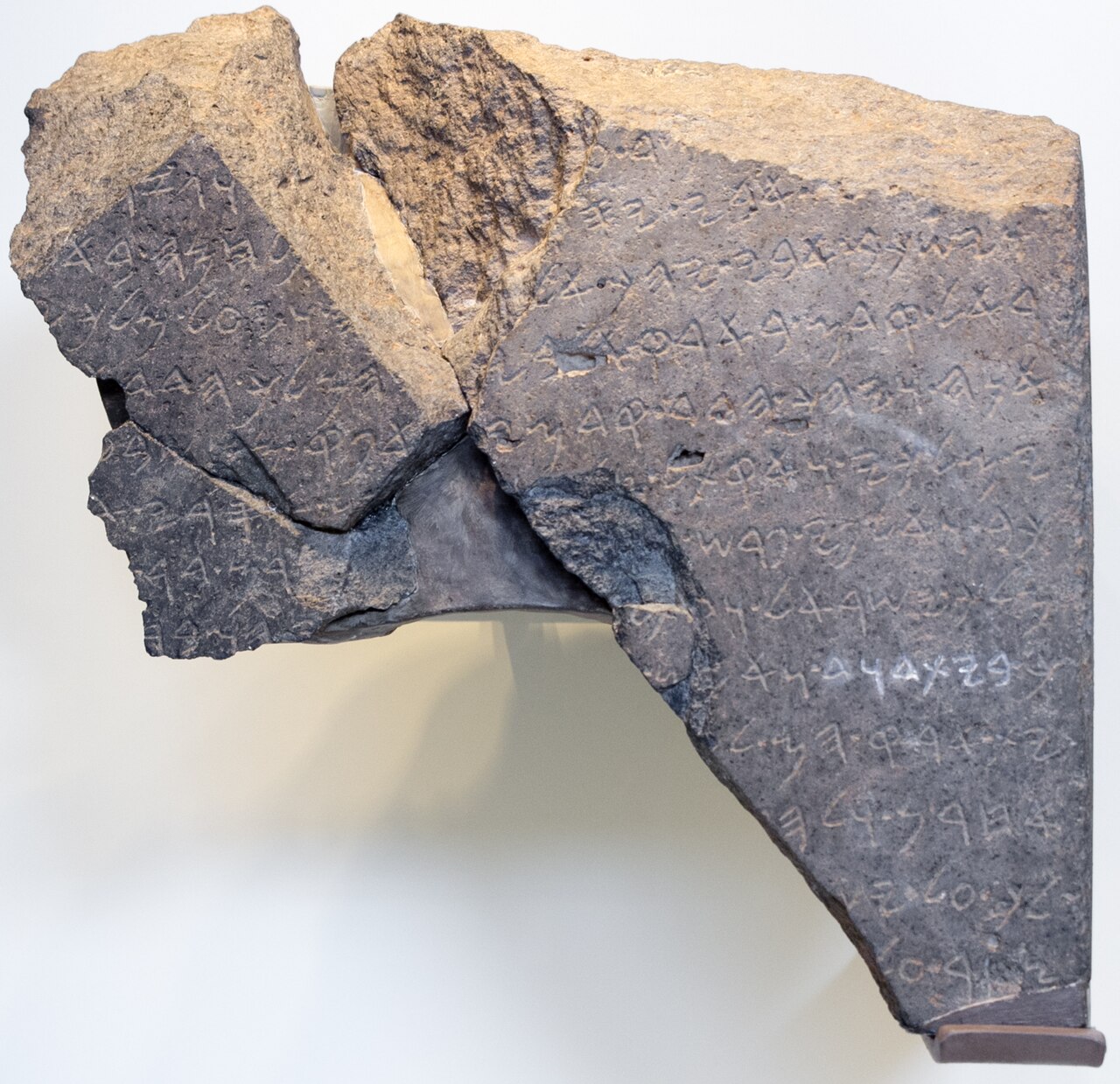
- 9th c. BCThe Tel Dan Stele An Aramaean king names the "House of David."
- Qumran4QFlorilegium Applies 2 Samuel 7 to the coming "branch of David."
- New TestamentSon of David "The Lord God shall give unto him the throne of his father David."
The Case for the Biblical Account
Scripture's account
God's promise to David (2 Samuel 7).
What evidence would we expect?
Royal ideology of divine sonship and dynastic promise in the region; a lasting Davidic dynasty.
The discoveries
Royal grant texts; divine sonship language for kings in Egypt and Mesopotamia; the 9th-century "House of David" in the Tel Dan Stele.
Testing the discoveries
A Davidic dynasty is attested by the 9th century BC; the oracle's composition date is debated.
The strongest reconstruction
A dynastic charter of the Davidic house, developed over time.
What remains possible
How much of the oracle goes back to David's time.
What the evidence shows
- The Tel Dan Stele mentions the "House of David."Source: The Jewish Museum, "Tel Dan Stele" ↗
- 2 Samuel 7 follows the form of ancient royal grants.Source: "Ancient Near Eastern Royal Grants and the Davidic Covenant: A Parallel?" JAOS 116 (1996) ↗
- "Thy throne shall be established for ever."
Continue the journey
Ancient MysteriesThe "House of David" on the Tel Dan SteleDoes an inscription outside the Bible name David's dynasty?More from this lesson
Investigations
Optional deep dives: the ancient sources, the physical evidence, and every interpretation side by side, including unconventional ones, each labeled for what it is.
The "House of David" on the Tel Dan SteleInscription: documented · Reading "House of David": widely accepted · Events of David's own reign: not recorded
Does an inscription outside the Bible name David's dynasty?
Fragments of a basalt victory stele found at Tel Dan in 1993–1994 record an Aramaean king, probably Hazael (c. 840 BC), boasting of killing a king of Israel and a king of the "House of David" (bytdwd). Most scholars accept the reading. It is the earliest undisputed mention of David's dynasty outside the Bible, about 150 years after David.
Open the full investigation →Psalm 89: The Promise to David and the Fall of the MonarchyLink to 2 Samuel 7: documented · Setting in 586 BC: plausible · Composition date: unknown
What does Psalm 89 describe, and when was it written?
Psalm 89 recites God's oath that David's line will last "as the days of heaven," then laments a king whose crown is in the dust, walls broken, youth cut short: "Thou hast made void the covenant of thy servant." Two questions must be kept apart: the situation the poem describes (a defeated Davidic king), and the date the poem, or its parts, were composed. The fall of Jerusalem in 597–586 BC is the most common setting proposed; other proposals exist, and the psalm may combine older material with a later lament.
Open the full investigation →Echoes Across Civilizations
Optional: how other ancient peoples told similar stories. Open one to compare, then come back to the lesson.
A god's promise of a royal dynastyHittite and Assyrian · Egyptian · Assyrian
Did other ancient kings claim that a god promised their dynasty would last?
- Hittite and Assyrian: Royal land grants to loyal servants Shared literary world
- Egyptian: The king as son of the god Resemblance only
- Assyrian: Oracles to Esarhaddon Possible historical contact
Why this matters to the rest of Scripture
- The parallel account.
- "I have sworn unto David my servant."
- "Thou art my Son."
- "The throne of his father David."
- "I will be to him a Father."