myBibleHistory

Ancient Mysteries & Interpretations

The "House of David" on the Tel Dan Stele

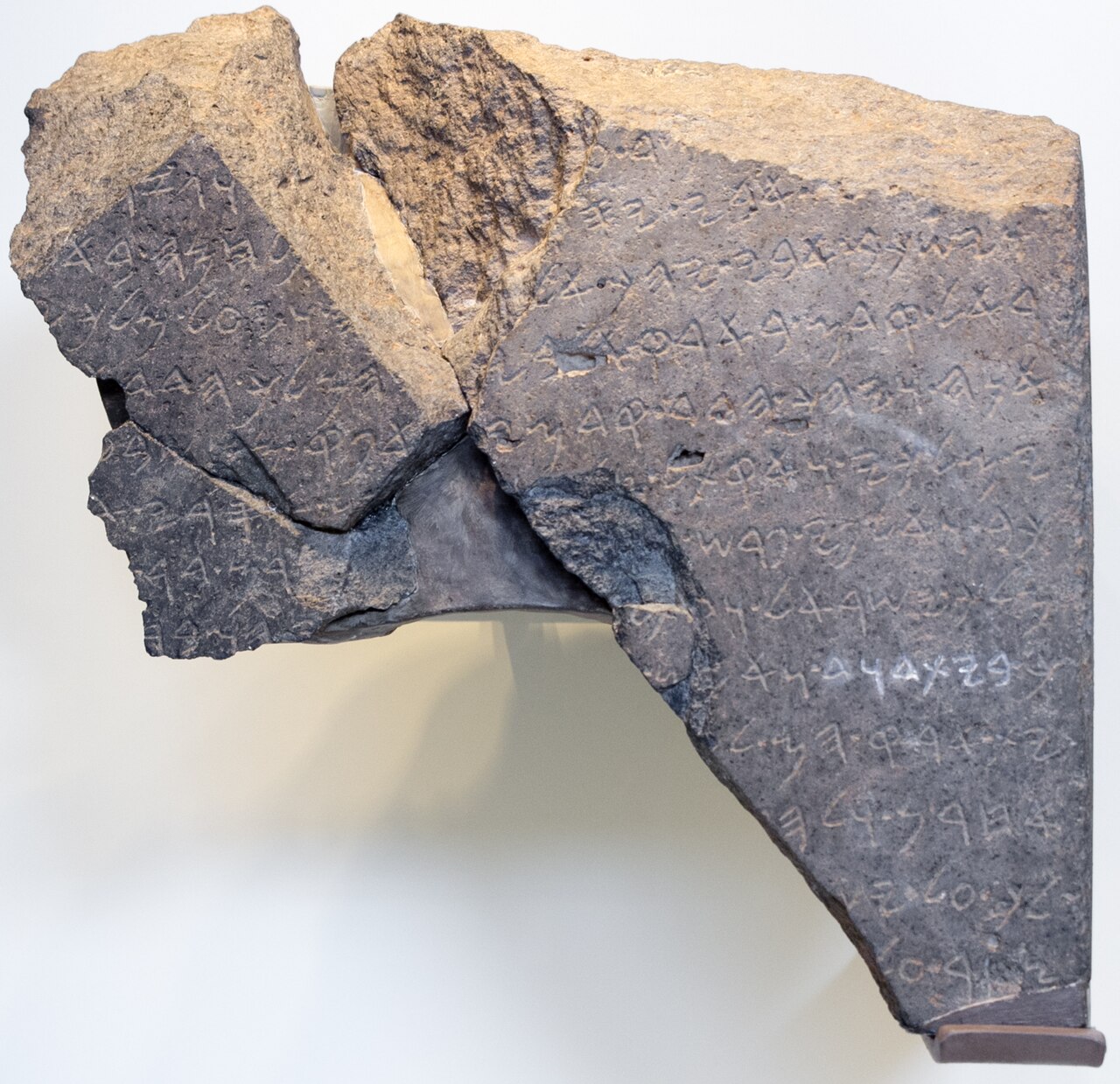
Fragments of a basalt victory stele found at Tel Dan in 1993–1994 record an Aramaean king, probably Hazael (c. 840 BC), boasting of killing a king of Israel and a king of the "House of David" (bytdwd). Most scholars accept the reading. It is the earliest undisputed mention of David's dynasty outside the Bible, about 150 years after David.

Inscription: documented · Reading "House of David": widely accepted · Events of David's own reign: not recorded

The Tel Dan Stele
Authentic ancient artifactThe Tel Dan Stele (9th century BC), found at Tel Dan, ancient Laish; it mentions the "house of David." Israel Museum.Image credit

1 What Scripture says

2 Kings 8:28–29; 9:14–28

"The LORD telleth thee that he will make thee an house" (2 Samuel 7:11).

2 What evidence we might expect

  • If David founded a dynasty, neighbors might name the kingdom after him, as Assyria called Israel "the house of Omri."

3 What ancient sources survive

Tel Dan Stele

Language
Old Aramaic
Composed
c. 840 BC (debated within the 9th century)
Oldest surviving copy
The stele fragments (Israel Museum)
Status
Not scripture

Lines 8–9: "…king of Israel, and I killed […]iahu son of […] king of the House of David."

Mesha Stele, line 31

Language
Moabite
Composed
c. 840 BC
Oldest surviving copy
Louvre AO 5066
Status
Not scripture

A damaged line some scholars read "House of [D]avid"; the reading is uncertain.

4 What discoveries exist

Fragment A was found in 1993 and fragments B1–B2 in 1994 by Avraham Biran's team, reused in later walls near Tel Dan's gate. The text matches the events of 2 Kings 8–9 (Joram of Israel and Ahaziah of Judah killed in 841 BC), though the Bible credits Jehu.

The Tel Dan Stele
Authentic ancient artifactThe Tel Dan Stele (9th century BC), found at Tel Dan, ancient Laish; it mentions the "house of David." Israel Museum.Image credit

5 How interpretations compare

Scholarly reconstruction

Other readings

A few proposed a place name or a divine epithet ("beloved"). These have not gained acceptance.

Alternative explanation

Forgery claims

Some early critics suggested forgery.

Assessment: The fragments were found in controlled excavation; the claim has no support.

6 The strongest supported reconstruction

By the 9th century BC, the kingdom of Judah was known to its neighbors as the "House of David." The founder was a historical memory. The stele says nothing about the size of David's kingdom or about any event of his life.

7 What remains possible or unknown

  • Which Aramaean king set up the stele (Hazael is most likely).
  • Whether the Mesha Stele also mentions David.

What the evidence shows

  • Independently documentedThe Tel Dan Stele was found in controlled excavation.
  • Strongly supportedIt refers to the House of David.

    Source: The Jewish Museum, "Tel Dan Stele" ↗

  • Conflicts with current evidenceIt confirms the events of 2 Samuel.

Where this connects