Era 6 · The First Kings1 Samuel
Investigation: Archaeology and Israel's First Kings
Khirbet Qeiyafa, an "Eshbaal" jar, and the "House of David"
Saul and David are not named in any inscription of their own time. The evidence is indirect: settlements, fortifications, names, and later references. Since the 1990s, the size and nature of the early monarchy have been among the most debated questions in biblical archaeology.
Khirbet Qeiyafa
Excavated 2007–2013 by Yosef Garfinkel and Saar Ganor, Qeiyafa is a small fortified town above the Elah valley, with a casemate wall and two gates, dated by radiocarbon to about 1020–980 BC. The excavators identify it with Shaarayim ("two gates," 17:52) and see it as Judahite; others propose a Canaanite, Philistine or Saulide (Benjaminite) polity. It overlooks the valley of the Goliath story.
"Eshbaal son of Beda"
A jar from Qeiyafa (published 2015) bears the inscription "Eshbaal son of Beda." Eshbaal ("man of Baal") is the original name of Saul's son, later called Ish-bosheth (1 Chronicles 8:33; 2 Samuel 2:8). This Eshbaal is the son of Beda, not of Saul: the inscription shows the name was in use around 1000 BC, which supports the plausibility of the biblical names, not that it is the same man.
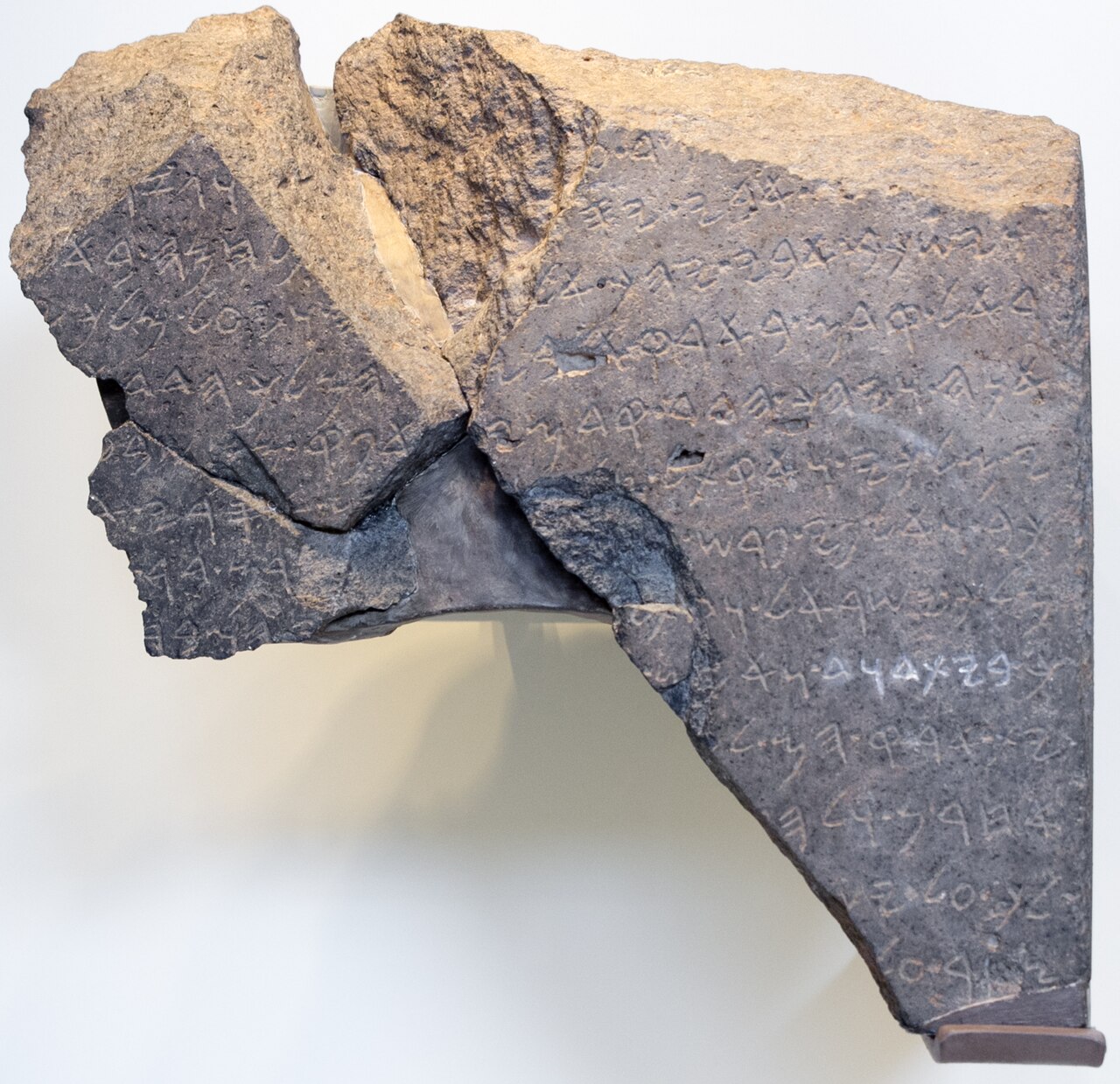
The Tel Dan Stele
Found in 1993–1994, this Aramaic stele (9th century BC) boasts of killing a king of Israel and a king "of the House of David" (bytdwd). It is the earliest undisputed reference to David's dynasty outside the Bible, about 150 years after David. It tells nothing about Saul's court or Goliath.
Highland settlements
Benjamin, Saul's tribe, had many Iron I villages. Finkelstein and Koch have proposed an early Saulide polity centered there; others question it. Gibeah (Tell el-Ful) had a fortification once called "Saul's fortress," but its date and function are disputed.
What the evidence shows
- Khirbet Qeiyafa was a fortified town of about 1000 BC.Source: Y. Garfinkel, S. Ganor and M. Hasel, Khirbet Qeiyafa excavation reports (2008–2013)
- Qeiyafa was a Judahite town under David.
- The Qeiyafa jar names Eshbaal son of Beda.Source: Khirbet Qeiyafa excavations (Hebrew University): the Eshbaal inscription ↗; Y. Garfinkel, M. Golub, H. Misgav and S. Ganor, "The ʾIšbaʿal Inscription at Khirbet Qeiyafa," BASOR 373 (2015)
- The Qeiyafa Eshbaal is Saul's son. Different father.
- The Tel Dan Stele mentions the House of David.Source: The Jewish Museum, "Tel Dan Stele" exhibition page ↗
- Saul is named in an inscription.
Continue the journey
Ancient MysteriesKhirbet Qeiyafa and the Eshbaal InscriptionDoes a fortified town of about 1000 BC, with a jar naming "Eshbaal," tell us about Saul and David?More from this lesson
Investigations
Optional deep dives: the ancient sources, the physical evidence, and every interpretation side by side, including unconventional ones, each labeled for what it is.
Khirbet Qeiyafa and the Eshbaal InscriptionSite and date: documented · Political identity: disputed · Eshbaal = Saul's son: no
Does a fortified town of about 1000 BC, with a jar naming "Eshbaal," tell us about Saul and David?
Khirbet Qeiyafa, above the Elah valley, is a fortified town dated by radiocarbon to about 1020–980 BC. Its excavators identify it with Shaarayim and see it as part of an early Judahite kingdom. A jar inscription names "Eshbaal son of Beda." It is not Saul's son Eshbaal, but it shows the name was used in this period. Who built Qeiyafa is disputed.
Open the full investigation →The "House of David" on the Tel Dan SteleInscription: documented · Reading "House of David": widely accepted · Events of David's own reign: not recorded
Does an inscription outside the Bible name David's dynasty?
Fragments of a basalt victory stele found at Tel Dan in 1993–1994 record an Aramaean king, probably Hazael (c. 840 BC), boasting of killing a king of Israel and a king of the "House of David" (bytdwd). Most scholars accept the reading. It is the earliest undisputed mention of David's dynasty outside the Bible, about 150 years after David.
Open the full investigation →Why this matters to the rest of Scripture
- Ish-bosheth (Eshbaal) made king.
- "Saul begat… Eshbaal."
- "By the way of Shaaraim."