Era 6 · The First Kings1 Samuel
Investigation: The Ark and the Philistine World
Five cities, Sea Peoples, ancient DNA and a 7th-century king of Ekron
1 Samuel names all five Philistine cities and shows them at the height of their power, from the Sorek valley to the Jezreel. The fuller treatment of their origins is in Judges; here the focus is on the 11th–10th centuries BC, the time the book describes.
The cities in 1 Samuel
| City | Site | In 1 Samuel |
|---|---|---|
| Ashdod | Tel Ashdod | The ark in Dagon's temple (5) |
| Gath | Tell es-Safi | The ark (5); Goliath (17); Achish (21; 27–29) |
| Ekron | Tel Miqne | The ark (5); the rout after Goliath (17:52) |
| Ashkelon | Tel Ashkelon | A golden tumor (6:17) |
| Gaza | Gaza | A golden tumor (6:17) |
What archaeology shows
- Gath (Tell es-Safi) was among the largest cities of the region in the 10th–9th centuries BC, destroyed by Hazael of Aram around 830 BC (2 Kings 12:17).
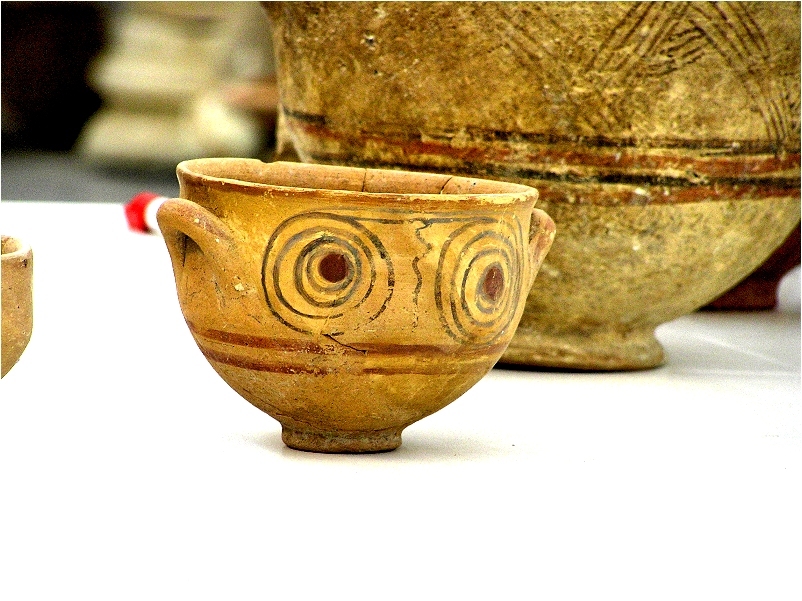
- Philistine temples with central pillars at Tell Qasile and Ekron.
- Ashkelon ancient DNA (2019): a European-related component in the early Iron Age, diluted within two centuries; based on ten individuals.
- The Ekron inscription (7th century BC) names Achish son of Padi, ruler of Ekron: the name Achish, but four centuries after David.
The ark as relic
Capturing an enemy's gods was common: Assyrian reliefs show soldiers carrying away divine statues, and Mesha boasts of taking "the vessels of YHWH" from Nebo. The ark narrative turns that custom around. Modern claims that the ark was an electrical device have no basis in the text or any evidence.
What the evidence shows
- The five Philistine cities are identified.
- Early Iron Age Ashkelon individuals had European-related ancestry.Source: M. Feldman et al., "Ancient DNA sheds light on the genetic origins of early Iron Age Philistines," Science Advances 5 (2019) ↗
- The Ekron inscription mentions the Achish of 1 Samuel. Same royal name, four centuries later.
- The ark was an electrical device. Speculation only.
Continue the journey
Ancient MysteriesThe Ark Among the PhilistinesWhat can be known about the ark's capture, Dagon's temple and the plague of 1 Samuel 4–6?More from this lesson
Investigations
Optional deep dives: the ancient sources, the physical evidence, and every interpretation side by side, including unconventional ones, each labeled for what it is.
The Ark Among the PhilistinesCities: documented · Events: not independently attested · Ark's later fate: unknown
What can be known about the ark's capture, Dagon's temple and the plague of 1 Samuel 4–6?
1 Samuel 4–6 tells how the Philistines captured the ark, how Dagon fell before it in Ashdod, how plague struck their cities, and how the ark came back on a cart. The cities are excavated and Philistine temples are known, but there is no record of these events outside the Bible. Capturing an enemy's gods was common in the ancient world; the biblical story turns the custom on its head.
Open the full investigation →Philistine Iron and the Pim WeightPim weights: documented · Iron monopoly: conflicts with current evidence
Did the Philistines control iron, and what was a pim?
1 Samuel says Israel had no smiths and had to pay the Philistines a pim to sharpen tools. Inscribed stone weights marked pym, about two-thirds of a shekel, have been found in Judah, explaining a word earlier translators could not read. Archaeology does not support a Philistine monopoly on iron: iron appears gradually at sites of every kind.
Open the full investigation →Echoes Across Civilizations
Optional: how other ancient peoples told similar stories. Open one to compare, then come back to the lesson.
When a people's god is taken captiveBabylonian · Assyrian · Moabite
Did other ancient peoples carry off the gods of their enemies, and what happened to the captured gods?
- Babylonian: The exiles of Marduk's statue Shared literary world
- Assyrian: "Godnapping" in Assyrian warfare Possible historical contact
- Moabite: Mesha takes YHWH's vessels Possible historical contact
Also covered: An ark with power?, clearly labeled as a modern theory.
Compare side by side →Why this matters to the rest of Scripture
- "The Philistines from Caphtor."
- Hazael takes Gath.
- "Go down to Gath of the Philistines."