Era 6 · The First Kings1 Samuel
Jonathan's Raid and Saul's Oath
"There is no restraint to the LORD to save by many or by few"
"Come, and let us go over unto the garrison of these uncircumcised: it may be that the LORD will work for us: for there is no restraint to the LORD to save by many or by few." Between the passes are two sharp crags, Bozez and Seneh. They show themselves; the Philistines call, "Come up to us." Jonathan climbs on hands and feet; twenty men fall. "There was trembling in the host… and the earth quaked."
Saul had bound the people with an oath: "Cursed be the man that eateth any food until evening, that I may be avenged on mine enemies." Jonathan, who had not heard, dips his staff in honey: "My father hath troubled the land… how much more, if haply the people had eaten freely to day." The famished army slaughters animals and eats with the blood; Saul builds an altar.
God does not answer Saul's inquiry. "Though it be in Jonathan my son, he shall surely die." Lots fall on Jonathan. "I did but taste a little honey… and, lo, I must die." "God do so and more also: for thou shalt surely die, Jonathan." The people answer: "Shall Jonathan die, who hath wrought this great salvation in Israel? God forbid… there shall not one hair of his head fall to the ground." "So the people rescued Jonathan."
The pass at Michmash
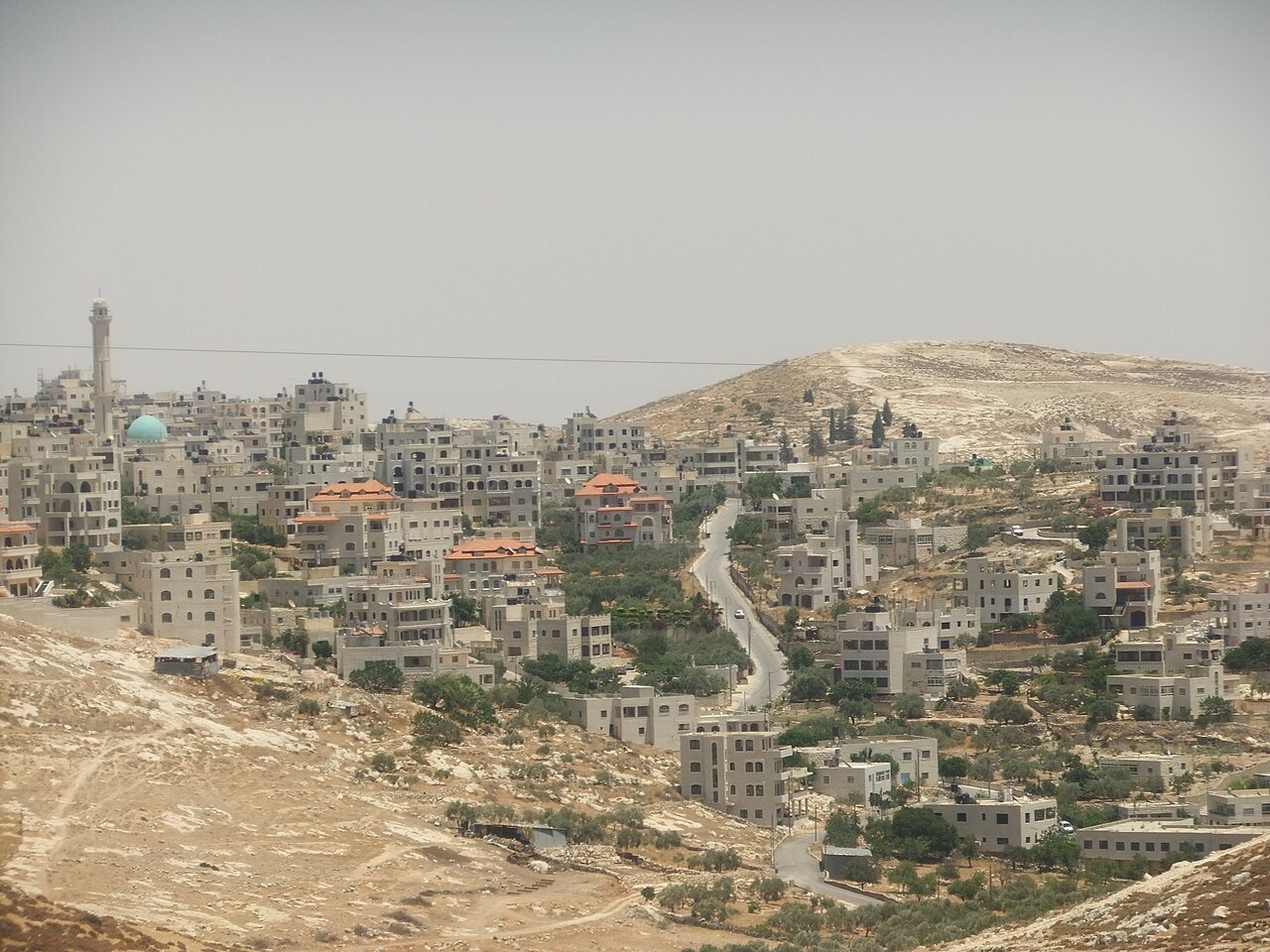
Michmash (Mukhmas) and Geba (Jaba) face each other across the deep Wadi es-Suweinit. The cliffs on either side fit the description of Bozez and Seneh; which crags are meant is a proposal, not a certainty. In 1918 a British officer reportedly used this account to plan a flanking move near Michmash; the story is widely told and its details are hard to verify.
Urim and Thummim (14:41)
The Hebrew of 14:41 is short and obscure: "Give perfect" (havah tamim). The library's Greek and the Vulgate have a much longer prayer: "Why have you not answered your servant today? If the guilt is in me or in Jonathan my son, give Urim; if it is in your people Israel, give Thummim." Many scholars think the Hebrew lost words when a scribe's eye skipped from one "Israel" to another. It is the fullest description in the Bible of how Urim and Thummim worked. See the passage page.
Eating with the blood
The army's sin of eating meat with the blood breaks Leviticus 17 and 19:26. Saul's makeshift altar (14:35) is "the first altar that he built unto the LORD."
The Case for the Biblical Account
Scripture's account
Jonathan's raid and Saul's oath (1 Samuel 14).
What evidence would we expect?
Steep terrain between Geba and Michmash; sacred lots.
The discoveries
The Wadi es-Suweinit gorge between Jaba and Mukhmas; the Urim and Thummim of Exodus 28 and Numbers 27.
Testing the discoveries
The geography fits remarkably; the raid is known only from Samuel.
The strongest reconstruction
A memory of a daring raid on a real pass.
What remains possible
The original wording of 14:41.
What the evidence shows
- Geba and Michmash face each other across a deep gorge.
- The library's Greek and the Vulgate have a longer 14:41.Source: NET Bible, note on 1 Samuel 14:41 ↗
- The Hebrew lost words by eye-skip.
- A British force used this passage at Michmash in 1918.
Continue the journey
Journey of a Passage1 Samuel 14:41: Urim and Thummim: the longer prayerThe Hebrew has only "Give perfect [tamim]." The library's Greek and the Vulgate have a full prayer: if the guilt is in Saul or Jonathan, give Urim; if in the people, give Thummim.More from this lesson
Echoes Across Civilizations
Optional: how other ancient peoples told similar stories. Open one to compare, then come back to the lesson.
Vows that cost a childGreek · Moabite
Do other ancient stories tell of a leader who must sacrifice a daughter or son because of a vow or a war?
- Greek: Agamemnon and Iphigenia Resemblance only
- Greek: Idomeneus Resemblance only
- Moabite: The king of Moab on the wall Possible historical contact
Why this matters to the rest of Scripture
- Jephthah's vow.
- Urim and Thummim.
- "Ye shall not eat any thing with the blood."
- "At Michmash he hath laid up his carriages… they have taken up their lodging at Geba."