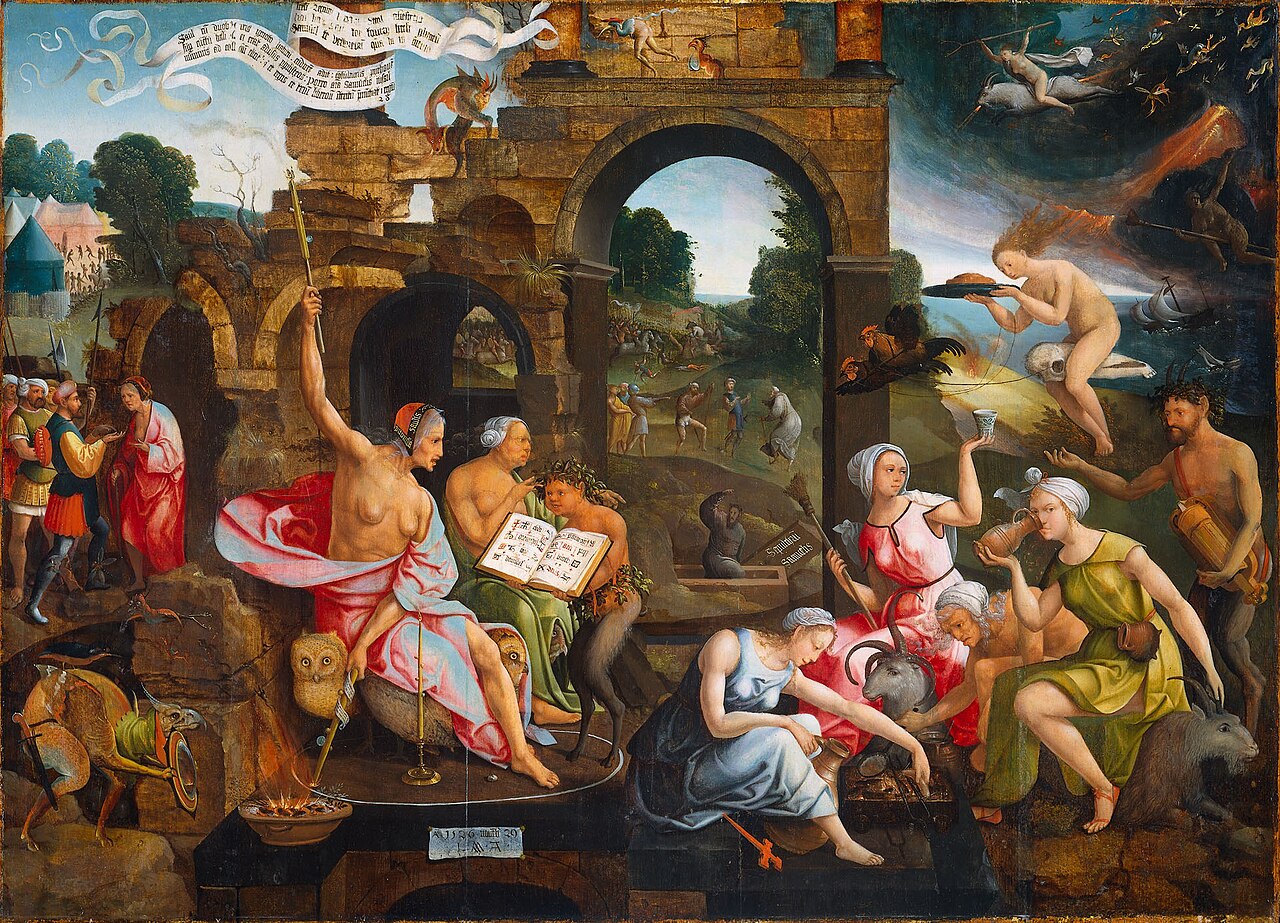
Era 6 · The First Kings1 Samuel
Investigation: Holy War, Prophecy and the Medium at En-dor
Reading 1 Samuel's hardest passages honestly
1 Samuel is not a book of heroes. Saul is rejected; David lies, flees, serves a Philistine king and raids without mercy; Samuel hews Agag in pieces; Doeg kills the priests of Nob. The book reports these things; it does not ask readers to imitate them.
Ḥerem and Amalek (chapter 15)
The ban appears in Deuteronomy, Joshua and the Mesha Stele. Traditional readings treat Amalek's judgment as unique and past; some scholars read the language as hyperbolic war rhetoric (Amalekites reappear in chapters 27 and 30); many readers find the command morally troubling and say so. Rabbinic tradition limited the command to the distant past, ruling that Amalek can no longer be identified.
Royal violence (chapters 22, 27)
The narrator condemns Saul's massacre at Nob through the refusal of his own guards; David's raids in chapter 27 are reported without praise, as part of a deception. 1 Chronicles later says David could not build the temple because he had shed much blood (22:8).
Prophecy and the dead (chapter 28)
Israel's prophets, priests (with the ephod and Urim) and dreams were the permitted ways to inquire of God; mediums were forbidden. Saul's turn to En-dor marks the end of his relationship with God. Interpreters debate whether Samuel truly appeared.
God's regret and Samuel's word
"It repenteth me" (15:11) and "the Strength of Israel will not… repent" (15:29) stand side by side. The tension invites reflection on how Scripture speaks of God in human terms while affirming His faithfulness.
What the evidence shows
- The Mesha Stele uses the same ḥerem vocabulary.
- 1 Samuel endorses all the violence it reports. Much of it is reported critically or without comment.
- The Torah forbids necromancy.
- These passages authorize violence today.
Continue the journey
Journey of a Passage1 Samuel 28:13: "I saw gods ascending"The medium says she sees elohim, with a plural verb, "rising from the earth." The Greek, Latin and KJV all say "gods." The question is what the word means here: a divine being, a spirit, or Samuel himself.More from this lesson
Investigations
Optional deep dives: the ancient sources, the physical evidence, and every interpretation side by side, including unconventional ones, each labeled for what it is.
The Medium at En-dorNecromancy in antiquity: documented · What appeared: disputed · Technological readings: speculative
Who was the woman of En-dor, what was an 'ov, and who appeared to Saul?
Saul consults "a woman, mistress of an 'ov," to bring up the dead Samuel. Necromancy is well attested across the ancient world and forbidden in the Torah. Interpreters have long debated whether Samuel truly appeared, whether a spirit impersonated him, or whether the woman staged it. The text calls what rose "elohim" and "Samuel."
Open the full investigation →Echoes Across Civilizations
Optional: how other ancient peoples told similar stories. Open one to compare, then come back to the lesson.
Calling up the deadMesopotamian · Greek · Israelite
Did other ancient peoples try to consult the dead, and how?
- Mesopotamian: Ghost-raising rituals and Gilgamesh XII Shared literary world
- Greek: The Odyssey, book 11 (the Nekyia) Resemblance only
- Israelite: Isaiah against necromancers Possible historical contact
Also covered: A hologram at En-dor?, clearly labeled as a modern theory.
Compare side by side →Why this matters to the rest of Scripture
- The ban in war.
- "Do justly, and to love mercy."
- "Thou hast shed blood abundantly."
- Prophets, not mediums.