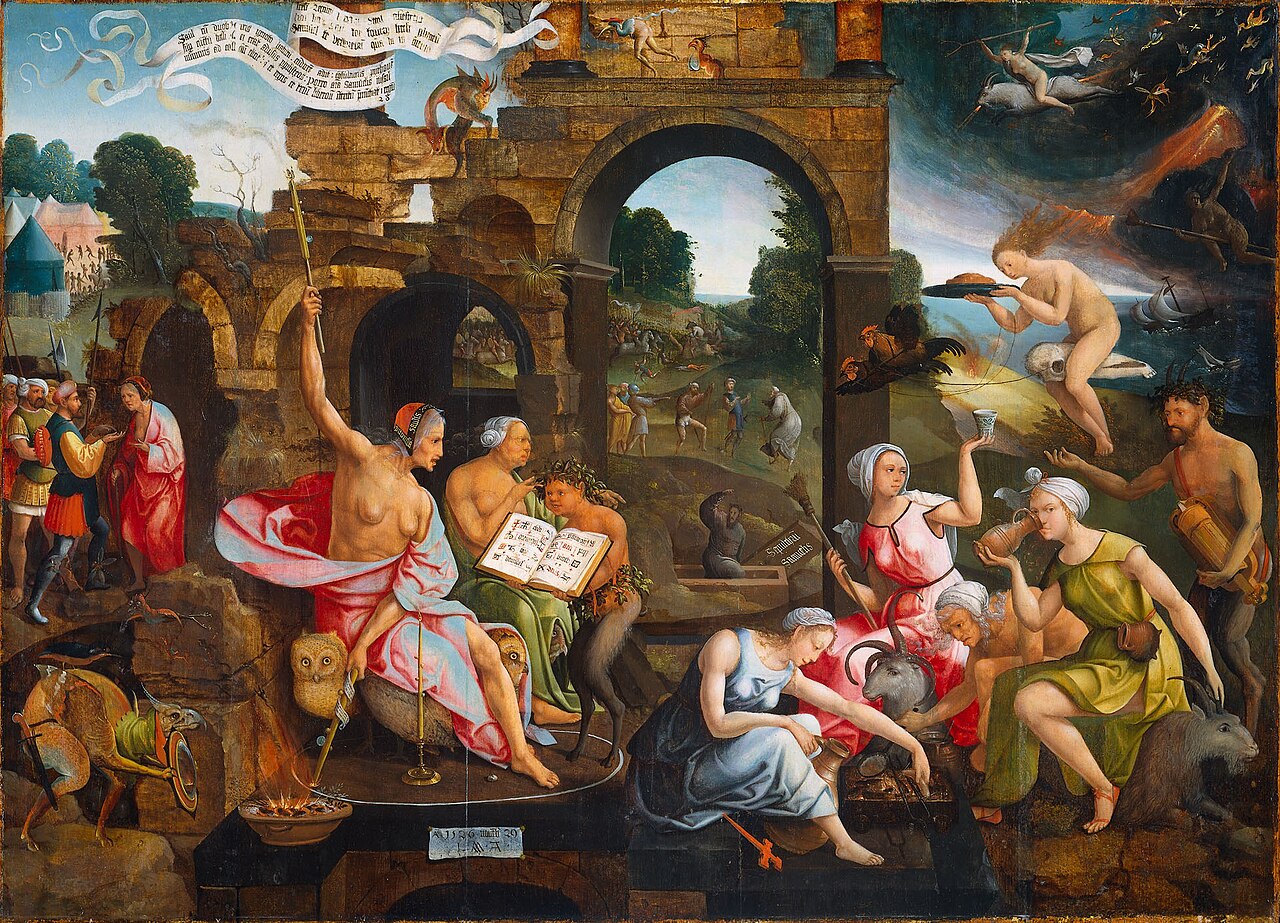
"I saw gods ascending out of the earth… An old man cometh up; and he is covered with a mantle" (28:13–14).
Gilgamesh, Tablet XII
- Language
- Akkadian
- Composed
- Sumerian original c. 2000 BC; Akkadian tablet 1st millennium BC
- Oldest surviving copy
- Neo-Assyrian tablets from Nineveh
- Status
- Not scripture
Enkidu's ghost rises from the underworld to speak with Gilgamesh.
Odyssey, book 11
- Language
- Greek
- Composed
- c. 8th–7th century BC
- Oldest surviving copy
- Papyri from the 3rd century BC; medieval manuscripts
- Status
- Not scripture
Odysseus digs a pit and pours blood to call up the dead.
Sirach 46:20
- Language
- Hebrew (Greek translation)
- Composed
- c. 180 BC
- Oldest surviving copy
- Masada scroll and Cairo Genizah (Hebrew); Greek codices
- Status
- Deuterocanonical
Samuel "prophesied after his death."
Mesopotamian ritual texts describe raising a ghost (eṭemmu) through a skull or a pit; Israelite tombs and texts show care for and fear of the dead. Recent studies examine the ritual knowledge implied by 1 Samuel 28 and its polemical purpose.
The scene is set in real ancient practice. What appeared is a theological question the text leaves partly open.
All witnesses checked read "gods" (plural) in 28:13; see the passage page.