"I remember that which Amalek did to Israel… Now go and smite Amalek, and utterly destroy [ḥaram] all that they have, and spare them not; but slay both man and woman, infant and suckling, ox and sheep, camel and ass." Saul warns the Kenites to leave, then strikes Amalek "from Havilah until thou comest to Shur." "But Saul and the people spared Agag, and the best of the sheep… and would not utterly destroy them."
"It repenteth me that I have set up Saul to be king." Samuel grieves and cries to the LORD all night. Saul greets him: "I have performed the commandment." "What meaneth then this bleating of the sheep in mine ears?" "The people spared the best… to sacrifice unto the LORD." "Hath the LORD as great delight in burnt offerings and sacrifices, as in obeying the voice of the LORD? Behold, to obey is better than sacrifice… Because thou hast rejected the word of the LORD, he hath also rejected thee from being king."
Saul seizes Samuel's robe and it tears. "The LORD hath rent the kingdom of Israel from thee this day, and hath given it to a neighbour of thine, that is better than thou. And also the Strength of Israel will not lie nor repent." Agag comes "delicately": "Surely the bitterness of death is past." "As thy sword hath made women childless, so shall thy mother be childless among women." "And Samuel hewed Agag in pieces before the LORD in Gilgal." Samuel never sees Saul again, "and the LORD repented that he had made Saul king."
Ḥerem
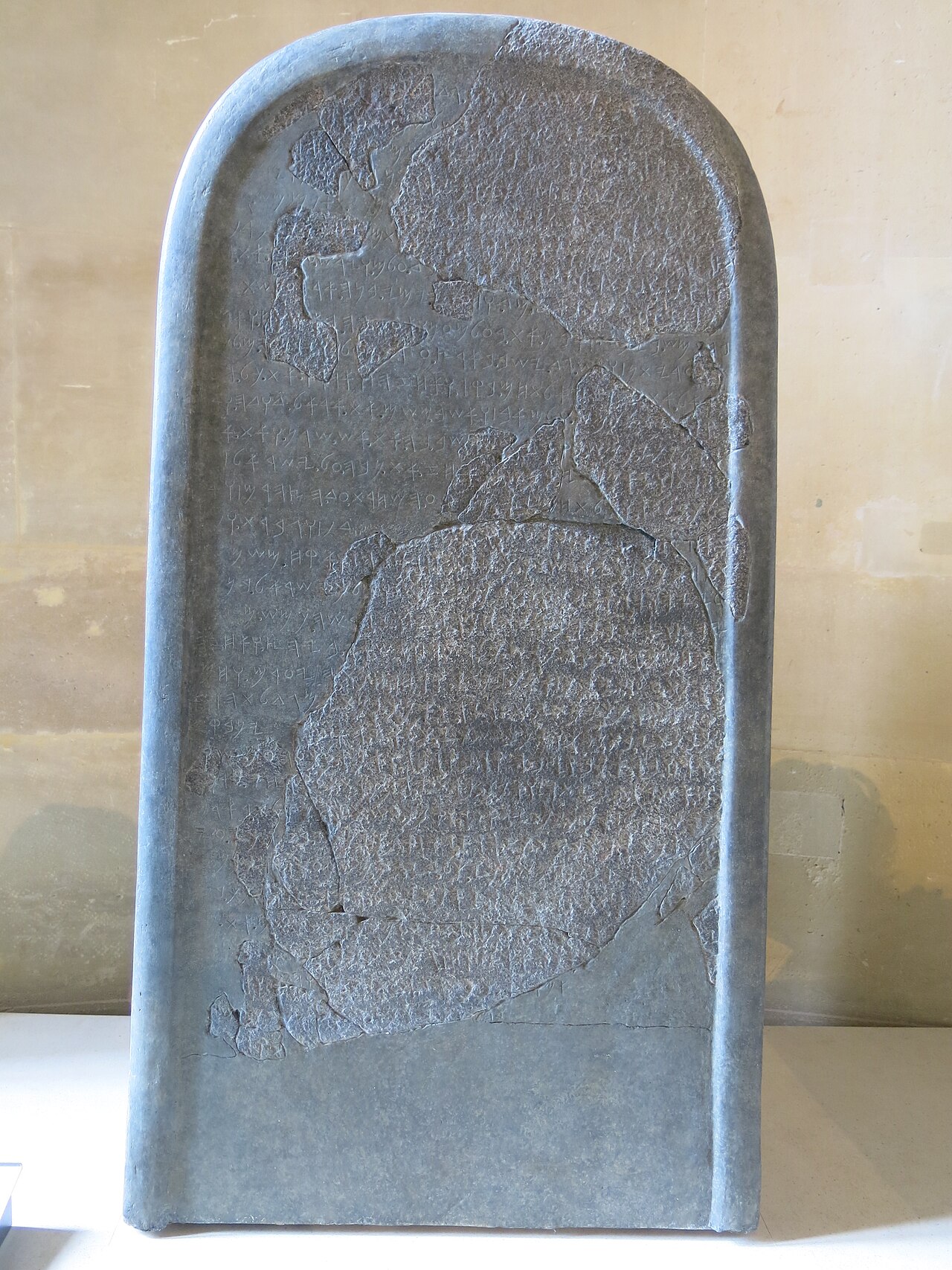
Ḥerem, "devotion to destruction," meant giving the conquered entirely to God, so that no one profited. The Moabite Mesha Stele (9th century BC) uses the same word: Mesha says he killed the seven thousand people of Nebo, "for I had devoted it (ḥrm) to Ashtar-Chemosh." The practice and its language belonged to the region's warfare.
How readers have understood it
Many traditional readers see a unique judgment on Amalek for centuries of attacks on the weak (Exodus 17; Deuteronomy 25:17–19), commanded by God and limited to that time, not a precedent.
Some scholars note that ancient war reports use total language as rhetoric: Amalekites reappear in 1 Samuel 27 and 30, a few years later.
Many modern readers, Jewish and Christian, find the command incompatible with other biblical teaching on justice and mercy, and wrestle with it honestly. Rabbinic tradition debated it and limited the law against Amalek to the distant past.
In every reading, the passage is not a warrant for violence against any people today; Amalek is not identifiable with any modern group.
Does God repent?
God "repents" (regrets) making Saul king (15:11, 35), yet Samuel says the Strength of Israel "will not repent: for he is not a man" (15:29). Interpreters read the first as God's sorrow and changed response, the second as His faithfulness to His word; the tension is deliberate.
Who were the Amalekites?
Amalek appears only in the Bible: a desert people of the Negev and Sinai, descended from Esau (Genesis 36:12). No inscription names them; Saul's campaign is not independently attested.
The Case for the Biblical Account
Scripture's account
Saul's war with Amalek and his rejection (1 Samuel 15).
What evidence would we expect?
Desert raiders of the Negev; ḥerem practice in the region.
The discoveries
The Mesha Stele's ḥerem language; pastoral groups in the Negev in Iron I.
Testing the discoveries
The practice is attested; Amalek and this campaign are not.
The strongest reconstruction
A prophetic account of Saul's rejection, built around disobedience in a ḥerem war.
What remains possible
How the command should be understood morally and theologically.
What the evidence shows
- The Mesha Stele uses ḥrm for devoting a population to a god.
- Amalek is attested outside the Bible.
- The passage authorizes violence against any people today.
- "To obey is better than sacrifice."
Continue the journey
Connected elsewhere in ScriptureWater from the Rock and AmalekExodus 17:8–16: Amalek attacks Israel.More from this lesson
Why this matters to the rest of Scripture
- Amalek attacks Israel.
- "Remember what Amalek did."
- "I desired mercy, and not sacrifice."
- Haman "the Agagite."
- Amalekites raid Ziklag.