Era 6 · The First Kings1 Samuel
How 1 Samuel Came to Us
One book of Samuel, two books of Kingdoms, and the most important Qumran scroll for the history of the text
Samuel does not name its author. The Talmud says "Samuel wrote his book" (Bava Batra 14b) and adds that Gad the seer and Nathan the prophet completed it, since Samuel's death is reported in 25:1. 1 Chronicles 29:29 refers to "the book of Samuel the seer, and… the book of Nathan the prophet, and… the book of Gad the seer."
One book or two?
In Hebrew manuscripts Samuel is one book, among the Former Prophets. The Greek translators, whose script with vowels took more space on a scroll, divided Samuel and Kings into four "Books of Kingdoms" (1–4 Reigns); the Latin followed (1–4 Kings). Hebrew Bibles adopted the division into 1 and 2 Samuel in the 15th–16th centuries (it appears in Daniel Bomberg's printed Rabbinic Bible of 1517). The library treats 1 Kingdoms as 1 Samuel.
The witnesses
| Witness | Kind | Date | Notes |
|---|---|---|---|
| 4QSam-a (4Q51) | Hebrew, extensive fragments | Mid-1st c. BC | Agrees often with the Greek; Nahash paragraph; four cubits at 17:4; one bull at 1:24 |
| 4QSam-b (4Q52) | Hebrew, fragments | 3rd c. BC (one of the oldest Qumran manuscripts) | Parts of 1 Samuel 16–23 (coverage to verify) |
| 4QSam-c (4Q53) | Hebrew, fragments | Early 1st c. BC | Parts of 1 Samuel 25 and 2 Samuel 14–15 (to verify) |
| 1QSam (1Q7) | Hebrew, small fragments | 1st c. BC–1st c. AD (to verify) | Mainly 2 Samuel |
| Codex Vaticanus | Greek | 4th c. AD | The shorter 1 Samuel 17–18; often the Old Greek elsewhere; kaige revision in parts of 2 Samuel |
| Codex Alexandrinus; Lucianic manuscripts | Greek | 5th c. AD onward | Fuller texts; the Lucianic group often preserves Old Greek readings |
| Josephus, Antiquities 5–7 | Greek retelling | c. AD 93 | Used a text close to 4QSam-a and the Greek in places |
| Vulgate | Latin from Hebrew | c. AD 400 | Follows the Hebrew, sometimes with Greek readings (14:41) |
| Leningrad Codex | Hebrew, Masoretic | AD 1008 | Basis of BHS |
Why the text of Samuel is special
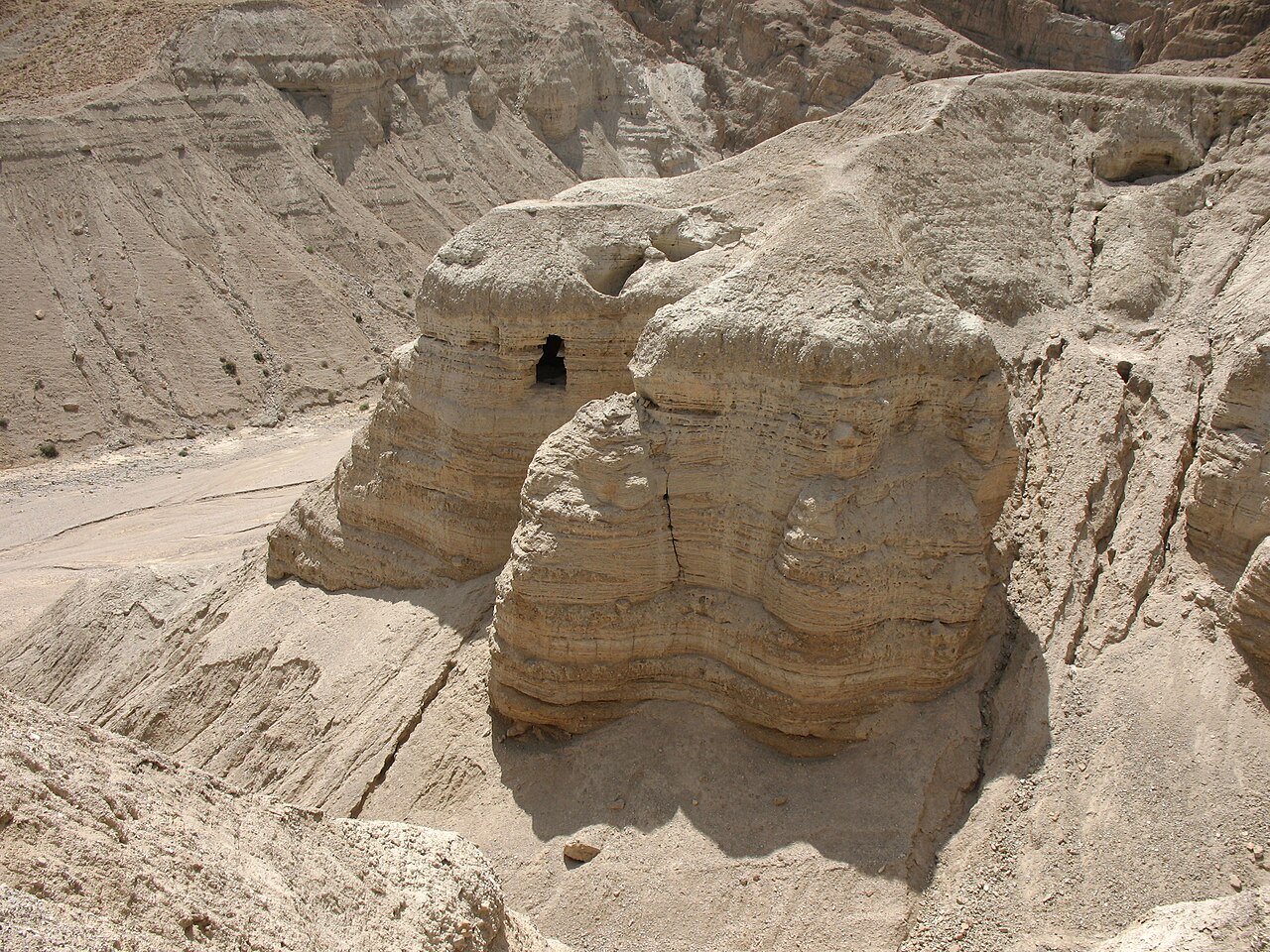
Before Qumran, scholars noticed that the Masoretic Text of Samuel had many gaps and difficulties, and that the Greek often seemed to translate a better Hebrew. 4QSam-a, published fully in 2005 (DJD XVII), confirmed that such a Hebrew text existed: it often agrees with the Greek against the Masoretic Text. Samuel is now a textbook case of the plurality of Hebrew texts before the standard text was fixed.
How was it composed?
Samuel, then Gad and Nathan, recorded events of their own time (1 Chronicles 29:29).
Scholars identify an Ark Narrative (1 Samuel 4–6; 2 Samuel 6), a History of David's Rise (1 Samuel 16–2 Samuel 5), a Succession Narrative (2 Samuel 9–20; 1 Kings 1–2), and poems such as Hannah's song.
Speeches such as 1 Samuel 12 and the framing of kingship tie Samuel to Deuteronomy–Kings. How much editing, and when, is debated.
What the evidence shows
- Samuel was one book in Hebrew tradition.
- The Talmud attributes the book to Samuel, Gad and Nathan.Source: Babylonian Talmud, Bava Batra 14b–15a ↗
- 4QSam-a often agrees with the Greek against the Masoretic Text.Source: F. M. Cross, D. W. Parry, R. J. Saley and E. Ulrich, Qumran Cave 4.XII: 1–2 Samuel (DJD XVII, 2005); E. Tov and others on Hebrew textual traditions (Rutgers, HHE 17, 2015) ↗
- The book was composed in stages.
- Samuel wrote the whole book. His death is reported in 25:1.
Then and Later
1 Samuel, then and later
- 11th–10th c. BCSamuel, Saul and David The setting.
- Monarchy to exileSources gathered and edited Ark, Saul and David traditions.
- 3rd–1st c. BCQumran scrolls 4QSam-b, 4QSam-a, 4QSam-c.
- c. AD 93Josephus Retells the Nahash story found in 4QSam-a.
- 4th c. ADCodex Vaticanus The short story of David and Goliath.
- 1st c. ADLuke 1 Hannah's song echoed in the Magnificat.
- AD 1008Leningrad Codex The complete Hebrew text.
- 2005DJD XVII The full publication of the Qumran Samuel scrolls.
Continue the journey
Journey of a Passage1 Samuel 1:24: Three bulls, or one three-year-old bull?Hannah brings Samuel to Shiloh with an offering.More from this lesson
Why this matters to the rest of Scripture
- The books of Samuel, Nathan and Gad.
- Paul summarizes Samuel to David.
- Samuel and David among the faithful.
Sources to explore
- E. Tov, "The Composition of 1 Samuel 16–18 in the Light of the Septuagint" (1999) ↗
- NET Bible, note on the 4QSam-a Nahash paragraph (1 Samuel 11:1) ↗
- E. Tov and others on Hebrew textual traditions (Rutgers, HHE 17, 2015) ↗
- Leon Levy Dead Sea Scrolls Digital Library (Israel Antiquities Authority) ↗
- University of Helsinki dissertation on textual plurality in Samuel ↗
Overviews are a starting point. Each links onward to the primary sources and specialist studies behind it.