Era 6 · The First Kings2 Samuel
Investigation: David's Jerusalem and the House of David
A stele from Dan, a disputed palace, and the city before David
Until 1993 no inscription outside the Bible mentioned David. Then, at Tel Dan, excavators found a fragment of a basalt victory stele in Aramaic. Since then the questions have changed: not whether David's dynasty existed, but how large and powerful his kingdom was.
The Tel Dan Stele
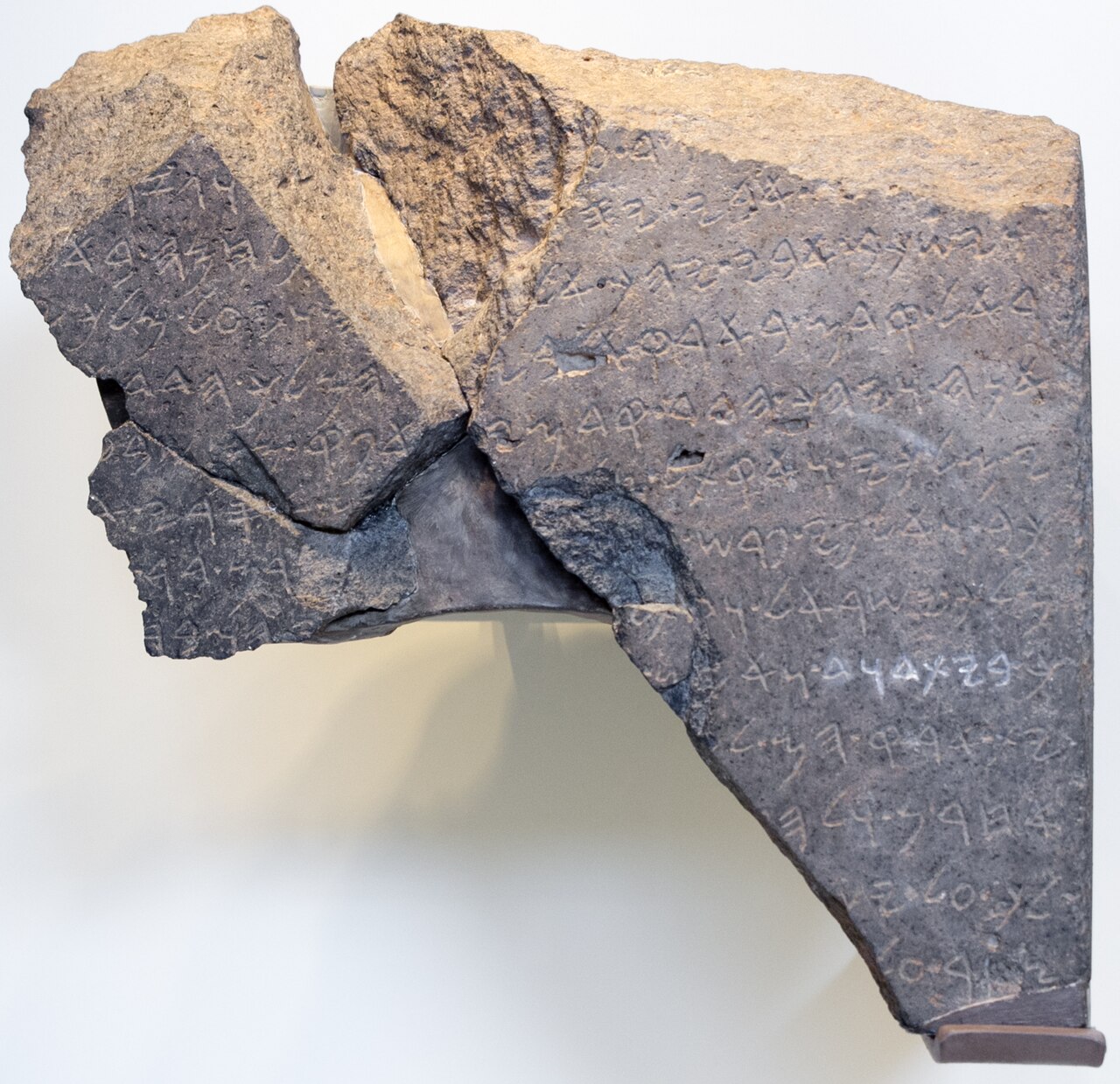
Found in 1993–1994 by Avraham Biran's team at Tel Dan, the stele's fragments record an Aramaean king (probably Hazael, c. 840 BC) claiming to have killed "[Jeho]ram son of [Ahab] king of Israel" and "[Ahaz]iahu son of [Jehoram, kin]g of the House of David" (bytdwd). Most scholars read bytdwd as "House of David," a dynasty named after its founder. A minority proposed other readings; they have not prevailed. The stele is in the Israel Museum.
The Large Stone Structure
Eilat Mazar (2005–2008) dated the building to the 10th century BC and identified it as the palace Hiram's builders made (5:11). The City of David organization presents it this way.
Finkelstein, Herzog, Singer-Avitz and Ussishkin (2007) argued the remains belong to different periods, mostly later, and do not form one 10th-century palace.
Avraham Faust (2010) argued the structure was begun earlier, in Iron I, as an important building, and continued in use.
The Stepped Stone Structure and the spring
A massive stepped stone mantle on the ridge (excavated by Macalister, Kenyon and Shiloh) supported something large above; its dates are also debated. The Gihon spring was protected by Middle Bronze towers; Warren's Shaft was not accessible as a water shaft in David's time.
Jerusalem before David
Six Amarna letters from Abdi-Heba of Urusalim (14th century BC) show Jerusalem as a small city-state loyal to Egypt. It was an established town when David took it.
How big was David's kingdom?
Models range from a substantial kingdom (traditional), to a real but modest early state (many archaeologists), to a later literary construct (minimalists). The Tel Dan Stele rules out the idea that David was invented centuries later; it does not settle the size of his kingdom. Khirbet Qeiyafa (c. 1000 BC) is part of the debate.
What the evidence shows
- The Tel Dan Stele refers to the "House of David."Source: The Jewish Museum, "Tel Dan Stele" ↗
- The Tel Dan Stele records events of David's own reign. It dates to about 150 years after David.
- The Large Stone Structure is David's palace.Source: City of David, "King David's Palace" (the excavators' interpretation; disputed) ↗; I. Finkelstein, L. Singer-Avitz, Z. Herzog and D. Ussishkin, "Has King David's Palace in Jerusalem Been Found?" Tel Aviv 34 (2007) ↗; A. Faust, "The Large Stone Structure in the City of David: A Reexamination" (2010) ↗
- Jerusalem was a city-state in the 14th century BC.Source: J. Magness, Jerusalem through the Ages (2024), "Jebusite Jerusalem" ↗
- David ruled a large empire.
Continue the journey
Ancient MysteriesThe "House of David" on the Tel Dan SteleDoes an inscription outside the Bible name David's dynasty?More from this lesson
Investigations
Optional deep dives: the ancient sources, the physical evidence, and every interpretation side by side, including unconventional ones, each labeled for what it is.
The "House of David" on the Tel Dan SteleInscription: documented · Reading "House of David": widely accepted · Events of David's own reign: not recorded
Does an inscription outside the Bible name David's dynasty?
Fragments of a basalt victory stele found at Tel Dan in 1993–1994 record an Aramaean king, probably Hazael (c. 840 BC), boasting of killing a king of Israel and a king of the "House of David" (bytdwd). Most scholars accept the reading. It is the earliest undisputed mention of David's dynasty outside the Bible, about 150 years after David.
Open the full investigation →Was David's Palace Found?Structure: documented · Date: disputed · Identification as David's palace: disputed
Is the Large Stone Structure in the City of David the palace Hiram built for David?
Eilat Mazar excavated massive walls at the top of the City of David (2005–2008) and identified them as David's palace, built with Phoenician help. Other archaeologists dispute the date, argue the walls belong to different structures and periods, or date the building earlier than David. The structure is real; its identification is not settled.
Open the full investigation →Why this matters to the rest of Scripture
- David takes Jerusalem.
- Joram and Ahaziah against Hazael.
- Adoni-zedek king of Jerusalem.