Scholarly reconstruction
David's palace
Mazar: the structure is the palace of 5:11.
Source: City of David, "King David's Palace" (the excavators' interpretation; disputed) ↗
Ancient Mysteries & Interpretations
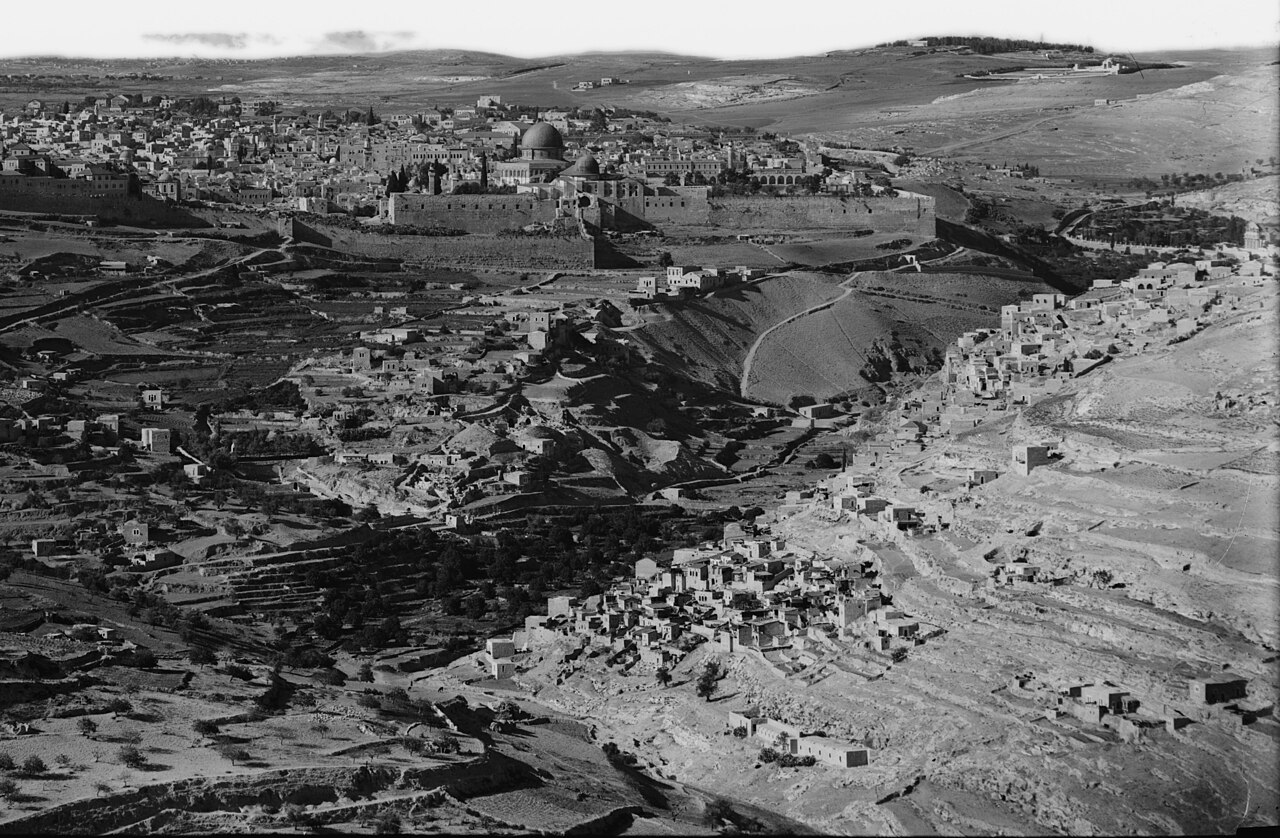
Eilat Mazar excavated massive walls at the top of the City of David (2005–2008) and identified them as David's palace, built with Phoenician help. Other archaeologists dispute the date, argue the walls belong to different structures and periods, or date the building earlier than David. The structure is real; its identification is not settled.
Structure: documented · Date: disputed · Identification as David's palace: disputed
"And Hiram king of Tyre sent messengers to David, and cedar trees, and carpenters, and masons: and they built David an house" (5:11).
Mazar found thick walls above the Stepped Stone Structure, with pottery she dated to the 10th century BC and a Phoenician-style ivory and proto-Aeolic capital nearby. Critics note the pottery's dating, the stratigraphy and whether the walls belong together.
Scholarly reconstruction
Mazar: the structure is the palace of 5:11.
Source: City of David, "King David's Palace" (the excavators' interpretation; disputed) ↗
Scholarly reconstruction
Finkelstein, Herzog, Singer-Avitz, Ussishkin: different walls from different periods, mostly Iron IIA–B or later.
Scholarly reconstruction
Faust: begun in Iron I, in use into the monarchy.
Source: A. Faust, "The Large Stone Structure in the City of David: A Reexamination" (2010) ↗
A massive building stood at the top of the City of David in the Iron Age. Whether it was built for David cannot be established on present evidence.
What the evidence shows
Source: City of David, "King David's Palace" (the excavators' interpretation; disputed) ↗; I. Finkelstein, L. Singer-Avitz, Z. Herzog and D. Ussishkin, "Has King David's Palace in Jerusalem Been Found?" Tel Aviv 34 (2007) ↗; A. Faust, "The Large Stone Structure in the City of David: A Reexamination" (2010) ↗