"I have sworn unto David my servant, Thy seed will I establish for ever" (89:3–4). "But thou hast cast off and abhorred, thou hast been wroth with thine anointed. Thou hast made void the covenant of thy servant" (89:38–39).
2 Samuel 7 and 1 Chronicles 17
- Language
- Hebrew
- Composed
- Within the books of Samuel and Chronicles (dates debated)
- Oldest surviving copy
- Qumran Samuel scrolls (4QSam-a) for parts of Samuel; Leningrad Codex
- Status
- Scripture
Nathan's oracle: an everlasting house; discipline "with the rod of men" (Samuel), which Chronicles omits. See the 1 Chronicles 17:13 passage page.
Psalm 132:11–12
- Language
- Hebrew
- Composed
- Unknown
- Oldest surviving copy
- Leningrad Codex; Qumran 11QPs-a includes Psalm 132
- Status
- Scripture
The same oath, but conditional: "If thy children will keep my covenant."
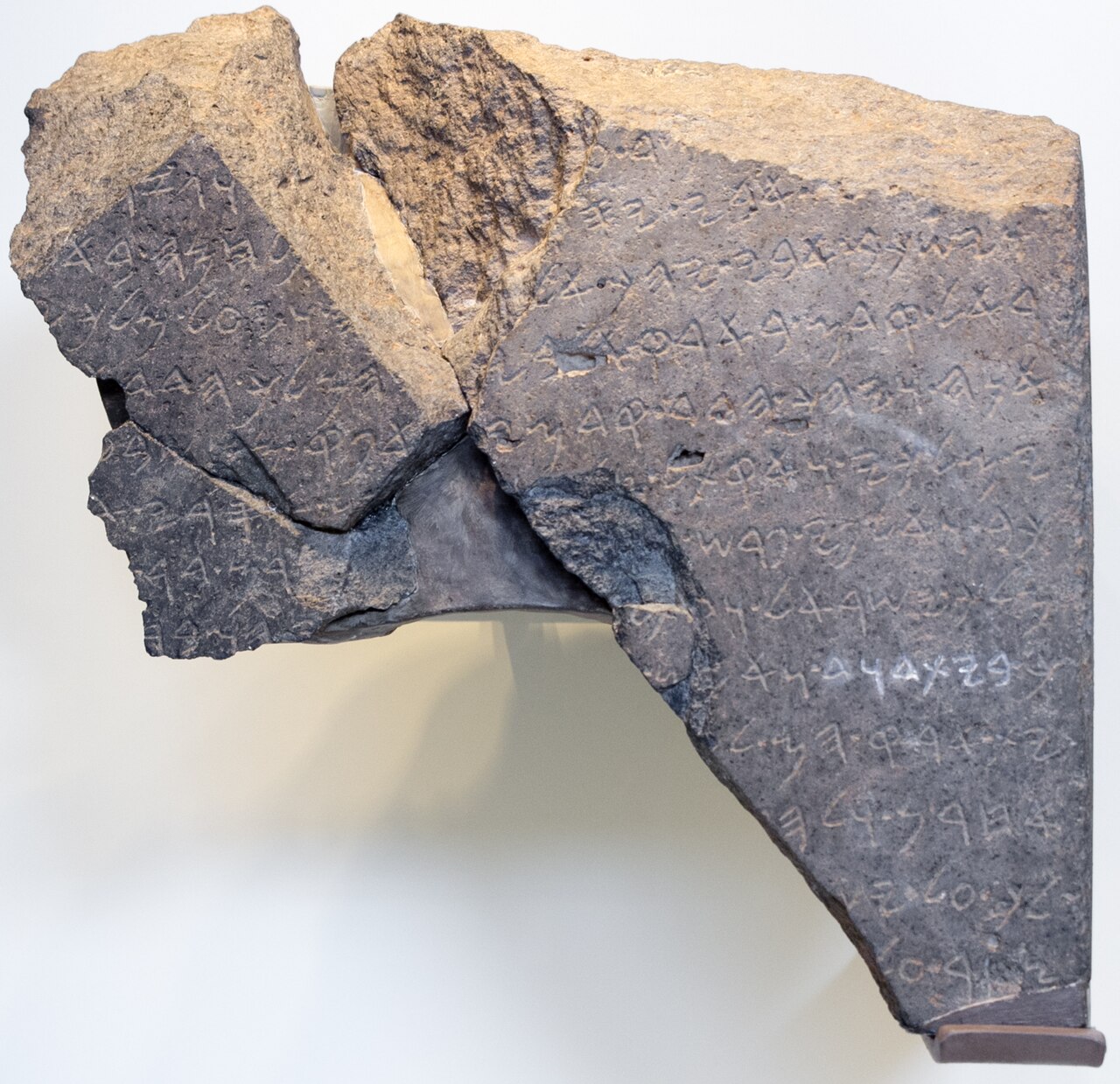
Tel Dan Stele
- Language
- Old Aramaic
- Composed
- c. 840 BC
- Oldest surviving copy
- The stele fragments
- Status
- Not scripture
Names the "House of David": the dynasty was a known political entity in the 9th century BC.
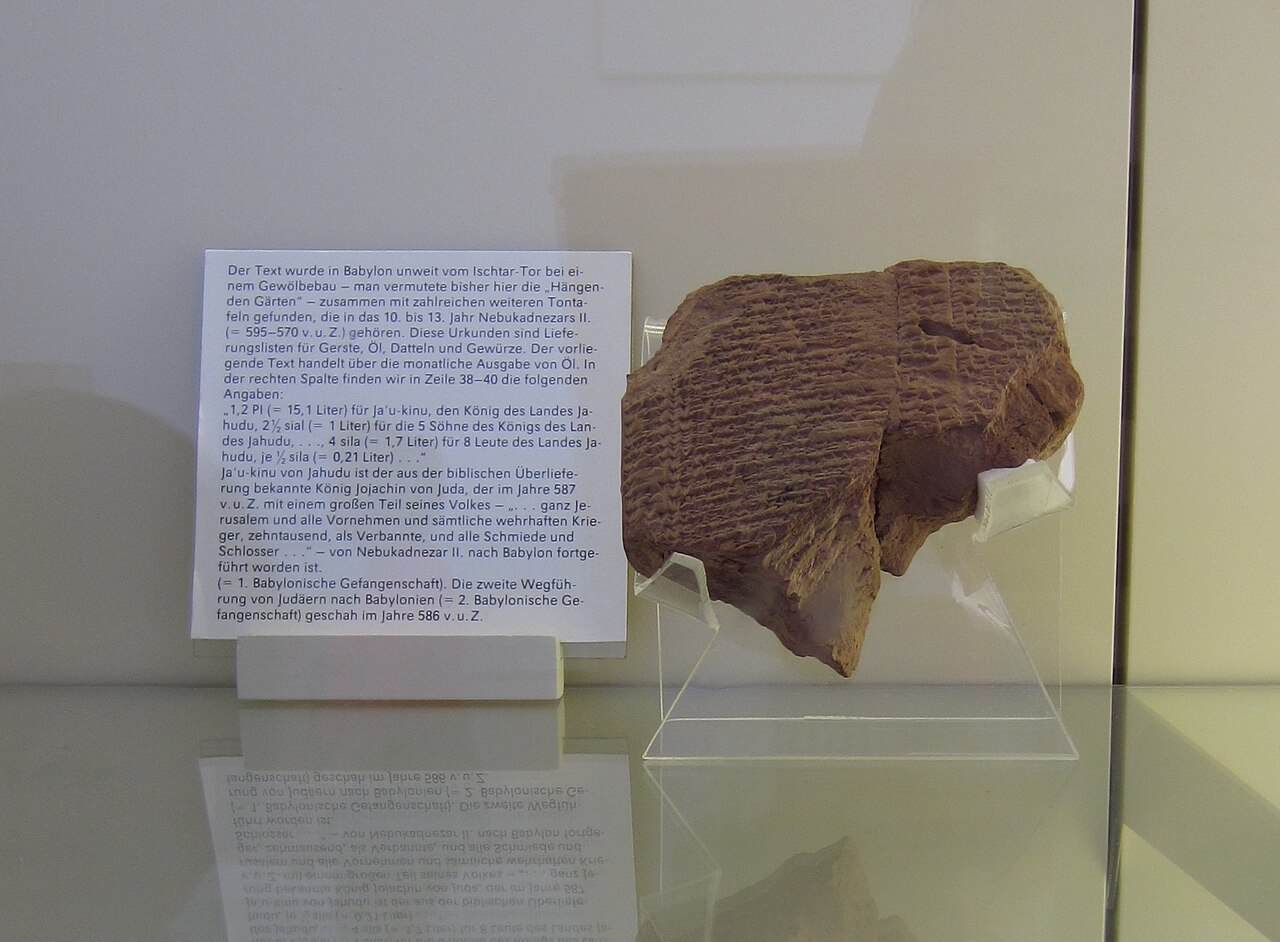
Babylonian ration tablets
- Language
- Akkadian
- Composed
- c. 592 BC
- Oldest surviving copy
- Tablets from Babylon (Berlin)
- Status
- Not scripture
Record rations for "Jehoiachin, king of Judah" in exile: the Davidic king's captivity documented outside the Bible.
The Tel Dan stele (1993–94) and the Babylonian ration tablets naming Jehoiachin (published 1939) bracket the history Psalm 89 assumes: a dynasty known as the "House of David" in the 9th century, and its king a captive in Babylon in the 6th. Neither mentions the psalm.
Scholarly reconstruction
The fall of Jerusalem (597–586 BC)
The lament (vv. 38–51) describes the end of the Davidic monarchy: Jehoiachin taken to Babylon in his youth (2 Kings 24:8–15) or Zedekiah blinded and exiled (2 Kings 25:7). "Thou hast shortened the days of his youth" fits Jehoiachin, who became king at eighteen.
Assessment: The most common proposal; the psalm names no king.
Scholarly reconstruction
An earlier crisis
Some propose the Syro-Ephraimite crisis (c. 735 BC), Sennacherib's invasion (701 BC) or another defeat of a Davidic king.
Assessment: Possible; fits "walls broken" but not necessarily the loss of the throne.
Alternative explanation
A ritual humiliation
A. R. Johnson and others proposed a royal ritual in which the king was symbolically humbled and restored.
Assessment: No such ritual is described in the Bible; few scholars hold this now.
Scholarly reconstruction
A composite psalm
A hymn to God the Creator (vv. 1–18), a royal oracle (19–37) and a lament (38–51) may come from different times, joined after a disaster.
Evidence offered: Shifts in form and mood.
Assessment: Widely considered; the joined form is what the Psalter preserves.
Psalm 89 in its present form confronts the promise of 2 Samuel 7 with the loss of the Davidic throne, most likely after 597–586 BC. Its first sections may be older. Its placement at the end of Book III, before Psalm 90 ("Lord, thou hast been our dwelling place") and the "The LORD reigneth" psalms, is widely read as an editorial answer to the crisis.
The library's witnesses agree in substance (D check). A Qumran manuscript, 4Q236 ("4QPs89"), is reported to preserve parts of 89:20–31 in a distinctive, shorter form; it has not been checked by the site (C check).