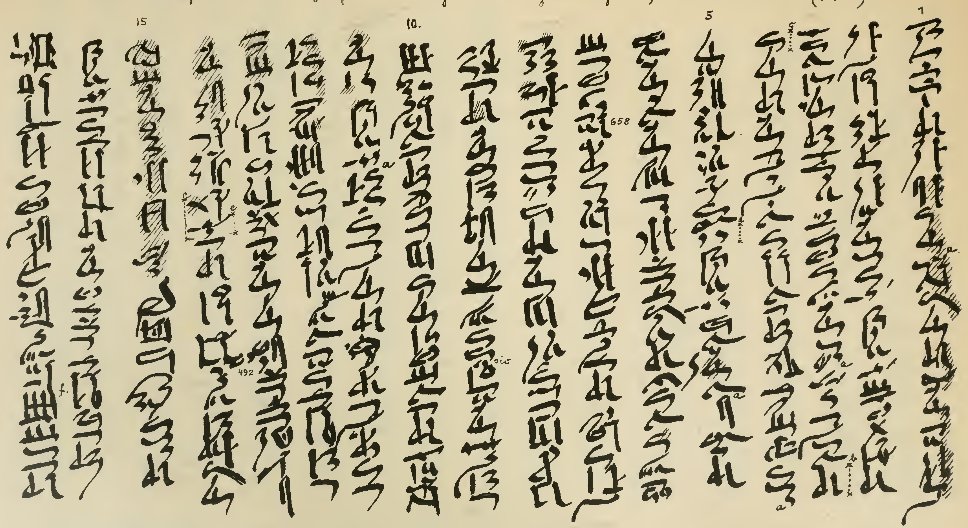
Sinuhe, an Egyptian exile in Canaan, is challenged by a "mighty man of Retenu"; he dodges his weapons, shoots him in the neck with an arrow, and kills him with his own axe.
Similar
A boastful champion
The underdog wins with a missile and the enemy's own weapon
Set in Canaan
Different
Nearly a thousand years earlier
A personal quarrel, not a battle between armies
Greek · Troy
The Iliad: Paris and Menelaus, Hector and Ajax
Resemblance only
Composed
c. 8th century BC
Earliest surviving copy
Papyri from the 3rd century BC; medieval manuscripts
Armies halt while champions fight duels, with terms agreed for the outcome.
Similar
Duels between champions before armies
Elaborate armor described
Different
Heroes aided by gods in a mythic war
Israelite · Gibeon
Twelve against twelve
Possible historical contact
Composed
2 Samuel 2:12–16
Earliest surviving copy
4QSam-a; Hebrew codices
Abner and Joab each send twelve young men to fight at the pool of Gibeon; all fall together.
Similar
Representative combat
Different
Groups, not one champion
Full investigations
Goliath of Gath →What does archaeology show about Gath and Goliath, and how tall was he?
Back to the story
David and Goliath →In the valley of Elah a Philistine champion from Gath, Goliath, challenges Israel to single combat for forty days. David, bringing food to his brothers, volunteers. He refuses Saul's armor, takes five stones and a sling, and strikes Goliath in the forehead. The story survives in two ancient editions, and Goliath's height differs between witnesses.
Investigation: David and Goliath in Two Ancient Editions →The oldest Greek translation of 1 Samuel 17–18 is about 45% shorter than the Hebrew. It lacks David's arrival with food for his brothers, Saul's question "whose son is this?", Jonathan's first covenant and the Merab marriage. Many scholars think two Hebrew versions of David's introduction were combined. Separately, Goliath is six cubits tall in the Hebrew but four in the Greek, Qumran and Josephus.
Two Kings and the Pool of Gibeon →David asks the LORD and goes up to Hebron, where Judah anoints him king. Abner, Saul's general, makes Saul's son Ish-bosheth king over the rest of Israel. At the pool of Gibeon twelve men from each side fight and all fall; battle follows. Abner kills Joab's swift brother Asahel. "Shall the sword devour for ever?"