Era 6 · The First KingsSong of Songs
How Song of Songs Came to Us
From love songs to Scripture: Qumran, Greek, Latin, the rabbis, the Masoretes and the mystics
No one knows who first sang these songs. What survives is the book, four fragmentary copies from Qumran, translations from antiquity, and complete Hebrew manuscripts from the 10th and 11th centuries.
Then and Later
The Song through time
- c. 1300–1100 BCEgyptian love songs Papyri and pottery from Thebes: a regional tradition of love poetry.The Egyptian Love Songs →
- 10th c. BCSolomon "His songs were a thousand and five" (1 Kings 4:32); the name in the heading.
- Debated (10th–3rd c. BC)Composition Love poems shaped into a sequence; present Hebrew most likely Persian or early Hellenistic.
- Late 1st c. BC – 1st c. ADQumran 4Q106–108 and 6Q6; possibly abbreviated texts.The Song at Qumran →
- 1st c. BC – 1st c. AD (debated)Greek Asma asmaton, a literal translation.
- c. AD 100Rabbi Akiva "The Holy of Holies" (Mishnah Yadayim 3:5).
- c. 240Origen The Christian allegorical tradition begins in earnest.
- c. 390sJerome's Latin Canticum Canticorum from the Hebrew.
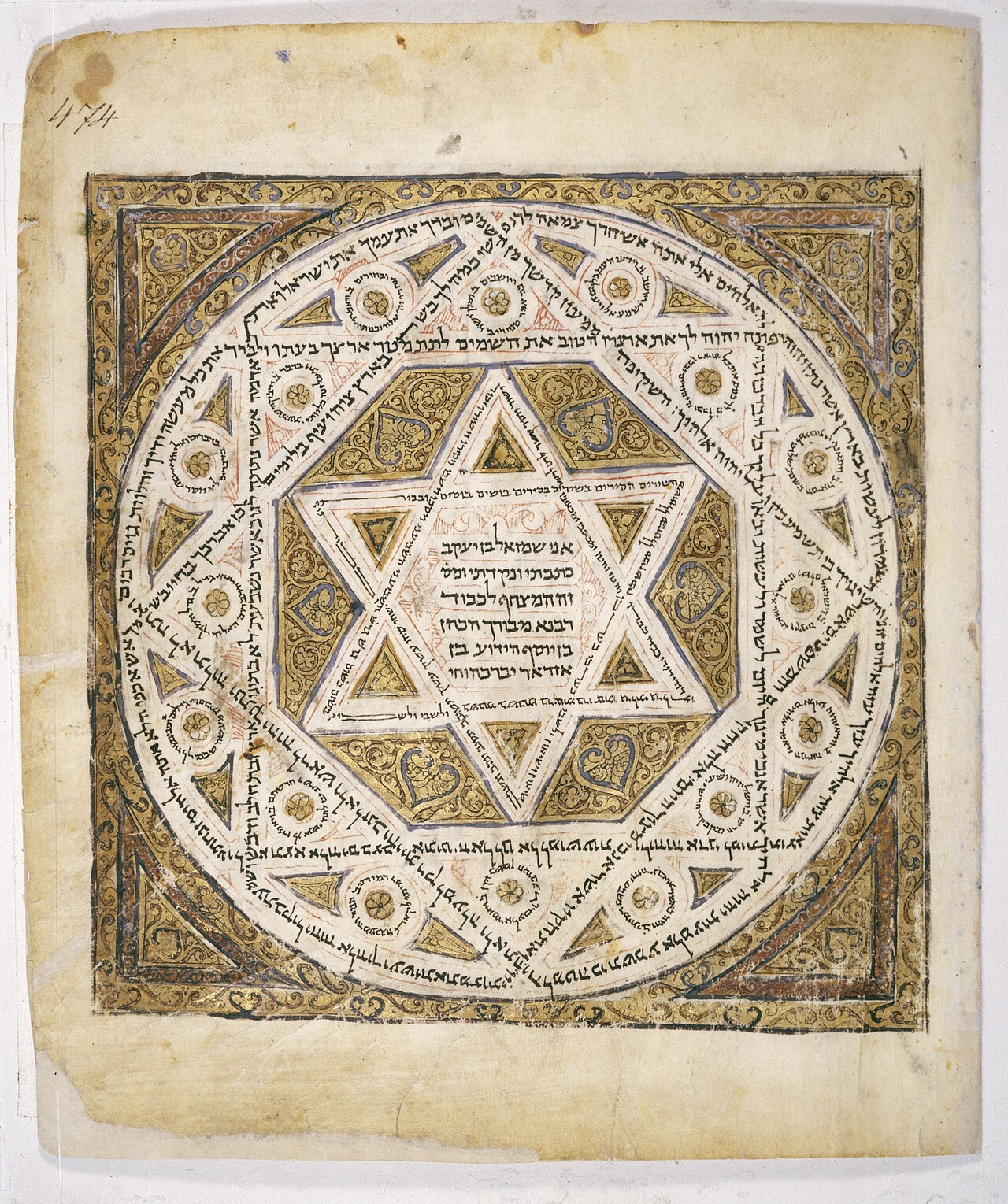
- c. 930 and 1008Aleppo and Leningrad Codices Masoretic manuscripts; the Aleppo Codex is lost from Song 3:11 onward, so the Leningrad Codex is the oldest complete Hebrew witness.
- 1135–1153Bernard of Clairvaux 86 sermons on the Song.
- 1611King James Version "The Song of Solomon" in English.
- 1950s–2000Qumran published DJD III (1962) and DJD XVI (2000).
A. Ancient background
Love songs with alternating voices, "sister/brother" endearments, gardens and praise of the body survive from New Kingdom Egypt (Papyrus Chester Beatty I, Papyrus Harris 500, the Cairo jar); Sumerian and Akkadian love poetry (Inanna and Dumuzi; Nabu and Tashmetu) offers more distant parallels. These are comparable texts, not sources, and they do not date the Song.
B. Composition and collection
The heading links the Song with Solomon; the Hebrew has late features (she-, Aramaisms, Persian pardes, possibly Greek appiryon) alongside old place names (Tirzah). Models: one poet, an edited anthology, wedding songs, or a unified poem without plot. History can show the language's age and the poem's design; it cannot name the author or recover a performance.
C. Hebrew manuscripts
Four Hebrew manuscripts from Qumran: 4Q106 (4QCant-a), 4Q107 (4QCant-b) and 4Q108 (4QCant-c) from Cave 4, and 6Q6 (6QCant) from Cave 6, all reported to date from the late 1st century BC to the 1st century AD. E. Tov (1995) argued that 4Q106 and 4Q107 are abbreviated texts: 4Q106 is reported to pass from 4:7 directly to 6:11, without 4:8–6:10, and 4Q107 to lack other verses. 6Q6 preserves parts of 1:1–7 (DJD III). Exact contents and readings are a C check (S-C04). The medieval Masoretic codices fix vowels and accents; the Aleppo Codex (c. 930) breaks off at Song 3:11, so the Leningrad Codex (1008) is the oldest complete Hebrew witness. The library's Hebrew is the Westminster Leningrad Codex.
D. Greek and other versions
The Greek is literal; most differences are vowel readings, names translated as words, and interpretation (see the Greek investigation). Later Greek translators (Aquila, Symmachus, Theodotion) survive in fragments of Origen's Hexapla. Jerome translated from Hebrew (Vulgate); the Syriac Peshitta is close to the Hebrew; the Aramaic Targum is a long allegorical paraphrase, an interpretation rather than a text-witness. Giguet's French in the site's library is a translation of a printed Greek text (D check only).
E. Recognition and placement
Mishnah Yadayim 3:5 defends the Song's holiness; Rabbi Akiva calls it the Holy of Holies. In Jewish Bibles it is the first of the Five Scrolls, read at Passover. In Christian Bibles it follows Ecclesiastes among the poetic books. Canon recognition was a process; a single meeting did not "create" it.
F. Interpretive history
Jewish allegory (God and Israel: Targum, Midrash, Rashi; philosophical and Kabbalistic readings); Christian allegory (Christ and the church: Origen; Christ and the soul: Gregory of Nyssa, Bernard, John of the Cross; Marian readings); literal readings (Theodore of Mopsuestia; Ibn Ezra's plain sense; modern scholarship); attention to women's voices and gender in recent study. The date of a commentary is not the date of the poem.
G. Why editions differ
Rare words and plant names; Greek and Latin vowel readings and name translations; uncertain speakers; possible Qumran abridgments; the chapter break between 6:13 and 7:1; editorial speaker labels and headings in modern Bibles. A footnote that says "Greek reads…" does not always mean a different Hebrew text.
H. What remains unknown
The author or authors; the date of composition; the place and setting of performance; whether the lovers are historical; the sequence of scenes; exact identifications of many plants and gems; the original speaker divisions; the meaning of several rare words (appiryon, Ammi-nadib, Bether, Baal-hamon); and whether shalhevetyah names God.
Open checks (C)
S-C02 Hebrew against a named critical edition (including the shalhevetyah word division); S-C03 Greek against a critical Greek edition and the codices' speaker notes; S-C04 the Qumran manuscripts against DJD XVI and DJD III; S-C05 Egyptian songs against published editions; S-C10 dated reception claims checked in the Targum, Midrash Rabbah and patristic texts. Until they close, the volume is built, not research-certified.
What the evidence shows
- Four Hebrew manuscripts of the Song were found at Qumran.Source: E. Ulrich et al., Qumran Cave 4.XI: Psalms to Chronicles (DJD XVI, 2000); M. Baillet, J. T. Milik and R. de Vaux, Les 'Petites Grottes' de Qumrân (DJD III, 1962), 112–114, pl. XXIII
- The Aleppo Codex is lost from Song 3:11 onward. C check against the codex's published facsimile.
- The Song was written by Solomon.
- The Song entered the canon at a single council.
Continue the journey
Journey of a PassageSong of Songs 1:1: "The song of songs, which is Solomon's"The heading: shir ha-shirim asher li-Shlomo.More from this lesson
Echoes Across Civilizations
Optional: how other ancient peoples told similar stories. Open one to compare, then come back to the lesson.
Songs of love in the ancient worldEgyptian · Sumerian · Assyrian
Did other ancient peoples sing love poems like the Song of Songs?
- Egyptian: New Kingdom love songs (Papyrus Chester Beatty I verso, Papyrus Harris 500, the Cairo jar, Turin papyrus) Possible historical contact
- Sumerian: Songs of Inanna and Dumuzi Shared literary world
- Assyrian: Love lyric of Nabu and Tashmetu Resemblance only
Why this matters to the rest of Scripture
- Solomon's songs.
- A royal wedding song in the Psalter.
- "Live joyfully with the wife whom thou lovest."