Era 6 · The First KingsSong of Songs
Investigation: The Greek Song and Its Translators
Asma Asmaton, a literal translation, readings that differ, and speaker notes
Greek-speaking Jews translated the Song into Greek, probably in the 1st century BC or 1st century AD (the date is debated). The translator stayed close to the Hebrew, so close that the Greek can often be turned back into Hebrew word by word. That makes its differences informative.
| Verse | Masoretic Text | Library's Greek (Giguet) | Kind |
|---|---|---|---|
| 1:2, 4 | your love (dodekha) | your breasts | Same letters, different vowels |
| 1:5 | black and/but beautiful | black and beautiful | Interpretation of ve- |
| 2:1 | rose of Sharon | flower of the plain | Place name translated |
| 2:7; 3:5 | by the gazelles and hinds of the field | by the powers and forces of the field | Tseva'ot read as "hosts" |
| 2:17 | mountains of Bether | mountains of ravines | Name translated |
| 3:10 | inlaid with love | paved with stones, love | Different construal; possible variant |
| 4:1 | behind your veil | apart from your hidden beauty | Interpretation of a rare word |
| 4:8 | from the top of Amana | (from) the beginning of faith (amanah) | Name read as a word |
| 6:4 | as Tirzah | as good pleasure | Name translated |
| 6:12 | chariots of ammi-nadiv | chariots of Aminadab | Two words read as a name |
| 7:9 | lips of sleepers | my lips and teeth | Possible variant (yeshenim / shinnayim) |
| 7:10 | his desire (teshuqah) | his turning (epistrophe) | Translation choice, as in Genesis 3:16 |
| 8:5 | coming up from the wilderness | coming up made white | Possible variant or interpretation |
| 8:6 | shalhevetyah | its flames (no divine name) | Interpretation |
| 8:7 | all the wealth of his house | all his life | Interpretation (hon read broadly) |
What kind of evidence is this?
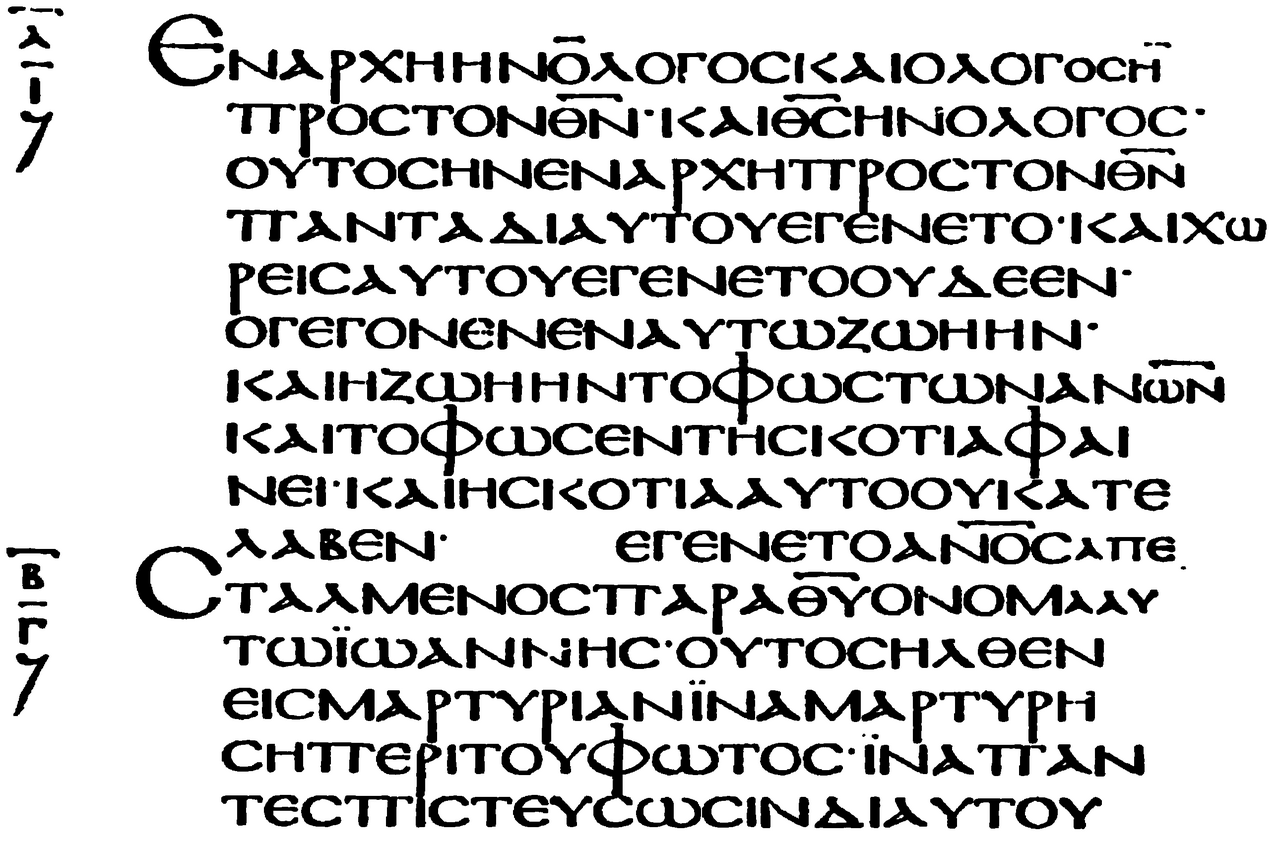
The library's Greek is Giguet's French (1872) of a printed Greek text. It reveals where the Greek tradition differs, but it is not a Greek manuscript. Every Greek reading above must be checked in a critical Greek edition (Rahlfs–Hanhart or the Göttingen edition when available) and, where it matters, in the codices (S-C03). J. C. Treat's work on the Old Greek Song and its earliest manuscripts, and his NETS introduction, describe the translation as unusually literal (cited, not reproduced).
Speaker notes in Greek codices
Some Greek manuscripts add marginal rubrics identifying speakers ("the bride," "the bridegroom," "the maidens"). These are among the earliest surviving interpretations of the Song's voices, already reading it as a nuptial dialogue. They are reception, not text.
What the evidence shows
- The Greek Song is a close, literal translation.Source: J. C. Treat, "Song of Songs: To the Reader," NETS (2009) ↗; R. J. V. Hiebert, "Megillot," The Oxford Handbook of the Septuagint (2021) ↗
- The library's Greek reads "breasts" in 1:2 and "powers" in 2:7.Source: The site's library: Westminster Leningrad Codex, KJV, Clementine Vulgate, Giguet's French of the Greek
- Every Greek difference reflects a different Hebrew text. Most are reading or translation choices.
Continue the journey
Journey of a PassageSong of Songs 1:2–4: "Thy love is better than wine": love, or breasts?The poem's first line in the Masoretic Text: "your love (dodekha) is better than wine," spoken by the woman to the man.More from this lesson
Why this matters to the rest of Scripture
- Genesis 3:16 (Greek)Apostrophe, "turning," the Greek translators' word for teshuqah.