Era 6 · The First KingsSong of Songs
Song of Songs 6: Beautiful as Tirzah, Terrible as an Army
The beloved found in his garden, sixty queens, a riddle of chariots, and the call to the Shulammite
"Whither is thy beloved gone, O thou fairest among women?… that we may seek him with thee" (6:1). She is no longer lost: "My beloved is gone down into his garden, to the beds of spices, to feed in the gardens, and to gather lilies. I am my beloved's, and my beloved is mine: he feedeth among the lilies" (vv. 2–3). The words of 2:16 return, now reversed.
"Thou art beautiful, O my love, as Tirzah, comely as Jerusalem, terrible as an army with banners. Turn away thine eyes from me, for they have overcome me" (vv. 4–5). He praises her again with the images of chapter 4 (vv. 5–7). "There are threescore queens, and fourscore concubines, and virgins without number. My dove, my undefiled is but one; she is the only one of her mother… The daughters saw her, and blessed her; yea, the queens and the concubines, and they praised her" (vv. 8–9).
"Who is she that looketh forth as the morning, fair as the moon, clear as the sun, and terrible as an army with banners?" (v. 10). "I went down into the garden of nuts to see the fruits of the valley, and to see whether the vine flourished, and the pomegranates budded. Or ever I was aware, my soul made me like the chariots of Amminadib" (vv. 11–12).
"Return, return, O Shulamite; return, return, that we may look upon thee. What will ye see in the Shulamite? As it were the company of two armies" (v. 13). In Hebrew Bibles this line opens chapter 7. The "company of two armies" may be "the dance of Mahanaim" (two camps): she is called to dance while others watch.
Read 6:1–13 without labels: the daughters' question, the garden answer, the praise, the queens, the dawn-like woman, the nut orchard, the chariots, the call to return.
The Hebrew has no speaker names. Readers work out who is speaking from the grammar, which marks gender in "you" and "my" forms and in many verbs.
| Lines | Proposed voice | Clue in the Hebrew |
|---|---|---|
| 6:1 | The daughters of Jerusalem | Feminine address "fairest among women"; "we will seek him with you." |
| 6:2–3 | The woman | "My beloved" (masculine); "I am my beloved's." |
| 6:4–9 | The man | Feminine forms: "you are beautiful, my darling." |
| 6:10 | The queens and concubines (quoted), or the man | "Who is this (zot)": introduced as their praise in v. 9. |
| 6:11–12 | Unclear: the man or the woman | First-person verbs without gender marking; the whole passage is disputed. |
| 6:13a | A chorus ("we") | "That we may look upon you" (plural). |
| 6:13b | The woman, or the man | "What will you see in the Shulammite?" may be her reply or his rebuke of the onlookers. |
These labels are the site's editorial suggestion, following the grammar where it is clear. Where the grammar is not clear, the label says so. No ancient Hebrew manuscript carries them.
| Verses | What it says | What to notice |
|---|---|---|
| 6:1 | The daughters: where has your beloved gone? We will seek him with you | The daughters join her search. |
| 6:2–3 | He has gone down to his garden; I am my beloved's and he is mine | Reverses the order of 2:16. |
| 6:4 | Beautiful as Tirzah, lovely as Jerusalem, awesome as bannered hosts | Tirzah: early capital of the northern kingdom; its name means "pleasing." |
| 6:5–7 | Turn your eyes away, they overwhelm me; hair, teeth, temples as before | Repeats 4:1–3. |
| 6:8–9 | Sixty queens, eighty concubines, maidens without number; my dove is one | A royal harem as foil; the queens themselves praise her. |
| 6:10 | Who is this looking forth like the dawn, fair as the moon, bright as the sun, awesome as bannered hosts? | Lebanah and chammah: poetic words for moon and sun. |
| 6:11 | Down to the nut orchard: the valley's green, the vine, the pomegranates | Spring again. |
| 6:12 | "Before I knew, my desire set me (in) the chariots of Ammi-nadib" | One of the most obscure verses in the Hebrew Bible (see the passage page). |
| 6:13 (Heb. 7:1) | Return, return, Shulammite… what will you see? The dance of the two camps | Shulammite: from Shunem? a feminine of Solomon? "the perfect one"? |
Tirzah and Jerusalem
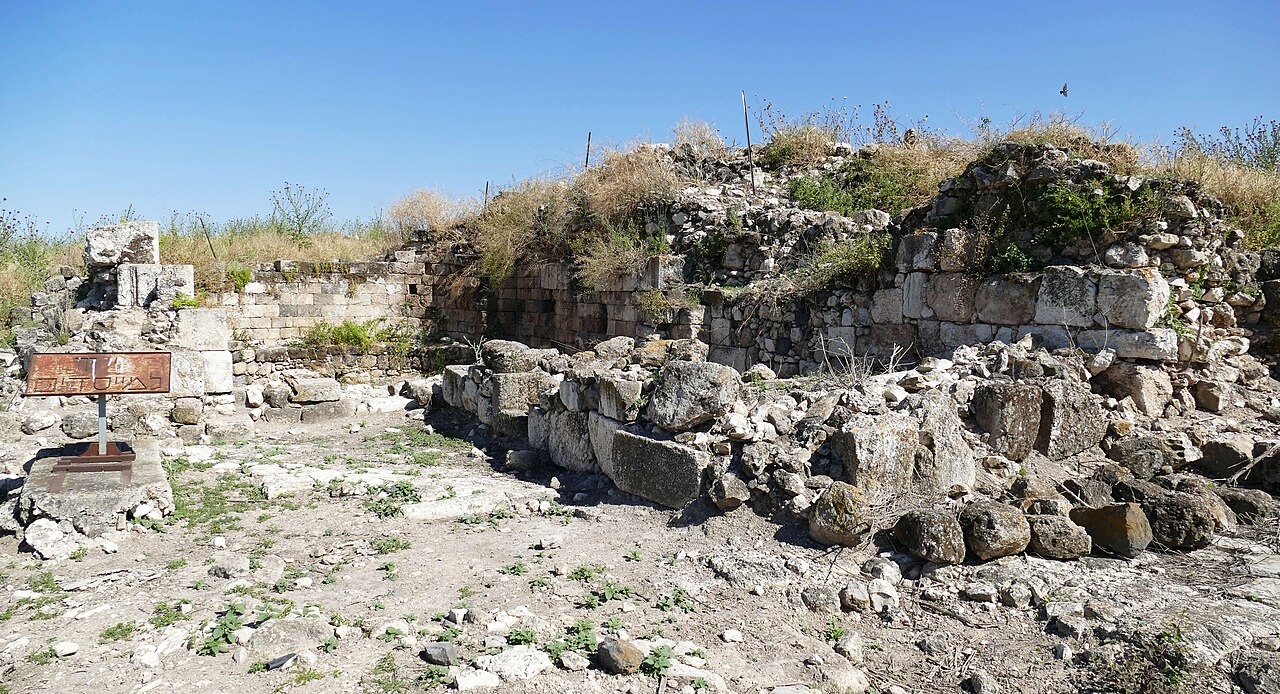
Tirzah, identified with Tell el-Far'ah (North), northeast of Shechem, was the capital of the northern kingdom of Israel from Jeroboam to Omri, who moved it to Samaria (1 Kings 14:17; 15:21, 33; 16:6–24). Its excavations (Roland de Vaux, 1946–1960) show a substantial Iron Age town. Pairing Tirzah with Jerusalem pairs the two royal cities; some argue this points to a date before Omri (early 9th century), while others think the name was chosen for its meaning ("pleasing") and does not date the poem. The library's Greek and the Vulgate translate the name as a word: "good pleasure" (Giguet "comme la tendresse"), "sweet" (suavis).
"Terrible as an army with banners"
Ayummah kannidgalot means "awe-inspiring as (troops) under banners," or, as some propose, "as the stars" (the heavenly host), which would fit v. 10's moon and sun. Either way, her beauty overpowers; the comparison is of effect. It is not a statement that she is violent.
As love poetry, chapter 6 resolves the search of chapter 5 (she knows where he is) and lifts the woman to cosmic splendor: dawn, moon, sun. Against a king's numbers of queens and concubines, the poem insists on one. Whether the speaker is Solomon (with his harem) or another lover contrasting himself with Solomon is open.
Royal harems are known across the ancient Near East (Egypt, Assyria, Persia; 1 Kings 11:3 gives Solomon 700 wives and 300 concubines). The Song's 60 and 80 are poetic numbers. Dances of women at festivals are attested (Judges 21:21; Exodus 15:20). The "dance of Mahanaim" may refer to a place in Gilead (Genesis 32:2) or to a dance between two lines of dancers.
The Targum reads 6:13 (Hebrew 7:1) as a call to Israel, the Shulammite ("the perfect one," from shalem), to return to Jerusalem; Song of Songs Rabbah plays on the name as "the one with whom God is at peace." The "chariots of Amminadib" were connected with Nahshon son of Amminadab, leader of Judah in the wilderness (Numbers 1:7).
Christian interpreters read the woman "looking forth as the morning" (6:10) as the church rising, and later as the Virgin Mary (the verse entered Marian liturgy). The Vulgate's "quadrigas Aminadab" (chariots of Aminadab) became the title of medieval allegories, and the Shulammite's "return" the call to the converted soul or to Israel's future conversion.
6:12 in the witnesses
Lo yada'ti nafshi samatni markevot ammi-nadiv: "I did not know; my soul (desire) set me (in) the chariots of my noble people" or "of Ammi-nadib." The Masoretic Text writes two words, ammi nadiv ("my people, noble"); the library's Greek reads one name, Aminadab (Giguet: "emportée par les chars d'Aminadab"), and so does the Vulgate (quadrigas Aminadab). The KJV keeps "Amminadib." Modern versions guess: "my desire set me in a chariot beside my prince" (NRSV note), "among the chariots of my people as their prince." The NET Bible lists the options. This verse should be left visibly uncertain.
Who is the Shulammite?
Ha-shulammit (6:13) occurs only here. Proposals: (1) "woman from Shunem," a village in the Jezreel Valley (by a known sound-change Shunammite → Shulammite); Abishag the Shunammite, David's nurse whom Adonijah sought to marry (1 Kings 1:3; 2:17–22), has been linked to her; (2) a feminine counterpart of "Solomon" (Shelomoh/Shulammit), "the Solomoness"; (3) "the perfect / peaceful one," from shalem. The site's Atlas marks Shunem as an association that is disputed, not as the woman's home.
What the evidence shows
- Tirzah is identified with Tell el-Far'ah (North). The standard identification.
- The pairing of Tirzah and Jerusalem dates the poem before Omri.
- Hebrew Bibles number English 6:13 as 7:1.Source: The site's library: Westminster Leningrad Codex, KJV, Clementine Vulgate, Giguet's French of the Greek
- The meaning of 6:12 is uncertain.Source: NET Bible, notes on Song 6:11–12 ↗
- The Shulammite came from Shunem. One of three main proposals.
Continue the journey
Journey of a PassageSong of Songs 6:4–10: Beautiful as Tirzah, terrible as an army with banners"Thou art beautiful, O my love, as Tirzah, comely as Jerusalem, terrible as an army with banners." Tirzah was the early capital of the northern kingdom; the library's Greek ("good pleasure") and the Vulgate ("sweet") translate the name by its meaning.More from this lesson
Why this matters to the rest of Scripture
- 1 Kings 14:17; 16:23–24Tirzah, capital until Omri built Samaria.
- Solomon's 700 wives and 300 concubines.
- 1 Kings 1:3; 2:17–22Abishag the Shunammite.
- Mahanaim, "two camps," named by Jacob.
- Nahshon son of Amminadab, prince of Judah.