Era 6 · The First KingsSong of Songs
Investigation: The Shulammite, Shunem and Solomon
A name that appears once, a village in Jezreel, and a king seen from outside
"Return, return, O Shulamite; return, return, that we may look upon thee" (6:13). The name has the article: "the Shulammite," like a title or a description of origin. It is the only name the woman ever receives.
| Proposal | Basis | Assessment |
|---|---|---|
| A woman from Shunem | Shunem (modern Sulam, in the Jezreel Valley) was later called Sulem; l and n alternate in some dialects. Abishag "the Shunammite" was the beautiful young woman who cared for David (1 Kings 1:3) and whom Adonijah's request cost his life (1 Kings 2:13–25). | Plausible; the modern village name Sulam supports the sound change. The Abishag link is an attractive but unprovable reading. |
| "Solomoness" | Shulammit as a feminine of Shelomoh (Solomon): the woman as Solomon's counterpart. | Plausible as wordplay; the vowels differ from a straightforward feminine. |
| "The perfect / peaceful one" | From the root sh-l-m (shalom); compare 8:10, "one that found peace (shalom)." | Plausible; may combine with the other two. |
Atlas policy
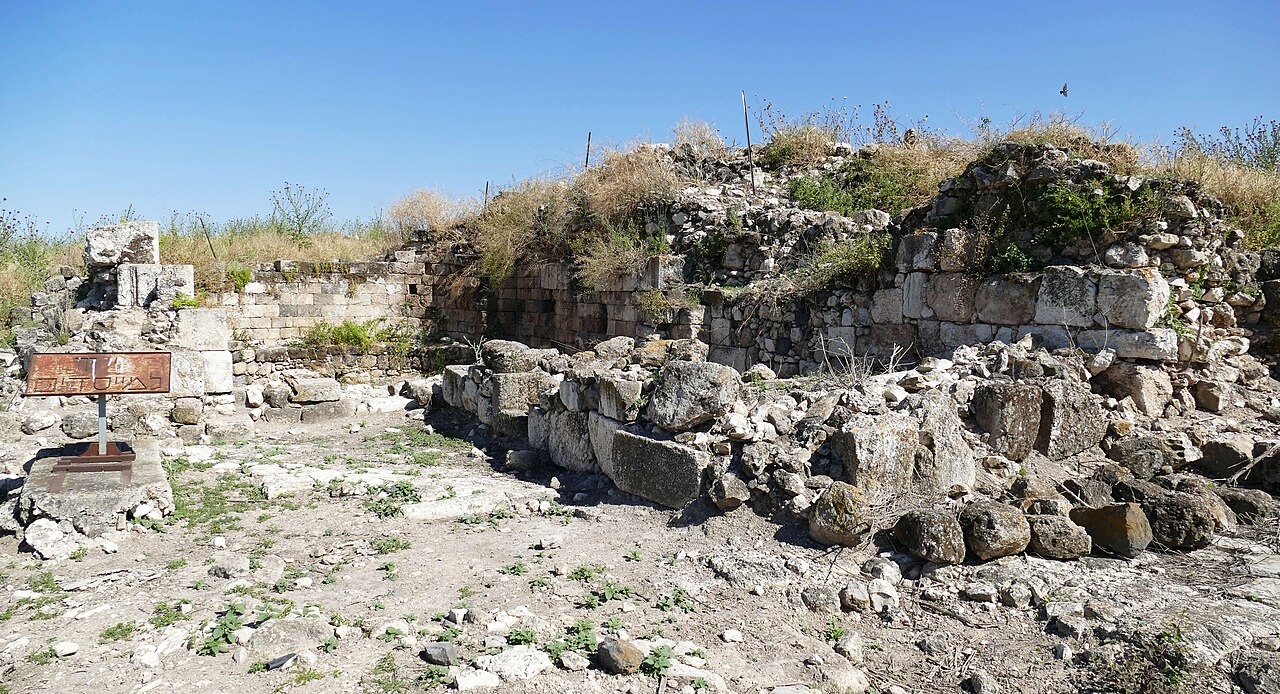
Shunem is a secure site (modern Sulam), already on the site's Atlas for Elisha and the Shunammite woman (2 Kings 4). The Song's link to it is marked "association disputed." Baal-hamon, Bether and Amana are not pinned as points (S-C09).
Abishag and the king's women
1 Kings 1–2 tells of Abishag the Shunammite, "a fair damsel" brought to warm the aged David, whom his son Adonijah later asked to marry, a request Solomon treated as a claim to the throne and answered with execution (1 Kings 2:13–25). Some 19th-century interpreters identified her with the Shulammite and built a romance around Solomon and Abishag, or around Abishag resisting Solomon for a shepherd. The Song names no Abishag, and "Shulammite" is not the same word as "Shunammite"; the link is a reader's hypothesis.
Solomon's women in Kings and in the Song
1 Kings 3:1 and 11:1–8 record Solomon's marriage alliances, including Pharaoh's daughter, and his 700 wives and 300 concubines who "turned away his heart" from God. The Song's "threescore queens, and fourscore concubines" (6:8) and Solomon's leased vineyard (8:11–12) show a king of many women and much wealth, against which the woman's single, self-given love stands out (6:9; 8:12). Whether the Song critiques Solomon, celebrates him, or uses him as a symbol is debated; the contrast is in the text.
Dance and the two camps
"What will ye see in the Shulamite? As it were the company of two armies" (6:13) can also be read "like the dance of the two camps (Mahanaim)." Women's dances at festivals and victories appear in Exodus 15:20, Judges 11:34; 21:21 and 1 Samuel 18:6. The verse may describe her dancing between two lines of onlookers, or allude to the town of Mahanaim in Gilead (Genesis 32:2). The praise that follows (7:1–5) begins with her feet, as if watching her move.
What the evidence shows
- The name "Shulammite" occurs only in Song 6:13 (Hebrew 7:1).
- The Shulammite came from Shunem.
- The Shulammite was Abishag. An attractive identification without evidence.
Continue the journey
Journey of a PassageSong of Songs 6:13 (Hebrew 7:1): "Return, O Shulamite": a chapter boundary and a name"Return, return, O Shulamite… What will ye see in the Shulamite?More from this lesson
Why this matters to the rest of Scripture
- 1 Kings 1:1–4; 2:13–25Abishag the Shunammite.
- Elisha and the woman of Shunem.
- "As one that found peace (shalom)."