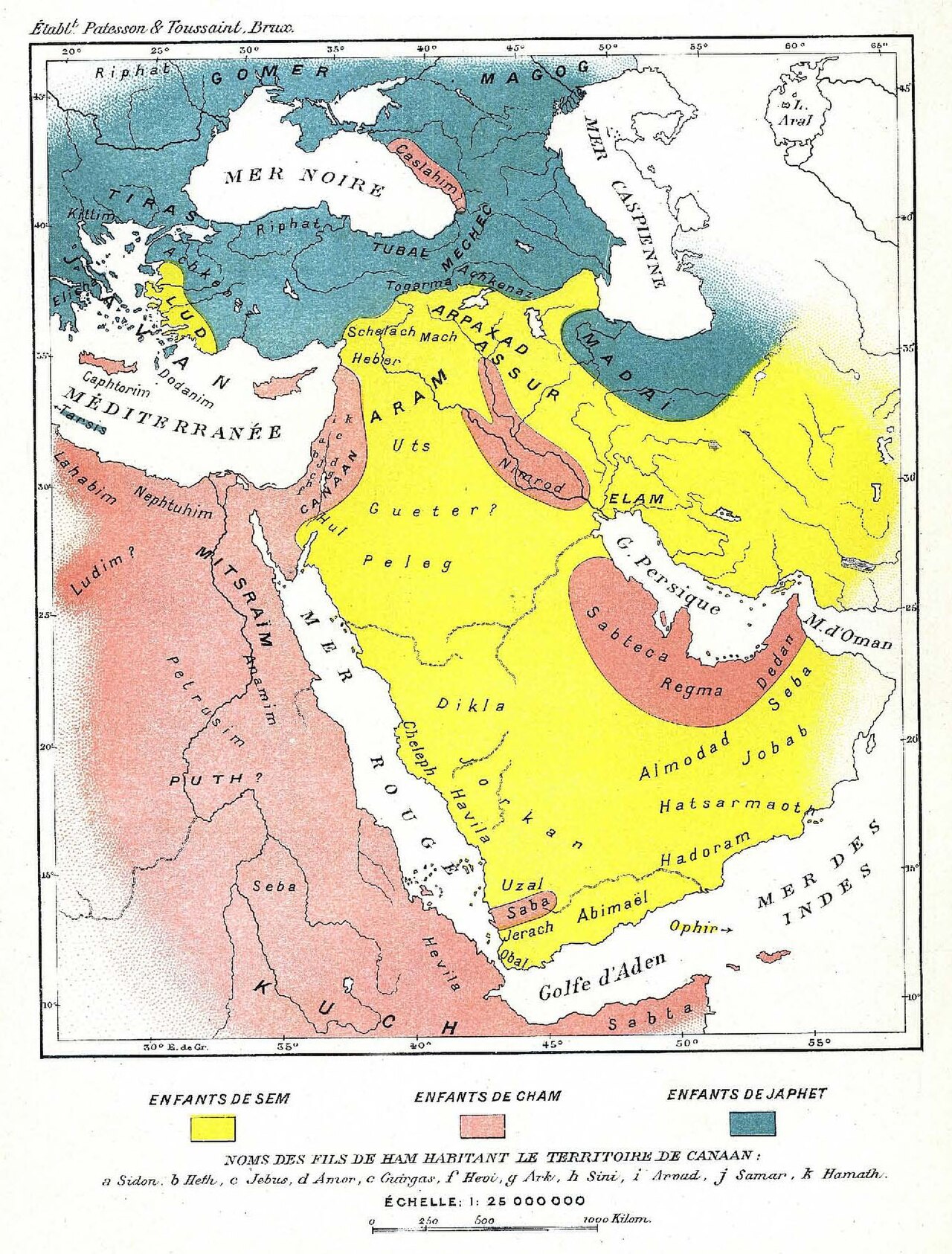
"Adam, Sheth, Enosh, Kenan, Mahalaleel, Jered, Henoch, Methuselah, Lamech, Noah, Shem, Ham, and Japheth." The chapter compresses Genesis 5, 10 and 11 into bare names: the sons of Japheth, Ham and Shem, Nimrod "mighty upon the earth," Peleg "because in his days the earth was divided."
"Abram; the same is Abraham. The sons of Abraham; Isaac, and Ishmael." Ishmael's twelve sons, Keturah's sons, Isaac's sons Esau and Israel, Esau's sons and the Horite chiefs of Seir.
"Now these are the kings that reigned in the land of Edom before any king reigned over the children of Israel; Bela the son of Beor: and the name of his city was Dinhabah." Eight kings and eleven chiefs of Edom close the chapter.
Why begin with Adam?
Writing after the exile, the Chronicler sets Israel's story inside the whole human family, beginning with the first man rather than with Abraham or the Exodus. The genealogy says that Israel's history belongs to world history.
Borrowed from Genesis
Almost every name comes from Genesis 5, 10, 11, 25 and 36, often in the same order; a few spellings differ (Diphath for Riphath in 1:6 in the Hebrew, Rodanim for Dodanim). Such differences are typical of copying lists: similar Hebrew letters (d/r) are easily confused.
Edom's kings
The list of Edomite kings (1:43–54) repeats Genesis 36:31–43. None of these kings has been found in an inscription; Edom's archaeology suggests a kingdom from the 8th century BC, though 10th-century copper production at Faynan shows earlier organized activity.
What the evidence shows
- 1 Chronicles 1 draws on Genesis 5, 10, 11, 25 and 36.
- The kings of Edom in 1:43–54 are known from inscriptions.
Continue the journey
Connected elsewhere in ScriptureCain, Abel, and the Long-Lived AncestorsGenesis 5; 10; 11: The sources.More from this lesson
Why this matters to the rest of Scripture
- Genesis 5; 10; 11The sources.
- A genealogy back to Adam.