"Now the sons of Reuben the firstborn of Israel, (for he was the firstborn; but, forasmuch as he defiled his father's bed, his birthright was given unto the sons of Joseph… For Judah prevailed above his brethren, and of him came the chief ruler.)"
In Saul's days Reuben makes war with the Hagrites. The tribes on the east of Jordan, 44,760 valiant men, fight the Hagrites, Jetur, Nephish and Nodab: "they cried to God in the battle, and he was intreated of them; because they put their trust in him."
"And they transgressed against the God of their fathers… And the God of Israel stirred up the spirit of Pul king of Assyria, and the spirit of Tilgath-pilneser king of Assyria, and he carried them away, even the Reubenites, and the Gadites, and the half tribe of Manasseh, and brought them unto Halah, and Habor, and Hara, and to the river Gozan, unto this day."
Pul and Tiglath-pileser
Chronicles names "Pul" and "Tilgath-pilneser" as if two kings; they are one, Tiglath-pileser III (Pul was his name as king of Babylon). The Hebrew grammar ("he carried them away," singular) may show the writer knew they were one person. The deportation of 733–732 BC from Gilead fits Tiglath-pileser's records.
Reuben and Moab
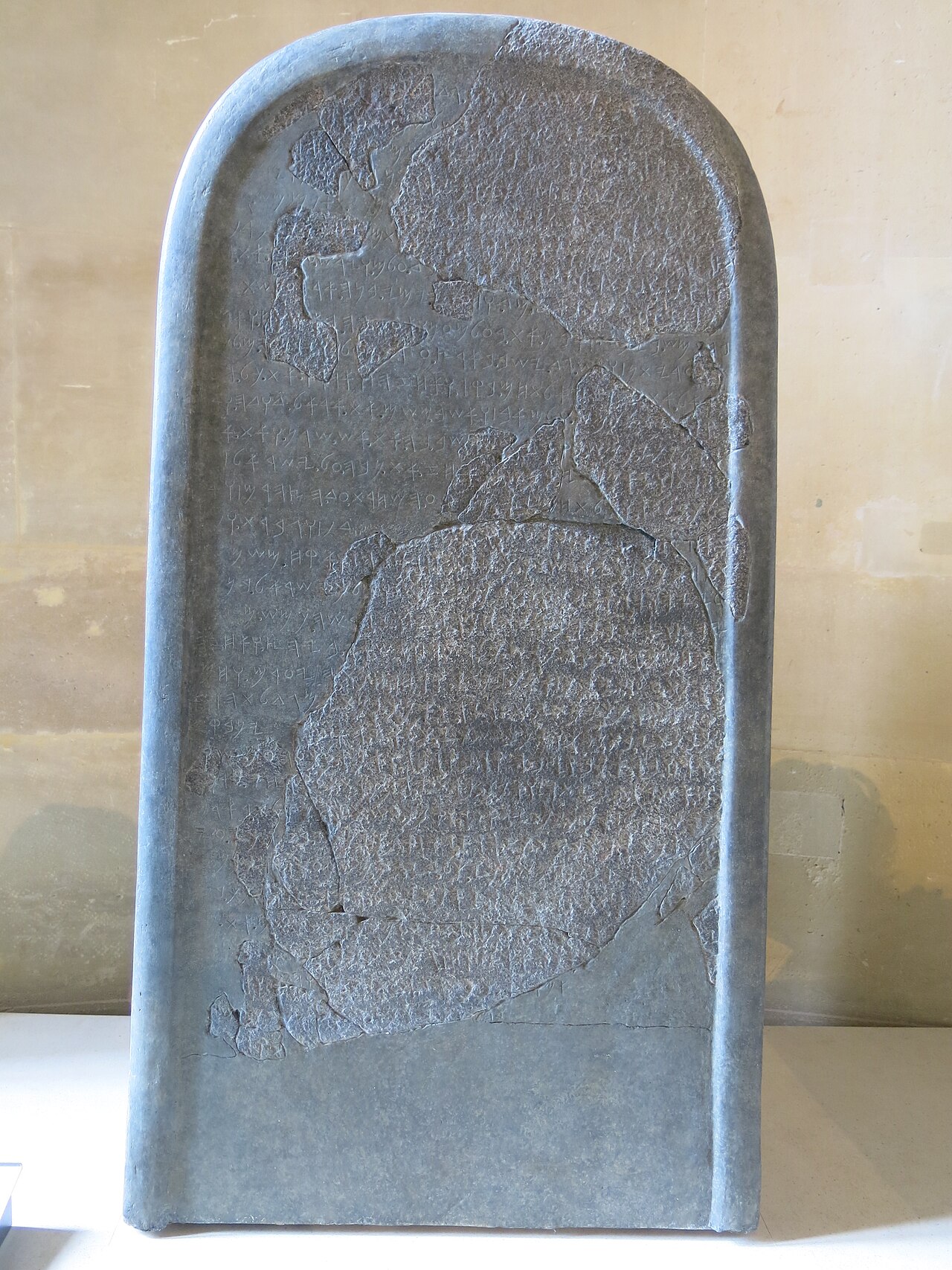
Reuben's towns (Aroer, Nebo, Baal-meon) appear on the Mesha Stele as places Mesha took from Israel; by the 9th century Reuben as a tribe is not mentioned, only "the men of Gad."
Hagrites
The Hagrites (Hagarenes) are named in Psalm 83:6 and probably in Assyrian texts as Hagaranu, an Aramean or Arab group east of the Jordan.
What the evidence shows
- Tiglath-pileser III deported people from Gilead c. 733 BC.
- Pul and Tiglath-pileser are the same king.
- The Mesha Stele names towns of Reuben's territory.
Continue the journey
Connected elsewhere in ScriptureDinah, Bethel, and the Twelve TribesGenesis 35:22; 49:3–4: Reuben loses the birthright.More from this lesson
Why this matters to the rest of Scripture
- Genesis 35:22; 49:3–4Reuben loses the birthright.
- Tiglath-pileser takes Gilead.