Leviticus 16:8
For Azazel, or for the scapegoat?
Every Hebrew witness we have checked (the Masoretic Text and the Samaritan Pentateuch) reads the same word: la'aza'zel, "for Azazel." Translators have disagreed for over two thousand years about what it means. The Greek made it "the one sent away," the Latin "the goat sent out," Tyndale coined "scapegoat," and many modern Bibles keep the name Azazel.
Same letters, different readings: the consonants agree, but ancient readers vocalized or interpreted them differently
The family tree
Each row is a language or text tradition. Witnesses in the same row may share ancestry, revise one another, or have an uncertain relationship; the line under each box says which. A solid arrow appears only where direct copying or a documented revised edition is established. Order by date never implies copying. Scroll sideways on a phone.
✓ contains it · ✕ does not · ❝ quotes part of it · ⓘ reports on manuscripts · ▢ pages lost · – no copy survives
- Same line, through lost copies
- Translation
- Related (shared ancestry)
- Original LeviticusUnknown (debated)
- 1 Enoch 10:4–83rd century BC
- Dead Sea Scrolls (4Q180; 4Q203)1st century BC
- Mishnah Yoma 6:4–8c. AD 200
- Masoretic Text (Leningrad Codex)AD 1008Descends, through lost copies, from Original Leviticus
- Samaritan PentateuchAncient tradition; medieval copiesDescends, through lost copies, from Original Leviticus
Four meanings for one word
- The goat that departs
- Septuagint, Vulgate, Tyndale's "scapegoat," KJV, NIV.
- A place
- The Mishnah's cliff; "a land not inhabited" (16:22); some medieval commentators.
- Complete removal
- An abstract noun, "for dismissal" (some modern lexicons).
- A wilderness being
- 1 Enoch, Qumran, Ibn Ezra's hint, Nachmanides, and many modern scholars; the parallel "for the LORD… for Azazel" suggests a name.
Every witness, in order
Unknown (debated)
Original Leviticus
No original survives.
Translated c. 250 BC
Septuagint
How the site knows this: Reported in scholarship; not checked by the site. The Greek wording is from published editions; its sense was compared with Giguet's French in the library.
κλῆρον ἕνα τῷ κυρίῳ καὶ κλῆρον ἕνα τῷ ἀποπομπαίῳ
one lot for the Lord and one lot for the one sent away
Interprets Azazel as a description of the goat, "the averter" or "the one carried off." Giguet's French Septuagint in our library: "le bouc émissaire."
3rd century BC
1 Enoch 10:4–8
How the site knows this: Reported in scholarship; not checked by the site.
"Bind Azazel hand and foot, and cast him into the darkness… make an opening in the desert which is in Dudael… to him ascribe all sin."
The Book of the Watchers makes Azazel a fallen angel bound in the desert, with all sin ascribed to him: an early interpretation of Leviticus 16 as a being in the wilderness. See the Watchers and Azazel investigations.
1st century BC
Dead Sea Scrolls (4Q180; 4Q203)
How the site knows this: Reported in scholarship; not checked by the site.
Qumran texts mention Azazel and the angels who sinned, continuing the Enochic tradition.
c. AD 200
Mishnah Yoma 6:4–8
How the site knows this: Reported in scholarship; not checked by the site.
The goat is led to a cliff (tzuk) in the wilderness and pushed off: Azazel understood as a place.
c. AD 400
Jerome's Vulgate
How the site knows this: Read in the site's library text: Clementine Vulgate (1592 edition).
unam Domino, alteram capro emissario
one for the Lord, the other for the goat sent out
Follows the Greek understanding.
AD 1008
Masoretic Text (Leningrad Codex)
How the site knows this: Read in the site's library text: Westminster Leningrad Codex, a digital transcription of the Leningrad Codex.
גּוֹרָל אֶחָד לַיהוָה וְגוֹרָל אֶחָד לַעֲזָאזֵל
one lot for the LORD and one lot for Azazel
The word is vocalized as a name. Some scholars read it as ʿez ʾazal, "the goat that goes away"; others as a form of ʿzz, "strong," for a rugged place or a powerful being.
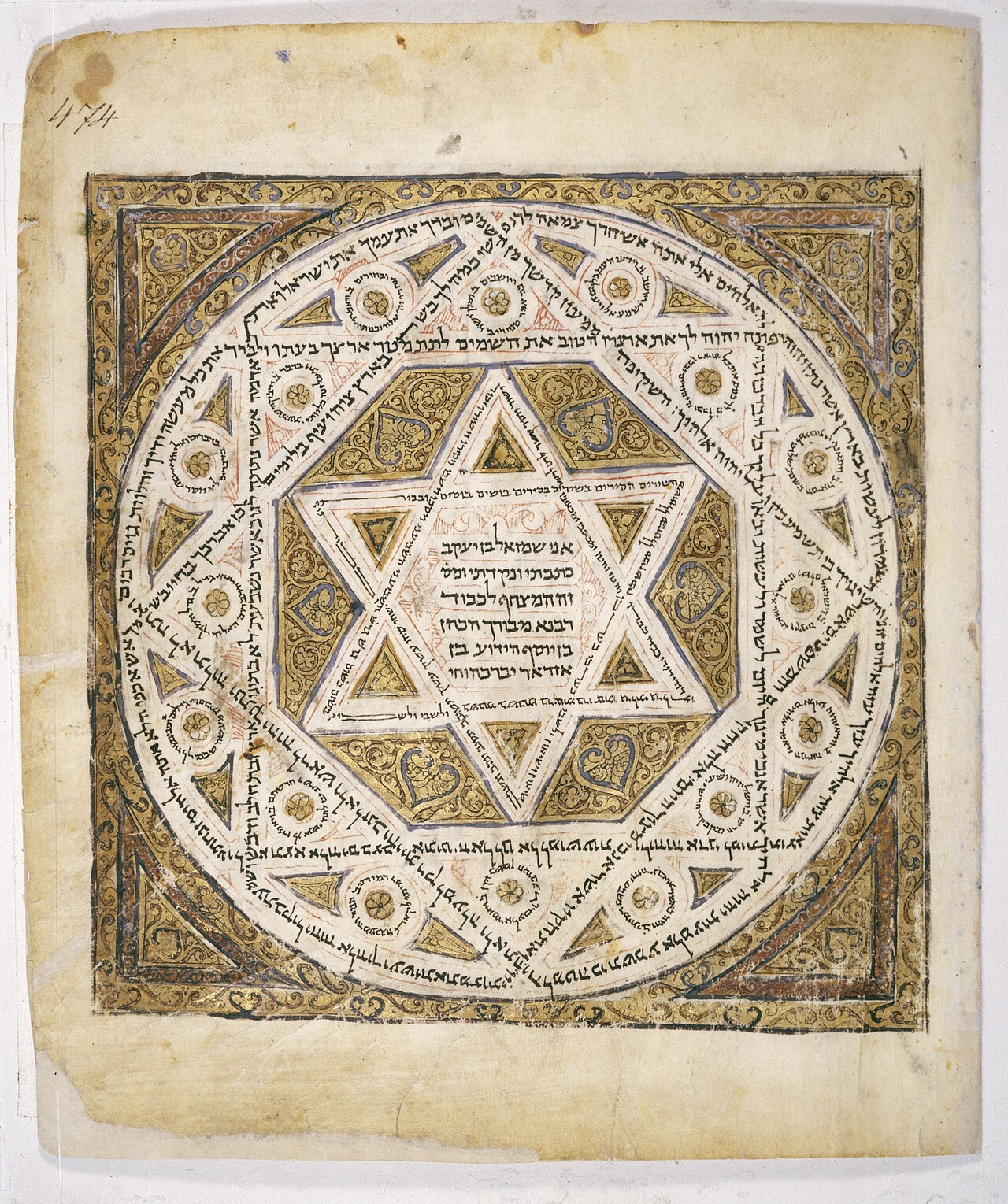
Historical manuscriptImage credit Pictured: a decorated page from the codex, not Leviticus 16.
Ancient tradition; medieval copies
Samaritan Pentateuch
How the site knows this: Read in the site's library text: Samaritan Pentateuch, Kennicott's 1780 text digitized by A. Sigalov.
גורל אחד ליהוה וגורל אחד לעזאזל
one lot for the LORD and one lot for Azazel
Identical consonants to the Masoretic Text.
1380s
Wycliffe Bible
How the site knows this: Read in the site's library text: Wycliffe Bible (c. 1395).
o lot to the Lord, and another lot to the goot that schal be sent out
Translated from the Vulgate.
1530
Tyndale's Pentateuch
How the site knows this: Reported in scholarship; not checked by the site.
scape goote
William Tyndale coined the English word "scapegoat" (escape goat) for this verse. It entered everyday English for someone blamed for others' faults.
1611
King James Bible
How the site knows this: Read in the site's library text: King James Version (1769 text).
one lot for the LORD, and the other lot for the scapegoat.
Keeps Tyndale's word, as the Geneva Bible had.
20th–21st centuries
Modern translations
How the site knows this: Checked in a published edition.
one lot for Yahweh and one for Azazel.
The Lexham English Bible (above), the JPS Tanakh, NRSV and ESV keep the name Azazel; the NIV says "for the scapegoat" with Azazel in a note; Young's Literal reads "a goat of departure."
What changed, and why
Nothing was added or removed here: every witness has the same Hebrew. The differences are entirely in interpretation and translation. Even if Azazel was understood as a being, the goat was not an offering to it; the text says plainly that only the LORD's goat is sacrificed, and the other carries sins away.
What the evidence shows
- The Masoretic Text and the Samaritan Pentateuch both read la'aza'zel. Qumran evidence for this verse has not been checked here.
- William Tyndale coined "scapegoat" in 1530.
- Azazel was originally the name of a demon.
Sources
- E. Tov, Textual Criticism of the Hebrew Bible, 3rd ed. (Fortress, 2012)
- J. Milgrom, Leviticus 1–16 (1991), pp. 1020–1021, 1071–1079
- NET Bible, note on Leviticus 16:8
Related lessons
- The Day of Atonement →Once a year the high priest enters the most holy place with blood and incense to cleanse the sanctuary. Two goats are chosen by lot: one is sacrificed for the LORD, the other, bearing Israel's sins, is sent into the wilderness "for Azazel." This is the center of Leviticus, and of Jewish and Christian ideas of atonement.
- How Leviticus Came to Us →Who wrote Leviticus, how scholars explain its priestly and holiness layers, the Dead Sea Scrolls in ancient and Greek scripts, a burned scroll read by computer, the variants and translation choices that matter, and how Leviticus became Scripture for every Jewish and Christian tradition.