1 Kings 10; 2 Chronicles 9
- Language
- Hebrew
- Composed
- By the 6th–4th c. BC
- Oldest surviving copy
- Masoretic codices; Greek codices
- Status
- Scripture
The only ancient account of the visit.
Ancient Mysteries & Interpretations
Sheba is usually identified with Saba in Yemen, a kingdom made rich by the incense trade. Sabaean and Assyrian inscriptions document Saba and Arabian queens, but none names a queen who visited Solomon. Jewish, Christian, Islamic and Ethiopian traditions later retold her story richly (Bilqis, Makeda). These are reception history, not evidence of the visit.
Saba: documented · Arabian queens: documented (8th c. BC) · The visit: unverified
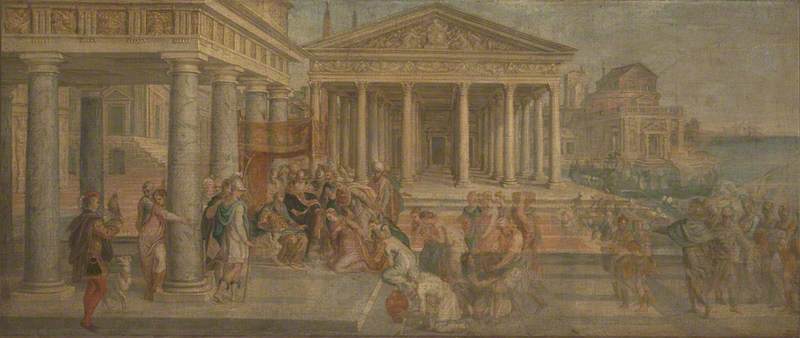
"And when the queen of Sheba heard of the fame of Solomon… she came to prove him with hard questions" (1 Kings 10:1).
The only ancient account of the visit.
Solomon, the hoopoe and the queen of Saba.
Makeda, Menelik and the ark.
Marib, the Sabaean capital, with its dam and the temple of Almaqah (Mahram Bilqis); Sirwah with early royal inscriptions; Assyrian records naming tribute from Saba and Arab queens (Zabibe, Samsi) in the 8th century BC.
Traditional reading
The queen ruled Saba in Yemen.
Scholarly reconstruction
Arabian queens are attested in North Arabia; Sabaean rulers in this period were men (mukarribs).
Scholarly reconstruction
The visit dramatizes Solomon's fame using the known incense trade.
Traditional reading
Ethiopian tradition: she bore Solomon a son, Menelik I.
Assessment: A sacred national tradition, first written down in the 14th century AD.
South Arabian trade and Arabian queens were real. Whether a queen visited Solomon cannot be established.
What the evidence shows