Scholarly reconstruction
The temple of El-berith
Wright and others: the excavated temple is the one Abimelech burned.
Source: "What's a Bamah? How Sacred Space Functioned in Ancient Israel," BAR (Shechem fortress temple) ↗
Ancient Mysteries & Interpretations
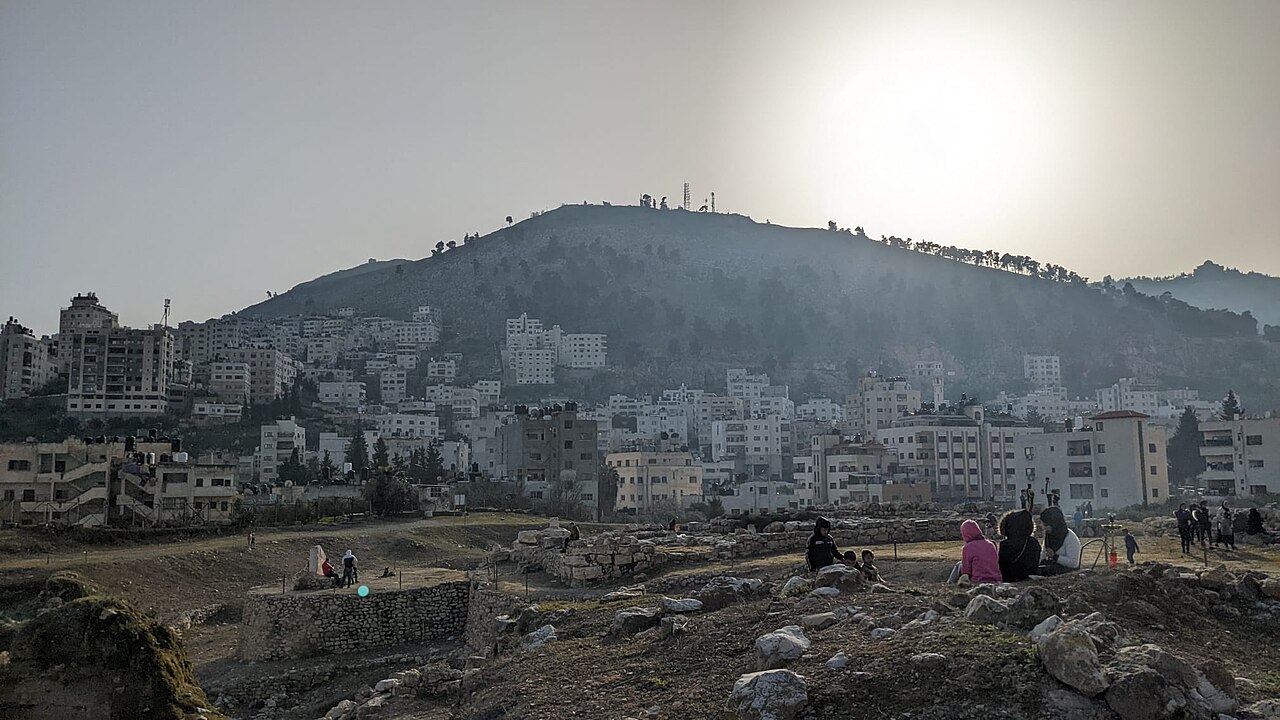
At Tell Balata, ancient Shechem, excavators uncovered a massive fortress-temple with walls about 5 meters thick and a great standing stone. G. Ernest Wright identified it with the "tower of Shechem" and "house of El-berith" of Judges 9 and connected a destruction with Abimelech. The comparison is attractive, but the building's later phases and the date of its destruction are debated.
Building: documented · Identification with Judges 9: disputed
"All the men of the tower of Shechem… entered into an hold of the house of the god Berith… and set the hold on fire upon them; so that all the men of the tower of Shechem died also, about a thousand men and women" (9:46, 49).
Ernst Sellin (1913–1914, 1926–1927) and the Drew-McCormick expedition under G. Ernest Wright (1956–1973) excavated the temple: Middle Bronze in origin (c. 1650 BC), rebuilt in the Late Bronze Age, with a large standing stone in front. Wright dated a destruction to the 12th century BC.
Scholarly reconstruction
Wright and others: the excavated temple is the one Abimelech burned.
Source: "What's a Bamah? How Sacred Space Functioned in Ancient Israel," BAR (Shechem fortress temple) ↗
Traditional reading
The temple's history matches Judges 9.
Source: Associates for Biblical Research, "Abimelech at Shechem" (confessional perspective) ↗
Scholarly reconstruction
The later phases and destruction date are uncertain; the "tower of Shechem" may be another building.
Shechem had a famous temple; the excavated building is a strong candidate for it, but not proven to be the building in Judges 9.
What the evidence shows
Source: "What's a Bamah? How Sacred Space Functioned in Ancient Israel," BAR (Shechem fortress temple) ↗