4Q550 ("4QprEsther ar")
- Language
- Aramaic
- Composed
- c. 1st century BC (copy)
- Oldest surviving copy
- Qumran Cave 4 fragments
- Status
- Not scripture
Tales set at the Persian court; similarities to Esther's world, not its text.
Ancient Mysteries & Interpretations
Every book of the Hebrew Bible except Esther (and, by some counts, Nehemiah) is represented among the Dead Sea Scrolls. Explanations range from chance survival to the community's calendar or theology. 4Q550, called "proto-Esther" by its editor, is an Aramaic collection of Persian court tales, not Esther.
Absence: documented · Reason: unknown
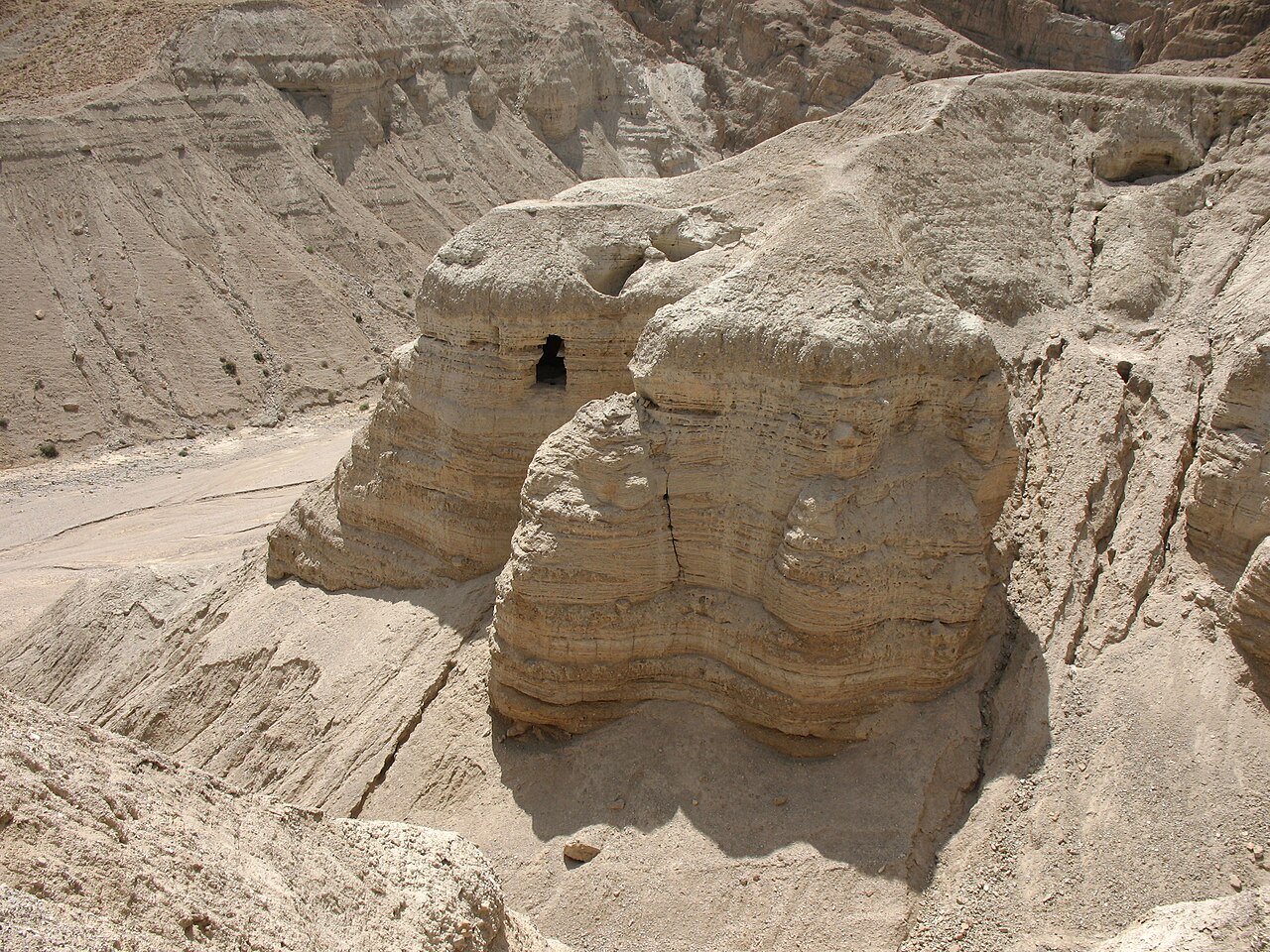
"These days should be remembered and kept throughout every generation" (Esther 9:28).
Tales set at the Persian court; similarities to Esther's world, not its text.
Scholarly reconstruction
Short books survive poorly; Chronicles has one fragment.
Scholarly reconstruction
Purim was not in the Torah or in the community's calendar; 14 Adar could fall on a Sabbath in their 364-day year.
Source: BAS Library, "Why Is Esther Missing from Qumran?" (Insight) ↗
Scholarly reconstruction
No name of God; a Jewish queen married to a gentile; no Torah observance in the Hebrew text.
Absence from the caves does not prove the community rejected Esther; it may have.
What the evidence shows
Source: BAS Library, "The Text of Esther" (4Q550 and "proto-Esther") ↗