Did other cultures remember a garden, a tree of life, or immortality lost?
What the relationship labels mean
Possible historical contact: The cultures were in contact, so one tradition could have known the other.
Shared literary world: The stories appear to share older roots or a common cultural setting.
Similar human experience: Different peoples responding to similar realities, such as river floods.
Resemblance only: A real similarity worth noticing; no historical connection has been established.
Modern speculative theory: A modern interpretation, not an ancient source. Not supported by authenticated evidence.
Sumer · Mesopotamia
Enki and Ninhursag
Shared literary world
Composed
c. 2000–1800 BC
Earliest surviving copy
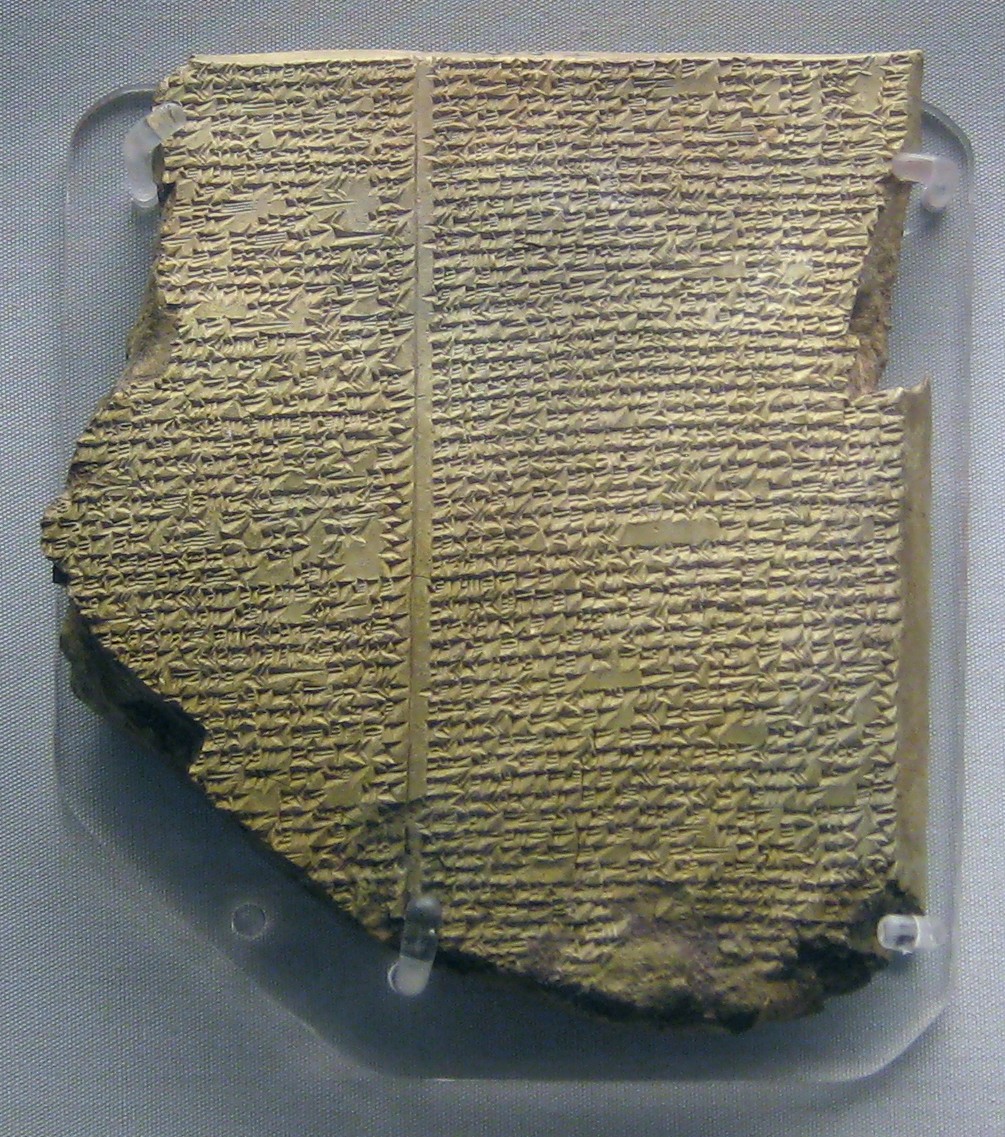
Old Babylonian clay tablets, c. 1800 BC
Dilmun is a pure land with no sickness or death. Enki eats forbidden plants and falls ill; the goddess Ninhursag heals him by creating healing goddesses, including Ninti, whose name can mean both "lady of the rib" and "lady who makes live."
Similar
A pure paradise land
Forbidden plants and their consequences
A wordplay on "rib" and "life" that some scholars compare to Eve, made from Adam's rib and called "mother of all living"
Different
The story is about gods, not humans
No command from a single God or human disobedience
Babylon · Mesopotamia
The Myth of Adapa
Shared literary world
Composed
Second millennium BC
Earliest surviving copy
Tablet found at Amarna, Egypt, 14th century BC
Adapa, a wise man, is summoned to heaven. Warned that he will be offered the food of death, he refuses what is actually the bread and water of life, and so loses immortality for humanity.
Similar
A man offered life-giving food
Humanity loses immortality at the beginning
Different
Adapa loses life by obeying advice, not by disobeying