Black Obelisk epigraphs
- Language
- Akkadian
- Composed
- c. 825 BC
- Oldest surviving copy
- British Museum BM 118885
- Status
- Not scripture
"Tribute of Jehu son of Omri: silver, gold, a golden bowl, a golden vase…"
Ancient Mysteries & Interpretations
Shalmaneser III's Black Obelisk (British Museum BM 118885), found at Nimrud in 1846, shows tribute bearers from five lands. The second register shows a man bowing before the king, labeled "Tribute of Jehu (Ia-ú-a) son of Omri." It records the year 841 BC. It is the only known contemporary picture of a king of Israel or Judah, or of his envoy.
Obelisk: documented · Jehu's tribute: documented · Figure: Jehu or envoy (debated)
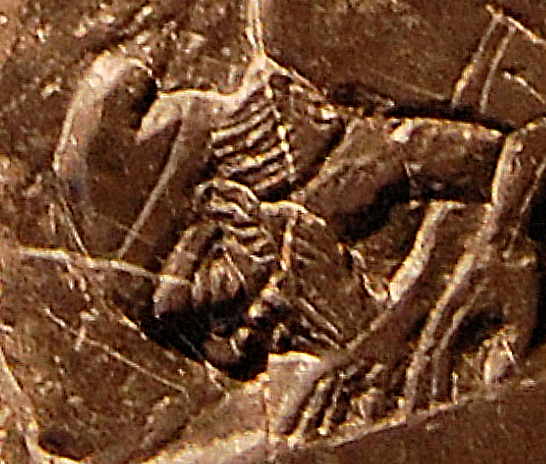
"And the time that Jehu reigned over Israel in Samaria was twenty and eight years" (2 Kings 10:36).
"Tribute of Jehu son of Omri: silver, gold, a golden bowl, a golden vase…"
Excavated by Austen Henry Layard at Nimrud. Shalmaneser's annals for his 18th year (841 BC) also record tribute from "Jehu son of Omri" after he fought Hazael.
Scholarly reconstruction
The kneeling figure is Jehu in person.
Scholarly reconstruction
The figure represents Jehu's emissary bringing tribute.
Alternative explanation
Jehu was actually descended from Omri.
Assessment: Kings says he destroyed Omri's house; Assyria used "house of Omri" as Israel's name.
Jehu submitted to Assyria in 841 BC, which Kings does not mention.
What the evidence shows
Source: CDLI, Black Obelisk of Shalmaneser III (BM 118885) ↗; Oracc, "The Black Obelisk of Shalmaneser III" ↗