myBibleHistory

Ancient Mysteries & Interpretations

Jehoiachin's Rations in Babylon

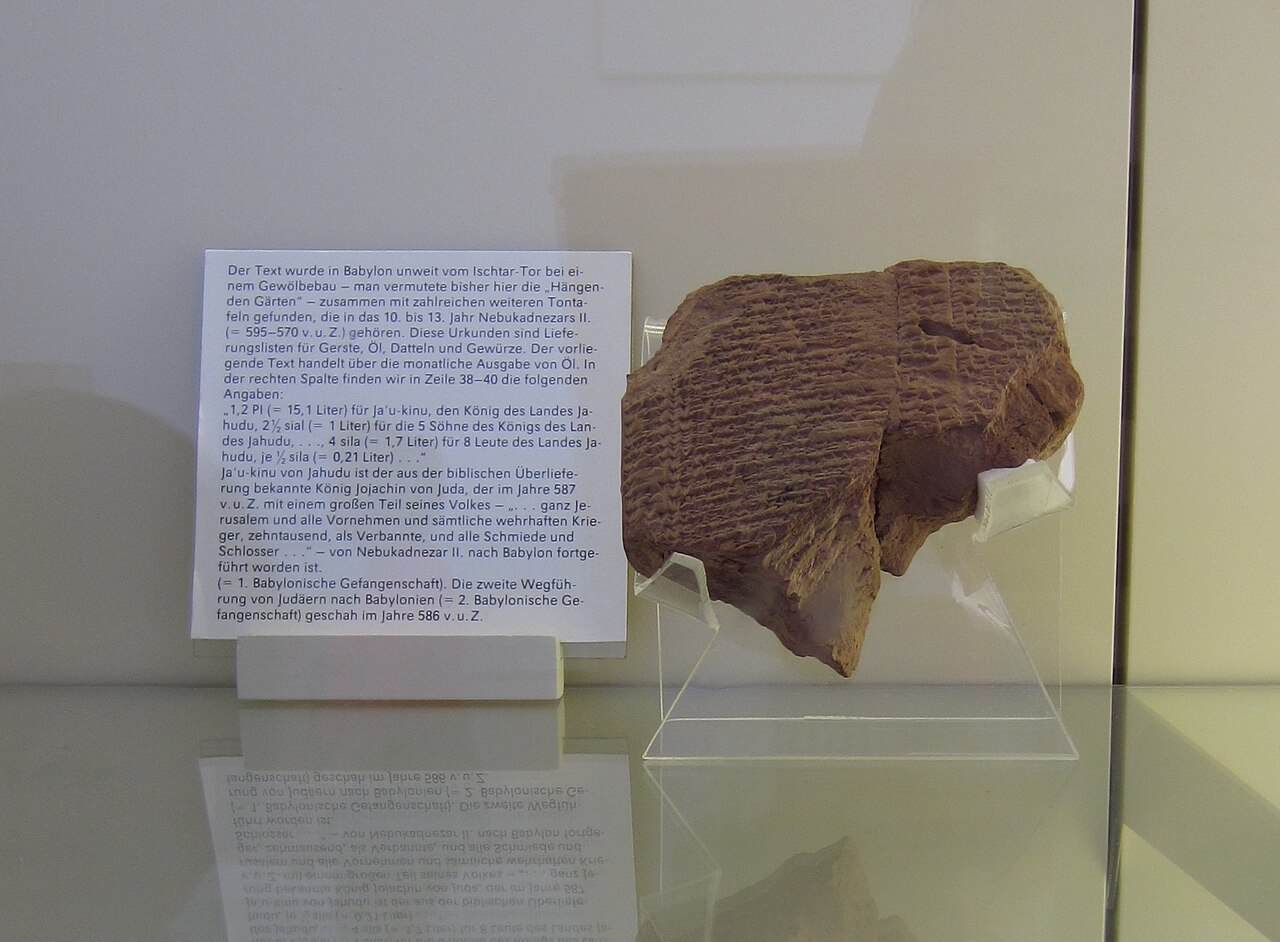
Administrative tablets from Nebuchadnezzar's palace in Babylon, dated c. 592 BC and published by E. F. Weidner in 1939, record oil rations for "Ya'ukin, king of the land of Yahud," his five sons and other Judeans, alongside other foreign captives. They confirm Jehoiachin's life at the Babylonian court; his release under Amel-Marduk (Evil-merodach) c. 561 BC is known from Kings and Jeremiah.

Rations for Jehoiachin: documented · Release: known from the Bible

Babylonian ration tablet naming Jehoiachin
Authentic ancient artifactA Babylonian ration tablet naming "Jehoiachin, king of Judah" (Pergamon Museum, Berlin).Image credit

1 What Scripture says

"And his allowance was a continual allowance given him of the king, a daily rate for every day, all the days of his life" (2 Kings 25:30).

2 What evidence we might expect

  • Babylonian palace records of royal captives.

3 What ancient sources survive

Babylon ration tablets (Weidner texts)

Language
Akkadian
Composed
c. 592 BC
Oldest surviving copy
Vorderasiatisches Museum, Berlin (Babylon excavations)
Status
Not scripture

"…to Ya'ukin, king of the land of Yahud"; "to the five sons of the king of Yahud." Exact museum numbers to verify before pinning an image.

4 What discoveries exist

Found by the German excavations at Babylon (1899–1917) in vaulted rooms near the Ishtar Gate.

Babylonian ration tablet naming Jehoiachin
Authentic ancient artifactA Babylonian ration tablet naming "Jehoiachin, king of Judah" (Pergamon Museum, Berlin).Image credit

5 How interpretations compare

Scholarly reconstruction

Captive but honored

Jehoiachin was held at court with his family, as other captive kings were.

6 The strongest supported reconstruction

Jehoiachin lived as a royal captive in Babylon from 597 BC and was released from confinement c. 561 BC.

7 What remains possible or unknown

  • The tablets' current inventory numbers (to confirm).

What the evidence shows

Where this connects