Evidence Case: The Two Exiles
Samaria and Judah: deportation, resettlement and survival
| Israel (Assyria) | Judah (Babylon) | |
|---|---|---|
| When | 732 BC (Galilee, Gilead); 722–720 BC (Samaria) | 597, 587/586, 582 BC |
| Numbers given | Sargon: 27,290 from Samaria | 2 Kings: 10,000 / 8,000; Jeremiah: 3,023 + 832 + 745 = 4,600 |
| Where | Halah, Habor on the Gozan, cities of the Medes | Babylon and its region (Al-Yahudu, Nippur) |
| Policy | Two-way exchange: foreigners settled in Samaria | One-way: no foreign settlers in Judah |
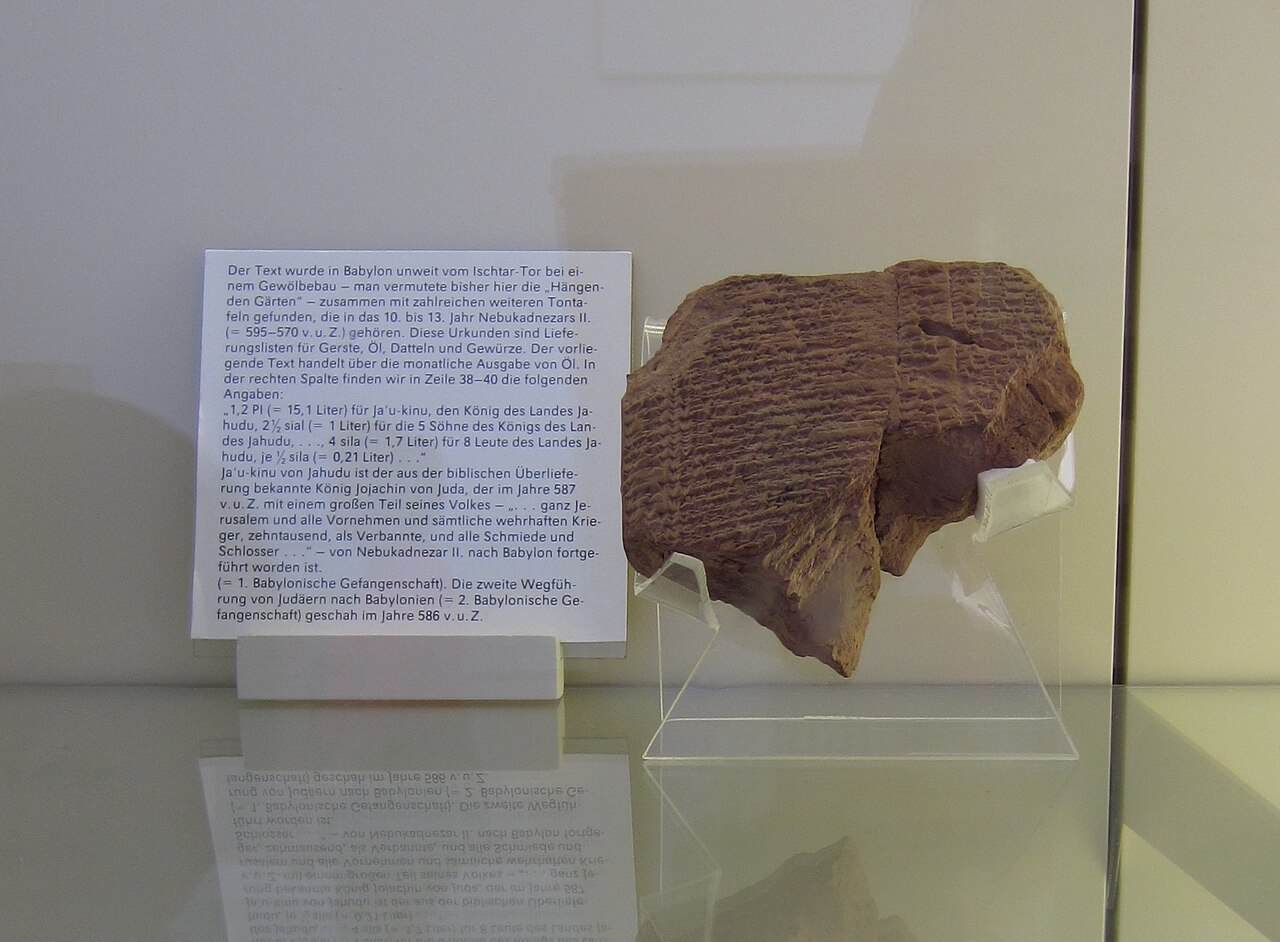
| Evidence of exiles | Israelite names in Assyrian documents (e.g. at Guzana and Nineveh) | Jehoiachin rations; Al-Yahudu tablets (6th–5th c. BC) with Judean names |
| Afterward | Those who remained in the north; later Samaritans | Return under Cyrus (539 BC onward); Jewish communities in Babylon |
The Al-Yahudu tablets ("town of Judah" in Babylonia), about two hundred cuneiform documents from 572 to 477 BC, show Judean families farming, paying taxes and keeping names with YHWH. Most were sold through the antiquities market, which limits what can be known of their context.
The idea of "ten lost tribes" grows from 2 Kings 17. Historically, part of the northern population was deported and absorbed; part remained; some moved south to Judah (2 Chronicles 30).
What the evidence shows
- Assyria practiced two-way population exchange.
- The Al-Yahudu tablets document Judeans in Babylonia.
- The land of Judah was empty during the exile.
Continue the journey
Journey of a Passage2 Kings 24:14–16 and Jeremiah 52:28: How many were deported in 597 BC?2 Kings 24:14 gives 10,000 captives; 24:16 gives 7,000 men of might and 1,000 craftsmen; Jeremiah 52:28 gives 3,023 in Nebuchadnezzar's seventh year.More from this lesson
On the map
Location securely identified Probable identification Proposed or debated location Biblical route (roads schematic) Scholarly proposal
- Deportation from Samaria (schematic). Schematic. Israelites were taken to Halah, Habor on the river Gozan and the cities of the Medes; the route is not recorded.
- Judah to Babylon, 597 and 586 BC (schematic). Schematic. Captives went north via Riblah and along the Euphrates; the exact route is not recorded.
Investigations
Optional deep dives: the ancient sources, the physical evidence, and every interpretation side by side, including unconventional ones, each labeled for what it is.
The Babylonian Chronicle and 597 BCCapture of 597 BC: documented · Date: 2 Adar (March 16) 597 BC
Does a Babylonian text record the capture of Jerusalem?
The Babylonian Chronicle for Nebuchadnezzar's early years (British Museum BM 21946) records that in his seventh year he besieged "the city of Judah," took it on the second of Adar, captured the king, appointed a king of his choice, and took heavy tribute to Babylon. This dates the event to 16 March 597 BC. The chronicle does not cover the destruction of 587/586 BC.
Open the full investigation →Jehoiachin's Rations in BabylonRations for Jehoiachin: documented · Release: known from the Bible
Is the exiled king of Judah named in Babylonian records?
Administrative tablets from Nebuchadnezzar's palace in Babylon, dated c. 592 BC and published by E. F. Weidner in 1939, record oil rations for "Ya'ukin, king of the land of Yahud," his five sons and other Judeans, alongside other foreign captives. They confirm Jehoiachin's life at the Babylonian court; his release under Amel-Marduk (Evil-merodach) c. 561 BC is known from Kings and Jeremiah.
Open the full investigation →Echoes Across Civilizations
Optional: how other ancient peoples told similar stories. Open one to compare, then come back to the lesson.
Deportation as imperial policyAssyrian · Babylonian
Why did Assyria and Babylon deport conquered peoples?
- Assyrian: Mass deportations Possible historical contact
- Babylonian: Deportees in Babylonia Possible historical contact
Why this matters to the rest of Scripture
- "By the rivers of Babylon."
- "Build ye houses… seek the peace of the city."