Isaiah and Jerusalem's Deliverance
"He shall not come into this city, nor shoot an arrow there"
"This day is a day of trouble, and of rebuke, and blasphemy: for the children are come to the birth, and there is not strength to bring forth." Isaiah: "Be not afraid of the words which thou hast heard… Behold, I will send a blast upon him, and he shall hear a rumour, and shall return to his own land." Sennacherib hears that Tirhakah king of Ethiopia is coming and sends a letter: "Let not thy God in whom thou trustest deceive thee."
"And Hezekiah received the letter… and went up into the house of the LORD, and spread it before the LORD." "O LORD God of Israel, which dwellest between the cherubims, thou art the God, even thou alone, of all the kingdoms of the earth… Of a truth, LORD, the kings of Assyria have destroyed the nations… and have cast their gods into the fire: for they were no gods." Isaiah's oracle: "The virgin the daughter of Zion hath despised thee… I will put my hook in thy nose… He shall not come into this city, nor shoot an arrow there… For I will defend this city, to save it, for mine own sake, and for my servant David's sake."
"And it came to pass that night, that the angel of the LORD went out, and smote in the camp of the Assyrians an hundred fourscore and five thousand: and when they arose early in the morning, behold, they were all dead corpses." Sennacherib returns to Nineveh. "As he was worshipping in the house of Nisroch his god, Adrammelech and Sharezer his sons smote him with the sword: and they escaped into the land of Armenia. And Esarhaddon his son reigned in his stead."
Why did Sennacherib withdraw?
Sennacherib's annals end the Judah episode with Hezekiah's tribute sent to Nineveh. Proposed explanations: the tribute satisfied him; the Egyptian–Kushite army under Tirhakah forced a withdrawal; an epidemic in the camp (Herodotus 2.141 tells an Egyptian story of mice destroying Sennacherib's army's equipment at Pelusium); or the miracle the Bible describes. Some scholars propose a second campaign later in Sennacherib's reign, partly because Tirhakah was young in 701 BC; others reject it. None of these can be confirmed. The 185,000 is not attested outside the Bible; the site neither confirms nor dismisses it.
Sennacherib's murder
Babylonian chronicles and later sources confirm that Sennacherib was murdered by a son in 681 BC, about twenty years after the campaign; Esarhaddon then took the throne. Esarhaddon's own inscription speaks of brothers who rebelled. One name, Adrammelech, corresponds to Arda-Mulissi (Ardumuzan), a son of Sennacherib named in Assyrian letters. "Nisroch" has not been identified. The library's Greek has "Méserach" and "Asordan."
Three accounts
2 Kings 18:13–19:37 is repeated almost word for word in Isaiah 36–37 (without the tribute verses 18:14–16), and summarized in 2 Chronicles 32. The Great Isaiah Scroll from Qumran preserves Isaiah 36–37 complete.
The Case for the Biblical Account
Scripture's account
Jerusalem's deliverance (2 Kings 19).
What evidence would we expect?
Assyria failing to take Jerusalem; Sennacherib's assassination.
The discoveries
The prisms (no capture of Jerusalem); Babylonian chronicle and Esarhaddon's inscription on the assassination; Herodotus' Egyptian tradition.
Testing the discoveries
Jerusalem's survival and the assassination are documented; the cause of withdrawal is not.
The strongest reconstruction
Sennacherib left Jerusalem untaken after receiving tribute, for reasons the Assyrian record does not give.
What remains possible
One campaign or two; what happened in the camp.
What the evidence shows
- Sennacherib did not capture Jerusalem.Source: Israel Museum, Sennacherib Prism (IMJ 71.72.249) ↗
- Sennacherib was assassinated by a son in 681 BC.
- 185,000 Assyrians died in one night. Not attested outside the Bible.
- Sennacherib campaigned against Judah twice.
Continue the journey
Journey of a Passage2 Kings 19:35–37: 185,000, and Sennacherib's deathAll witnesses checked give 185,000 Assyrian dead.More from this lesson
On the map
Location securely identified Probable identification Proposed or debated location Biblical route (roads schematic) Scholarly proposal
- Sennacherib's campaign, 701 BC (schematic). Schematic, following the order of the annals: Phoenicia, the Philistine coast (Ekron), Judah's cities (Lachish), and the blockade of Jerusalem, which was not taken.
Investigations
Optional deep dives: the ancient sources, the physical evidence, and every interpretation side by side, including unconventional ones, each labeled for what it is.
Sennacherib, Hezekiah and the Siege of LachishCampaign: documented · Lachish siege: documented · Jerusalem not taken: documented · Cause of withdrawal: unknown
What do Assyrian records and archaeology say about 701 BC?
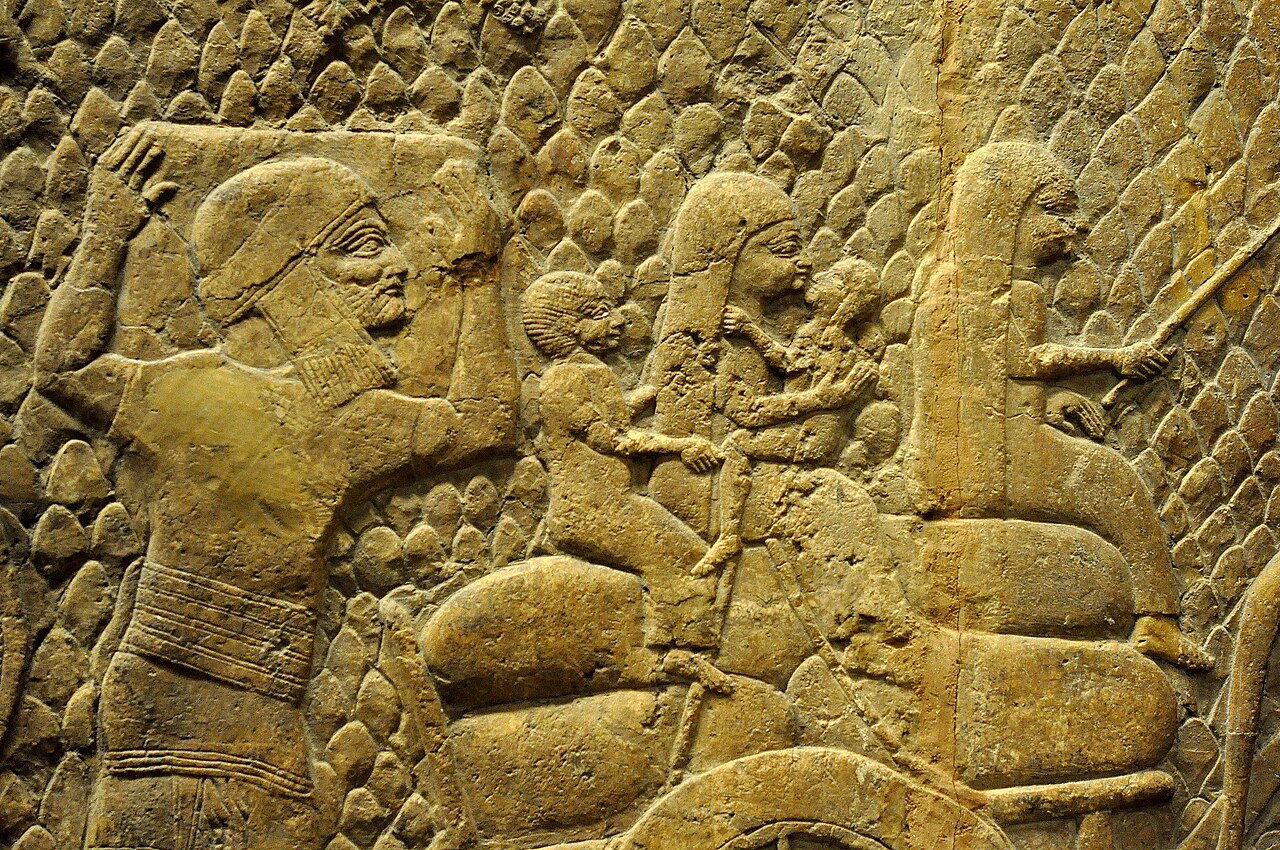
Sennacherib's annals claim he took 46 walled cities of Judah, shut Hezekiah in Jerusalem "like a bird in a cage," and received tribute. His palace reliefs show the siege of Lachish; excavations at Lachish found the siege ramp and destruction. Neither text nor relief claims Jerusalem fell. Why Sennacherib withdrew is not explained by Assyrian sources.
Open the full investigation →Echoes Across Civilizations
Optional: how other ancient peoples told similar stories. Open one to compare, then come back to the lesson.
Royal annals and prophetic historyAssyrian · Babylonian
How do empire chronicles tell the same events as Kings?
- Assyrian: Royal annals (Shalmaneser III to Ashurbanipal) Possible historical contact
- Babylonian: Babylonian chronicles Possible historical contact
Why this matters to the rest of Scripture
- The parallel account.
- The Chronicler's summary.
- "God is in the midst of her; she shall not be moved."
- Death in the night.