Naaman and Gehazi
"Behold, now I know that there is no God in all the earth, but in Israel"
"Now Naaman, captain of the host of the king of Syria, was a great man… but he was a leper." A little maid taken captive from Israel tells her mistress: "Would God my lord were with the prophet that is in Samaria! for he would recover him of his leprosy." The king of Aram sends a letter; the king of Israel tears his clothes: "Am I God, to kill and to make alive?"
Elisha sends a messenger: "Go and wash in Jordan seven times." Naaman is furious: "Are not Abana and Pharpar, rivers of Damascus, better than all the waters of Israel?" His servants reason with him: "if the prophet had bid thee do some great thing, wouldest thou not have done it?" He dips seven times, "and his flesh came again like unto the flesh of a little child."
"Behold, now I know that there is no God in all the earth, but in Israel." Elisha refuses any gift. Naaman asks for "two mules' burden of earth," and: "when my master goeth into the house of Rimmon to worship there… and I bow myself in the house of Rimmon, the LORD pardon thy servant in this thing." "Go in peace." Gehazi runs after him, invents a request for two young prophets, takes two talents of silver and two changes of clothing, and lies to Elisha. "The leprosy therefore of Naaman shall cleave unto thee."
Tsara'at, not leprosy
Hebrew tsara'at covers several visible skin conditions; it is not the same as modern Hansen's disease (leprosy). Naaman could still command an army and enter the king's presence.
Earth from Israel; Rimmon
Naaman takes Israel's soil to make a place to worship Israel's God in a foreign land. Rimmon (Akkadian Ramman, "the thunderer") was a title of the storm god Hadad, chief god of Damascus. Elisha's "Go in peace" to a man who must bow in Rimmon's temple has been discussed by Jewish and Christian interpreters as a question of conscience in foreign service.
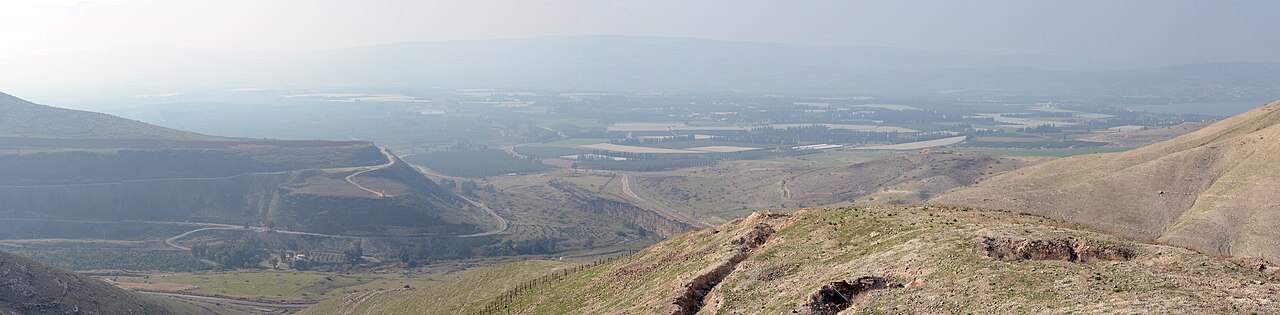
Abana and Pharpar
The Abana is usually identified with the Barada River, which waters Damascus; the Pharpar with the Awaj.
The Case for the Biblical Account
Scripture's account
Naaman's healing (2 Kings 5).
What evidence would we expect?
Aramean Damascus as a strong kingdom; the cult of Hadad-Rimmon.
The discoveries
Aramean Damascus in Assyrian texts; Hadad and Ramman titles in inscriptions.
Testing the discoveries
The setting is real; Naaman is not named outside the Bible.
The strongest reconstruction
A prophetic story on God's power beyond Israel's borders.
What remains possible
Which king of Aram is meant.
What the evidence shows
- Rimmon was a title of Hadad of Damascus.
- Naaman is named in an inscription.
- Tsara'at is identical to Hansen's disease.
Continue the journey
Journey of a Passage2 Kings 5:17–19: Naaman's earth and the house of RimmonThe witnesses agree: Naaman asks for Israelite earth and for pardon when he must bow beside his king in the temple of Rimmon.More from this lesson
Why this matters to the rest of Scripture
- "None of them was cleansed, saving Naaman the Syrian."
- Tsara'at and cleansing.
- Simon tries to buy a gift of God.