The Rediscovered Law and Huldah
"I have found the book of the law in the house of the LORD"
Josiah "did that which was right in the sight of the LORD, and walked in all the way of David his father, and turned not aside to the right hand or to the left." In his eighteenth year he sends Shaphan to the temple to pay the workmen, "for they dealt faithfully."
"And Hilkiah the high priest said unto Shaphan the scribe, I have found the book of the law in the house of the LORD." Shaphan reads it, then reads it before the king. "And it came to pass, when the king had heard the words of the book of the law, that he rent his clothes." "Go ye, enquire of the LORD for me… for great is the wrath of the LORD that is kindled against us, because our fathers have not hearkened unto the words of this book."
They go to "Huldah the prophetess, the wife of Shallum… keeper of the wardrobe; (now she dwelt in Jerusalem in the college)." "Thus saith the LORD, Behold, I will bring evil upon this place… But to the king of Judah… Because thine heart was tender, and thou hast humbled thyself before the LORD… Behold therefore, I will gather thee unto thy fathers, and thou shalt be gathered into thy grave in peace; and thine eyes shall not see all the evil which I will bring upon this place."
Which book?
Since W. M. L. de Wette (1805), many scholars have identified the scroll with Deuteronomy or an early form of it: Josiah's reform (one sanctuary, Passover in Jerusalem, removing mediums) matches Deuteronomy's laws, and "book of the law" and "book of the covenant" are Deuteronomy's own phrases. Some think it was written shortly before, in Josiah's circle; traditional readers see an existing Mosaic book rediscovered after Manasseh's neglect. See the Deuteronomy investigation.
Shaphan's family and seals
Shaphan's son Ahikam protects Jeremiah, and his grandson Gedaliah becomes governor (25:22). A bulla reading "Gemaryahu son of Shaphan" was found in the City of David (Shiloh's excavations, 1980s), matching the Gemariah son of Shaphan of Jeremiah 36:10. Bullae of officials show how documents were sealed in late Judah.
Huldah and the meaning of "peace"
Josiah dies in battle (23:29). Interpreters read "in peace" as meaning he would not see Jerusalem's destruction, or as a promise conditioned on his later choices.
The Case for the Biblical Account
Scripture's account
The discovery of the law book (2 Kings 22).
What evidence would we expect?
Scribal culture and literacy in late 7th-century Judah; written law scrolls.
The discoveries
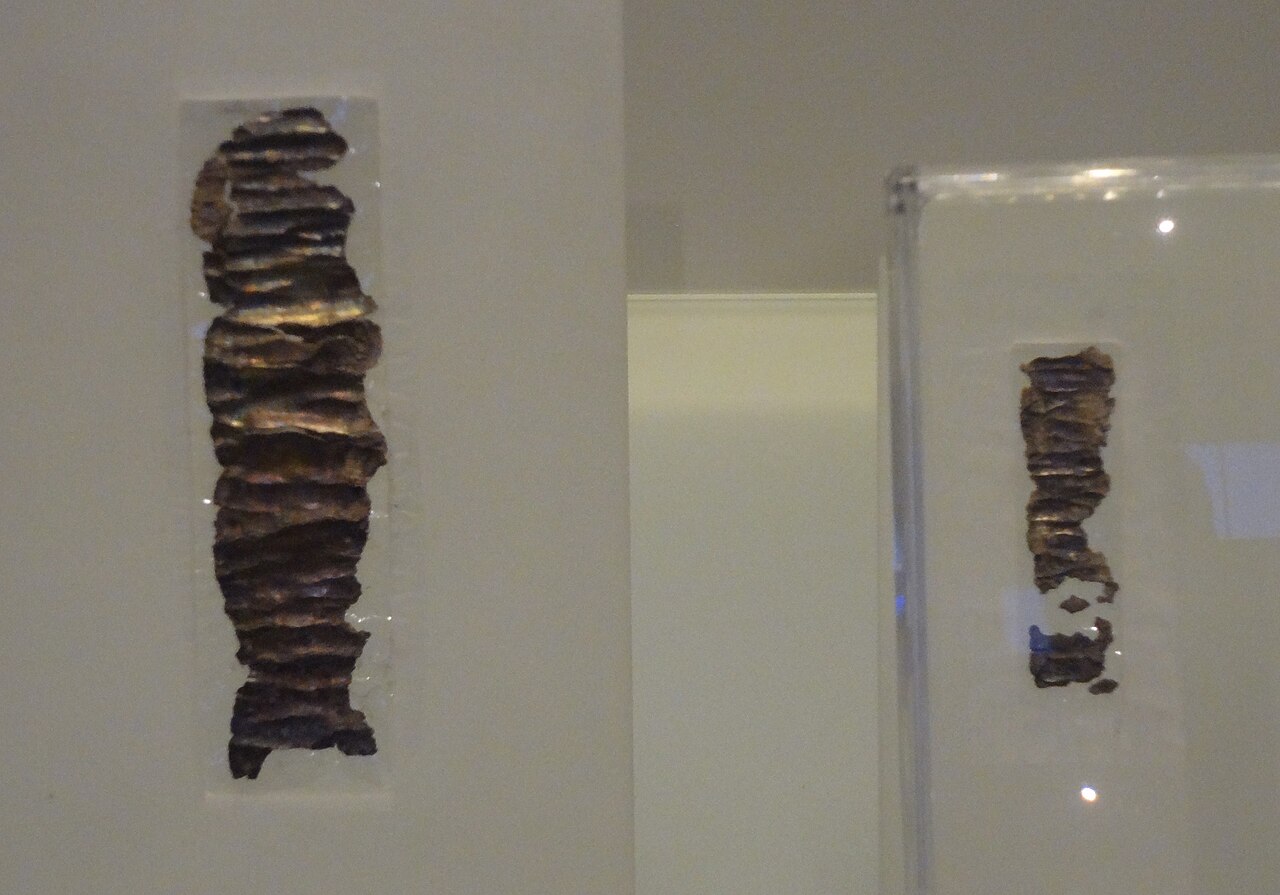
Hundreds of late Judahite bullae and seals (including Gemaryahu son of Shaphan); the Ketef Hinnom silver amulets with the priestly blessing (c. 600 BC); the Arad and Lachish ostraca.
Testing the discoveries
A literate administration is well attested; the scroll itself does not survive.
The strongest reconstruction
A law scroll closely related to Deuteronomy inspired Josiah's reform.
What remains possible
When that scroll was written.
What the evidence shows
- Late 7th-century Judah had extensive scribal administration.
- The law book was Deuteronomy or part of it.
- The law book was written in Josiah's time.
Continue the journey
Journey of a Passage2 Kings 22:8: "The book of the law"All witnesses agree that Hilkiah found "the book of the law" (sefer ha-torah).More from this lesson
Investigations
Optional deep dives: the ancient sources, the physical evidence, and every interpretation side by side, including unconventional ones, each labeled for what it is.
Josiah and the Book Found in the TempleJosiah: historical king · Book found: biblical report · Identification with Deuteronomy: a major hypothesis
Was the scroll found in Josiah's Temple an early form of Deuteronomy?
In about 622 BC, during Temple repairs, the high priest Hilkiah reported finding "the book of the law." King Josiah tore his clothes, read it to the people, removed the high places and held a great Passover in Jerusalem. Since 1805, many scholars have identified that book with Deuteronomy or its core. Others disagree.
Open the full investigation →Why this matters to the rest of Scripture
- The Chronicler's account.
- The book placed beside the ark.
- Gemariah son of Shaphan.
- Deborah the prophetess.