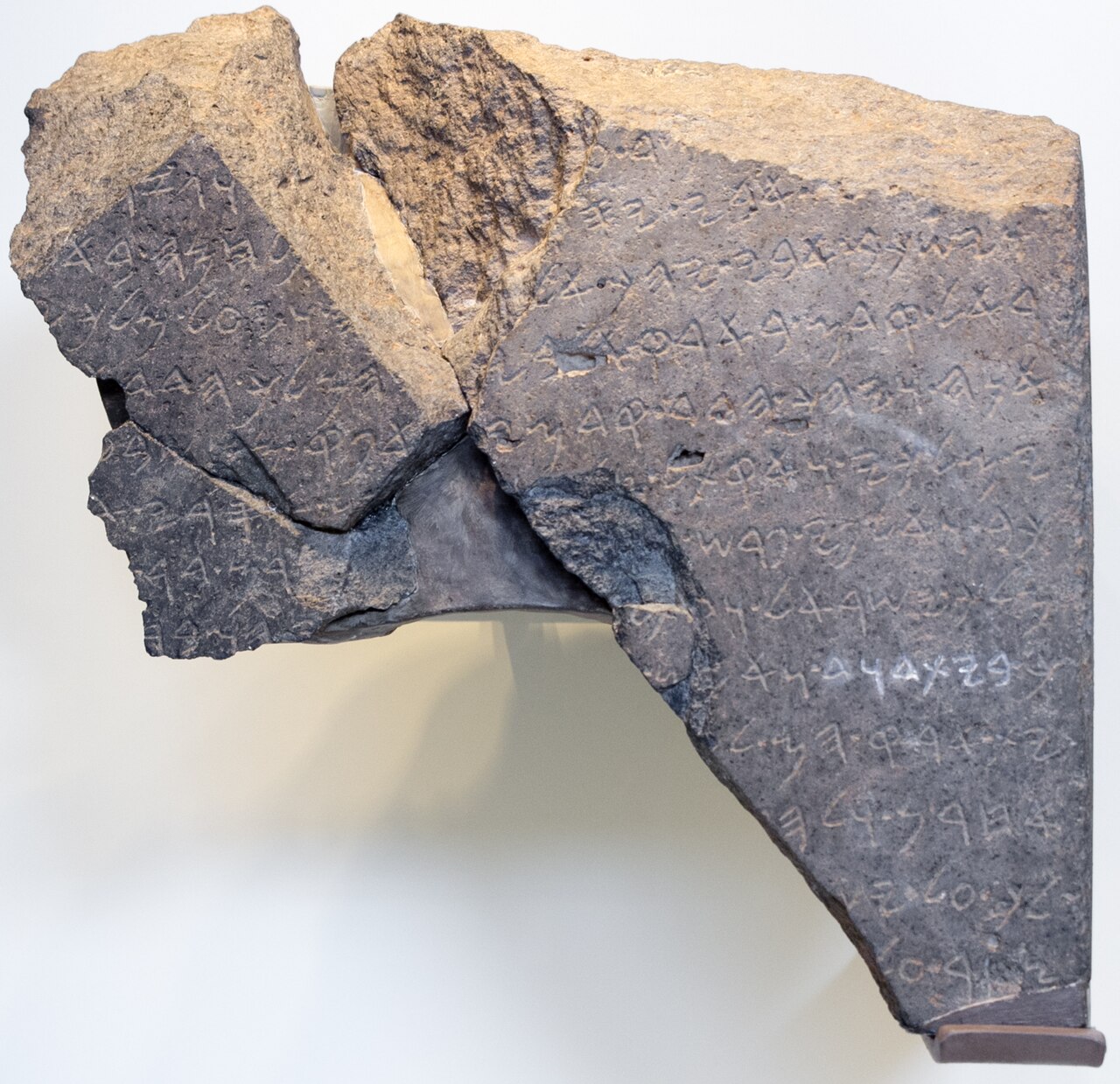
Ahaz, twenty, reigns sixteen years. "He walked in the way of the kings of Israel, yea, and made his son to pass through the fire, according to the abominations of the heathen." Rezin and Pekah come up to Jerusalem to war, "but could not overcome him." Rezin recovers Elath for Edom.
"So Ahaz sent messengers to Tiglath-pileser king of Assyria, saying, I am thy servant and thy son: come up, and save me out of the hand of the king of Syria, and out of the hand of the king of Israel." He sends the silver and gold. Assyria takes Damascus, deports its people to Kir and kills Rezin.
"And king Ahaz went to Damascus to meet Tiglath-pileser king of Assyria, and saw an altar that was at Damascus: and king Ahaz sent to Urijah the priest the fashion of the altar." Urijah builds it. Ahaz offers on it, moves the bronze altar to the north side for "to enquire by," cuts off the borders of the bases, takes down the Sea from the bronze oxen, and removes the covered sabbath way and the king's entrance "for the king of Assyria."
Ahaz in Assyrian records
A summary inscription of Tiglath-pileser III lists tribute from "Jehoahaz (Iauhazi) of Judah" among western kings around 734 BC: Ahaz's full name. A bulla (seal impression) reading "Ahaz son of Jehotham, king of Judah" is in a private collection; it was not excavated, and its authenticity cannot be fully established.
"Pass through the fire"
The phrase (he'evir ba'esh) is used for child sacrifice in Deuteronomy 18:10 and Jeremiah 32:35 ("to Molech"). Some scholars have proposed a non-lethal dedication rite; most read it as sacrifice, as 2 Chronicles 28:3 says ("burnt his children in the fire"). The library's Greek reads "delivered his son to the flames of Moloch." See the passage page.
The Syro-Ephraimite war
Rezin and Pekah tried to force Judah into an anti-Assyrian coalition (734–732 BC). Isaiah 7 ("a virgin shall conceive") and 2 Chronicles 28 give other perspectives on the same war.
The Case for the Biblical Account
Scripture's account
Ahaz's submission to Assyria (2 Kings 16).
What evidence would we expect?
Judah as an Assyrian tributary; the fall of Damascus in 732 BC.
The discoveries
Tiglath-pileser III naming Jehoahaz of Judah; Assyrian records of Damascus becoming a province.
Testing the discoveries
Ahaz's vassalage and Damascus's fall are documented.
The strongest reconstruction
Ahaz chose Assyrian vassalage in 734 BC; Damascus fell in 732 BC.
What remains possible
What the Damascus altar looked like; whether the Ahaz bulla is genuine.
What the evidence shows
- Tiglath-pileser III lists Jehoahaz (Ahaz) of Judah as tributary.Source: Posen Library, Tiglath-pileser III summary inscription ↗
- The Ahaz bulla is authentic. Unprovenanced.
- "Pass through the fire" means sacrifice.
Continue the journey
Journey of a Passage2 Kings 16:3: "Made his son to pass through the fire"The Hebrew says Ahaz "made his son pass through the fire." The library's Greek interprets: "delivered his son to the flames of Moloch"; the Vulgate: "consecrated his son, passing him through the fire." 2 Chronicles 28:3 says "burnt his children in the fire."More from this lesson
Echoes Across Civilizations
Optional: how other ancient peoples told similar stories. Open one to compare, then come back to the lesson.
Child sacrifice in crisisPhoenician / Punic · Greek
Did Israel's neighbors sacrifice children, and how does the Bible respond?
- Phoenician / Punic: The tophet of Carthage Shared literary world
- Greek: Iphigenia Resemblance only
Why this matters to the rest of Scripture
- Isaiah and Ahaz.
- The Chronicler's account.
- No one shall make a child pass through fire.