Jehu's Coup and Jezebel
"The driving is like the driving of Jehu the son of Nimshi; for he driveth furiously"
The young prophet pours oil on Jehu's head in an inner room: "I have anointed thee king over the people of the LORD… And thou shalt smite the house of Ahab thy master." He opens the door and flees. "Wherefore came this mad fellow to thee?" When Jehu tells them, the officers spread their garments on the stairs, blow the trumpet: "Jehu is king."
The watchman at Jezreel: "the driving is like the driving of Jehu the son of Nimshi; for he driveth furiously." Joram and Ahaziah ride out and meet him at Naboth's plot. "Is it peace, Jehu?" "What peace, so long as the whoredoms of thy mother Jezebel and her witchcrafts are so many?" Jehu shoots Joram between the arms; the arrow goes through his heart. "Cast him in the portion of the field of Naboth the Jezreelite." Ahaziah flees and is struck near Ibleam; he dies at Megiddo.
"And when Jehu was come to Jezreel, Jezebel heard of it; and she painted her face, and tired her head, and looked out at a window. And as Jehu entered in at the gate, she said, Had Zimri peace, who slew his master?" "Who is on my side? who?" Two or three eunuchs look out. "Throw her down." Jehu goes in to eat and drink, then orders her burial, "for she is a king's daughter." They find only "the skull, and the feet, and the palms of her hands," as Elijah had said.
The Tel Dan Stele's version
The Tel Dan Stele (c. 840 BC), probably by Hazael, claims that the Aramean king killed "[Jo]ram son of [Ahab] king of Israel" and "[Ahaz]iah son of [Jehoram] king of the House of David." The names are partly restored. Kings credits Jehu. Possibilities: Jehu acted as Hazael's ally, Hazael claimed credit for deaths caused by the war, or the two accounts reflect rival propaganda.
Ahaziah's death in two accounts
2 Kings 9:27–28: Ahaziah is shot near Ibleam, flees to Megiddo and dies there; his body is taken to Jerusalem. 2 Chronicles 22:9: he is found hiding in Samaria, brought to Jehu and killed. The two do not easily fit together. See the passage page.
Jezebel at the window
Painting her eyes (with kohl) and arranging her hair were marks of royal dignity; she meets death as a queen, not as a seductress, and her taunt "Zimri" calls Jehu a traitor. The "woman at the window" is also a known motif in Phoenician ivories from Samaria and Nimrud.
The Case for the Biblical Account
Scripture's account
Jehu's coup (2 Kings 9).
What evidence would we expect?
A violent change of dynasty in Israel c. 841 BC.
The discoveries
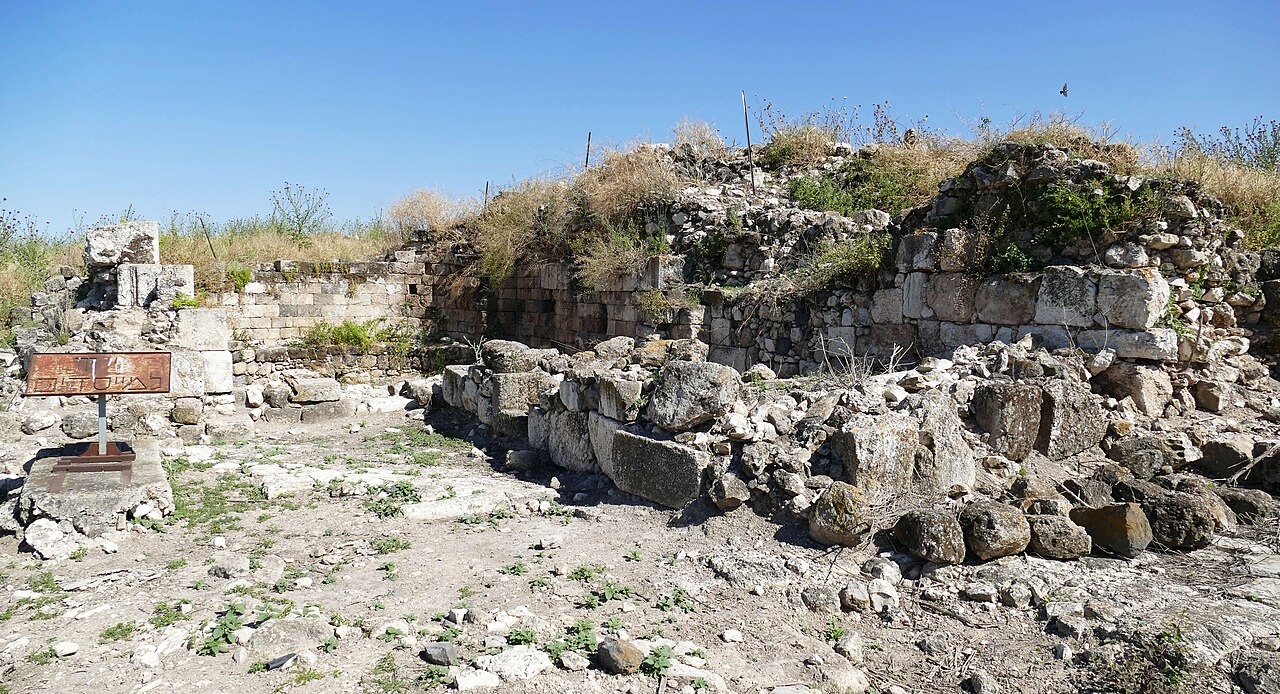
The Black Obelisk showing Jehu's tribute in 841 BC; the Tel Dan Stele claiming the deaths of Joram and Ahaziah; the Jezreel enclosure.
Testing the discoveries
Jehu's reign and the kings' deaths are documented; who killed them is contested.
The strongest reconstruction
Jehu seized power in 841 BC amid Aramean war, with prophetic backing.
What remains possible
Jehu's relationship to Hazael.
What the evidence shows
- Jehu was king of Israel in 841 BC.Source: CDLI, Black Obelisk of Shalmaneser III (BM 118885) ↗
- The Tel Dan Stele credits an Aramean king with killing Joram and Ahaziah. Names partly restored.
- 2 Kings 9:27 and 2 Chronicles 22:9 agree on Ahaziah's death.
Continue the journey
Journey of a Passage2 Kings 9:27–28 and 2 Chronicles 22:9: How did Ahaziah die?Kings: Ahaziah is shot near Ibleam, flees to Megiddo and dies there; his servants carry him to Jerusalem.More from this lesson
Why this matters to the rest of Scripture
- Elijah's word against Ahab and Jezebel.
- Jehu to be anointed.
- "I will avenge the blood of Jezreel upon the house of Jehu."