The Shunammite, Hazael and Judah's Kings
"What, is thy servant a dog, that he should do this great thing?"
Elisha had warned the Shunammite of a seven-year famine; she lived in Philistia. Returning, she goes to the king "for her house and for her land." Gehazi is just then telling the king how Elisha raised a dead child. "My lord, O king, this is the woman, and this is her son." The king appoints an officer: "Restore all that was hers, and all the fruits of the field since the day that she left the land."
In Damascus Ben-hadad is sick. Hazael brings forty camel-loads of gifts: "Shall I recover of this disease?" "Go, say unto him, Thou mayest certainly recover: howbeit the LORD hath shewed me that he shall surely die." Elisha stares until Hazael is ashamed, and weeps. "I know the evil that thou wilt do unto the children of Israel… their children wilt thou dash, and rip up their women with child." "What, is thy servant a dog, that he should do this great thing?" "The LORD hath shewed me that thou shalt be king over Syria." The next day Hazael spreads a wet cloth over the king's face, "so that he died: and Hazael reigned in his stead."
Jehoram son of Jehoshaphat reigns eight years in Jerusalem; "the daughter of Ahab was his wife." Edom and Libnah revolt. "Yet the LORD would not destroy Judah for David his servant's sake, as he promised him to give him alway a light." Ahaziah, "two and twenty years old," reigns one year; his mother is Athaliah. He joins Joram of Israel against Hazael at Ramoth-gilead, and visits the wounded Joram at Jezreel.
Hazael outside the Bible
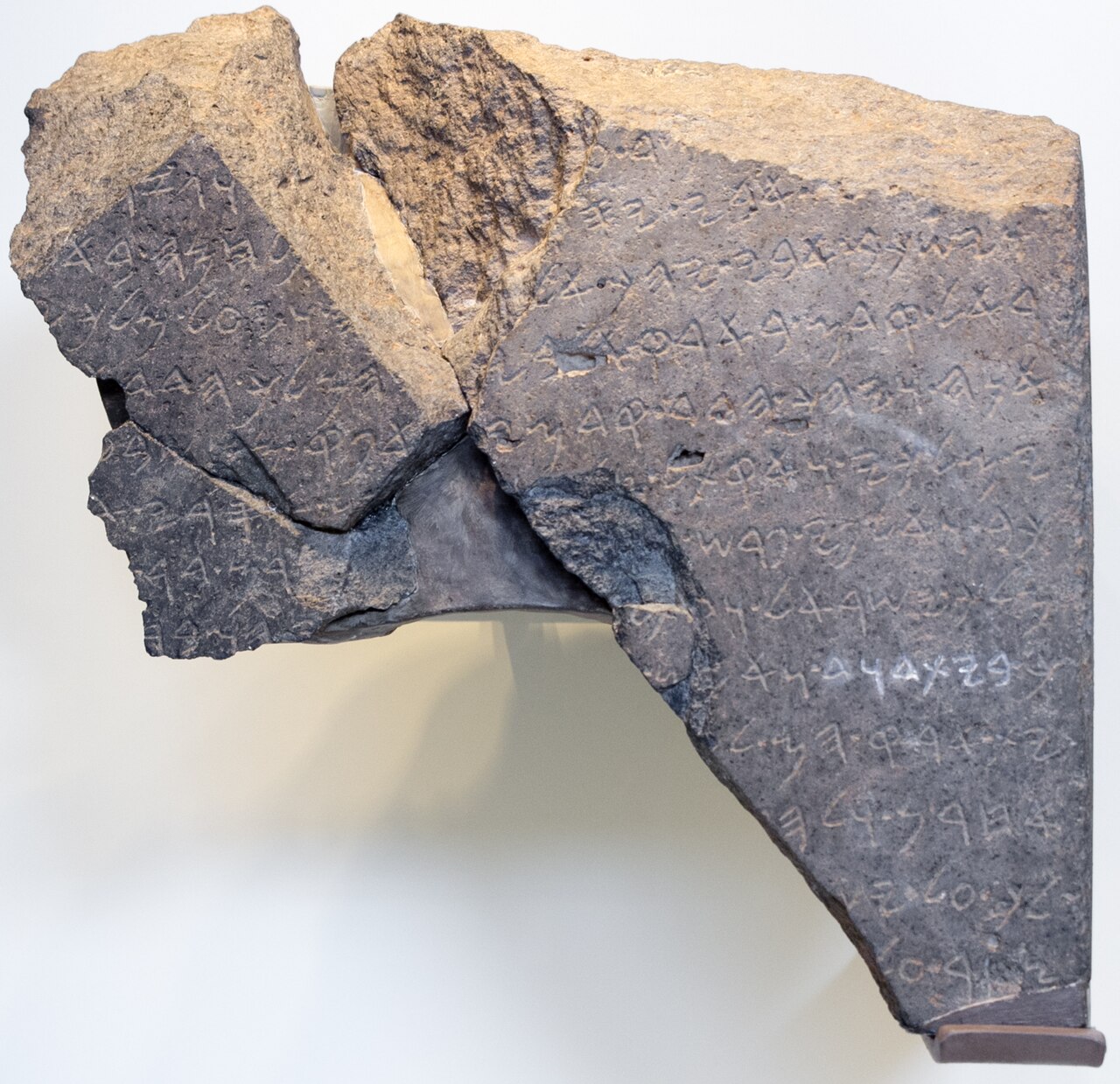
Shalmaneser III's inscriptions call Hazael "son of a nobody" who seized the throne, confirming he was a usurper. Shalmaneser fought him in 841 and 838 BC. Ivory and bronze objects inscribed "belonging to our lord Hazael" were found in Assyria and Greece (as booty). The Tel Dan Stele is widely attributed to Hazael, though its author's name does not survive.
"Thou mayest certainly recover"
In 8:10 the Hebrew consonants read lo, "not" ("say: you will not recover"), while the Masoretic marginal reading (qere) is lo, "to him" ("say to him: you will recover"). The two words sound the same. The library's Greek and Vulgate follow "you will recover"; the written text reads the opposite. See the passage page.
Ahaziah: 22 or 42?
2 Kings 8:26 makes Ahaziah 22 at his accession; 2 Chronicles 22:2 in the Hebrew says 42, which would make him older than his father (who died at 40, 2 Chronicles 21:20). The library's Greek of Chronicles has 20. See the passage page.
The Case for the Biblical Account
Scripture's account
Hazael's rise; Judah's kings (2 Kings 8).
What evidence would we expect?
A usurper named Hazael in Damascus c. 842 BC.
The discoveries
Shalmaneser III's records of Hazael; Hazael booty inscriptions; the Tel Dan Stele.
Testing the discoveries
Hazael's usurpation is documented; how he took power is known only from Kings.
The strongest reconstruction
Hazael seized power c. 842 BC and became Israel's most dangerous enemy.
What remains possible
Whether Ben-hadad was murdered or died of illness.
What the evidence shows
- Assyrian records call Hazael a usurper.Source: BAS Library, "Israelite Kings in Non-Biblical, Non-Israelite Inscriptions" ↗
- The Tel Dan Stele was set up by Hazael.
- 8:10 has a written/read difference (ketiv/qere).
Continue the journey
Journey of a Passage2 Kings 8:10: "Thou shalt not" or "to him"?The Hebrew letters say "Go, say: you will NOT surely live" (lo, not); the Masoretic reading tradition says "Go, say TO HIM: you will surely live" (lo, to him).More from this lesson
Why this matters to the rest of Scripture
- Elijah told to anoint Hazael.
- Jehoram and Ahaziah in Chronicles.
- "I will send a fire into the house of Hazael."