myBibleHistory

Ancient Mysteries & Interpretations

The Silver Scrolls of Ketef Hinnom

Found in 1979 in a burial cave across from Jerusalem's Old City, two rolled silver amulets carry the priestly blessing of Numbers 6 and words close to Deuteronomy 7:9. Usually dated about 600 BC, a date supported by a 2004 imaging study but challenged by Nadav Na'aman in 2011, they are the oldest known texts that also appear in the Hebrew Bible.

Amulets: authentic and excavated · Date: c. 600 BC (supported, debated) · A copy of Numbers: no · Proof of the whole Torah: no

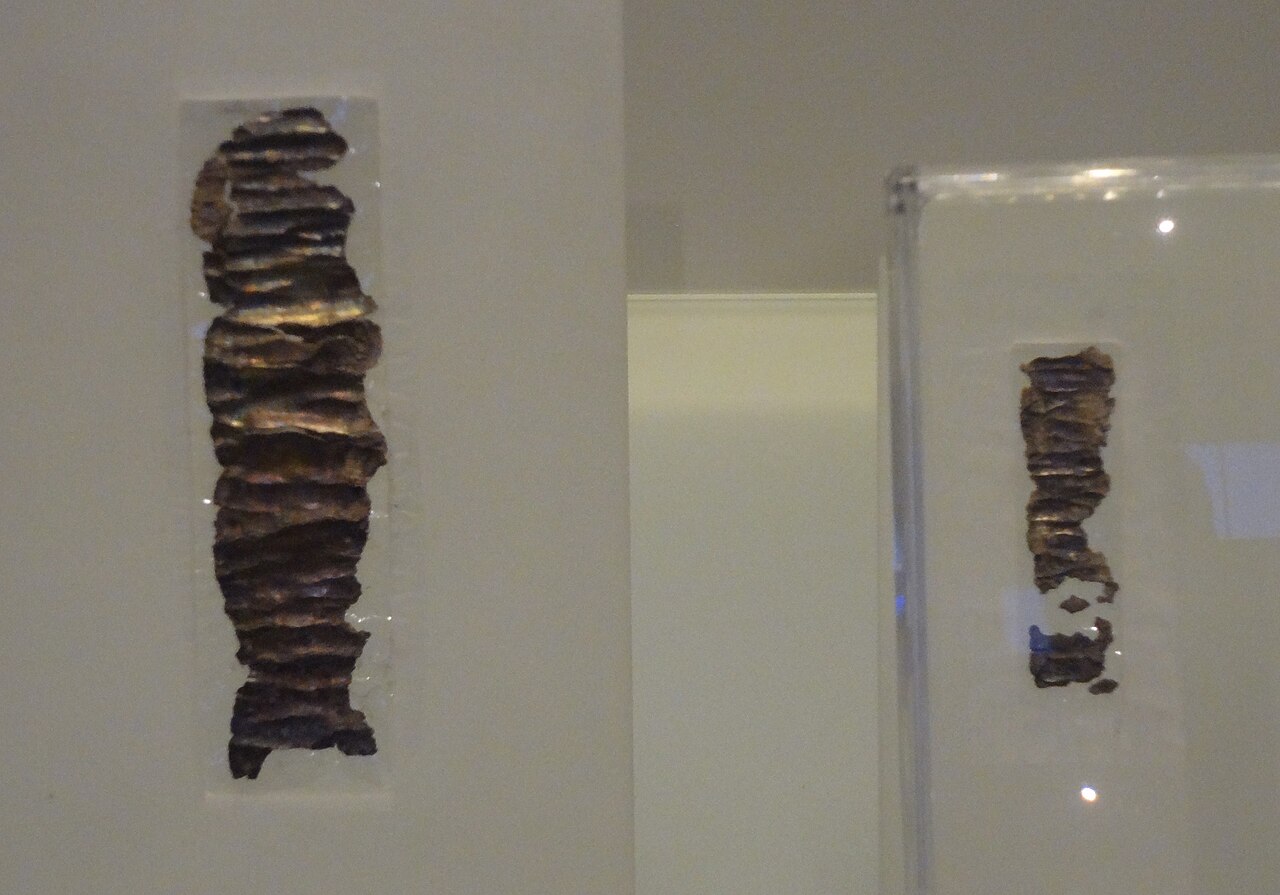
Silver amulet from Ketef Hinnom
Authentic ancient artifactThe Ketef Hinnom silver scrolls (c. 600 BC), inscribed with the priestly blessing of Numbers 6 (Israel Museum).Image credit

1 What Scripture says

"The LORD bless thee, and keep thee: The LORD make his face shine upon thee, and be gracious unto thee: The LORD lift up his countenance upon thee, and give thee peace. And they shall put my name upon the children of Israel" (Numbers 6:24–27). "The faithful God, which keepeth covenant and mercy with them that love him and keep his commandments" (Deuteronomy 7:9).

2 What evidence we might expect

  • Early written forms of biblical texts, if those texts were in use before the exile.
  • Use of God's name in blessings and protective amulets.

3 What ancient sources survive

Ketef Hinnom amulets KH1 and KH2

Language
Hebrew, paleo-Hebrew script
Composed
Late 7th to early 6th century BC (c. 600 BC); Na'aman argues for the late 6th–early 5th century
Oldest surviving copy
The amulets themselves, Israel Museum
Status
Personal amulets quoting a blessing

KH1: 27 × 97 mm; KH2: 11 × 39 mm; rolled silver sheets meant to be worn on a cord.

Source: G. Barkay, M. J. Lundberg, A. G. Vaughn and B. Zuckerman, "The Amulets from Ketef Hinnom: A New Edition and Evaluation," BASOR 334 (2004)

4 What discoveries exist

Gabriel Barkay excavated burial caves on the Ketef Hinnom ridge in 1979. In Cave 24 a collapsed ceiling had sealed a repository (chamber 25) where bones and grave goods of earlier burials were gathered: over a thousand objects, including pottery, jewelry, arrowheads and the two silver amulets. Unrolling and deciphering them took years.

Silver amulet from Ketef Hinnom
Authentic ancient artifactThe Ketef Hinnom silver scrolls (c. 600 BC), inscribed with the priestly blessing of Numbers 6 (Israel Museum).Image credit

Barkay first dated them to the late 7th or early 6th century BC by their script and the pottery. Johannes Renz and Wolfgang Röllig questioned whether the damaged script excluded a Hellenistic date. In 2004 Barkay, Marilyn Lundberg, Andrew Vaughn and Bruce Zuckerman used high-resolution imaging to produce a new edition and argued for the earlier date: shortly before Babylon destroyed Jerusalem in 586 BC.

5 How interpretations compare

Scholarly reconstruction

Oldest biblical text

The amulets are the earliest known citations of texts also found in the Hebrew Bible, about four centuries older than the Dead Sea Scrolls.

Source: G. Barkay, M. J. Lundberg, A. G. Vaughn and B. Zuckerman, "The Amulets from Ketef Hinnom: A New Edition and Evaluation," BASOR 334 (2004)

Scholarly reconstruction

A later date

The script is too damaged to rule out the 3rd–2nd centuries BC.

Assessment: Answered for most scholars by the 2004 imaging study and the archaeological context; the c. 600 BC date is the majority view, though Na'aman (2011) argues for a somewhat later one.

Source: J. Renz and W. Röllig, Handbuch der althebräischen Epigraphik (1995)

Alternative explanation

Proof of the whole Torah

The amulets prove the Torah existed in its present form before the exile.

Assessment: An overstatement. They show that the priestly blessing and Deuteronomy-like language were in use; they say nothing about the rest of the Torah.

6 The strongest supported reconstruction

The Ketef Hinnom amulets are authentic, excavated in context, and most often dated about 600 BC, with a later date argued by some. KH1 is badly damaged and must be partly restored; KH2 is clearer. Neither is a copy of the book of Numbers. They show that the priestly blessing, nearly as it stands in Numbers, was in written use in Jerusalem before the exile, invoking the name YHWH for protection.

7 What remains possible or unknown

  • Whether their shorter blessing is an earlier form or an abbreviation.
  • Who wore them.

What the evidence shows

  • Independently documentedTwo silver amulets from Ketef Hinnom contain the priestly blessing.

    Source: G. Barkay, M. J. Lundberg, A. G. Vaughn and B. Zuckerman, "The Amulets from Ketef Hinnom: A New Edition and Evaluation," BASOR 334 (2004); "Ketef Hinnom scrolls" ↗

  • Strongly supportedThey date to about 600 BC. Na'aman (2011) dates them later.

    Source: G. Barkay, M. J. Lundberg, A. G. Vaughn and B. Zuckerman, "The Amulets from Ketef Hinnom: A New Edition and Evaluation," BASOR 334 (2004); N. Na'aman, "A New Appraisal of the Silver Amulets from Ketef Hinnom," IEJ 61 (2011) ↗

  • Conflicts with current evidenceKH1 preserves the full blessing intact. It is badly damaged and partly restored.
  • DisputedThey prove the Torah existed in its present form before the exile.

Where this connects