Era 4 · Covenant and WildernessNumbers
How Numbers Came to Us
Four different questions: when it is set, where its traditions come from, how it was composed, and what copies survive
Numbers says once that Moses wrote: "Moses wrote their goings out according to their journeys by the commandment of the LORD" (33:2). Elsewhere it reports God speaking to Moses, about 150 times. It ends: "These are the commandments and the judgments, which the LORD commanded by the hand of Moses unto the children of Israel in the plains of Moab."
Jewish and Christian tradition received Numbers as the fourth book of Moses. Many modern scholars see it as the last book of the Torah to take shape, combining priestly laws and lists with older stories and poems. Many believers hold that it preserves Moses' records and early traditions, gathered and arranged by faithful scribes.
The witnesses, by kind
| Witness | Kind | Date | What it shows |
|---|---|---|---|
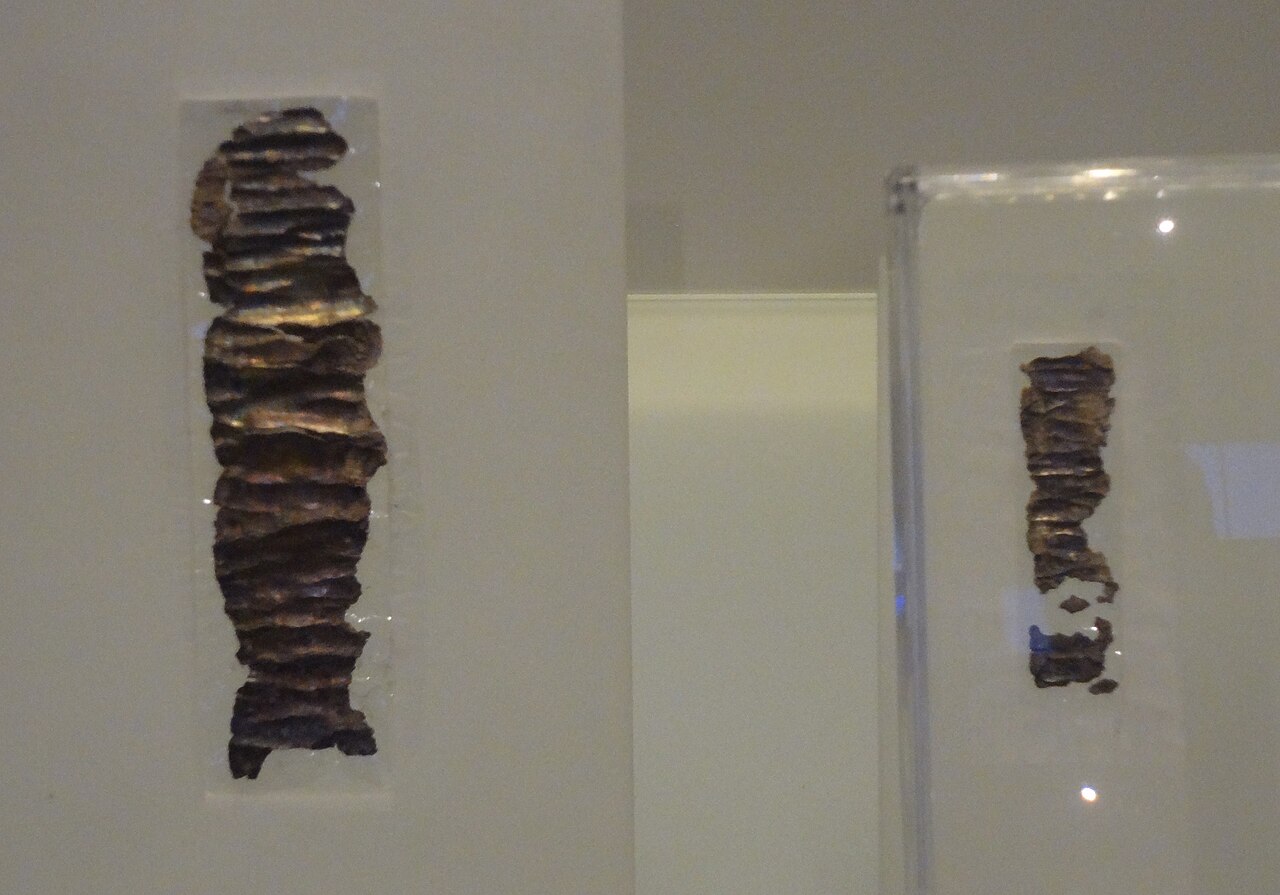
| Ketef Hinnom amulets (KH1, KH2) | Inscription quoting a blessing | c. 600 BC (some date them later) | A form of 6:24–26 in use; not a scroll of Numbers |
| Deir Alla plaster text | Independent non-biblical text | c. 800 BC (debated) | Balaam son of Beor in Transjordanian tradition; not a copy of Numbers |
| 4Q23 (4QLev-Num-a) | Hebrew manuscript, fragmentary | 2nd century BC | Parts of Leviticus and Numbers; a separate scroll from 4Q27 |
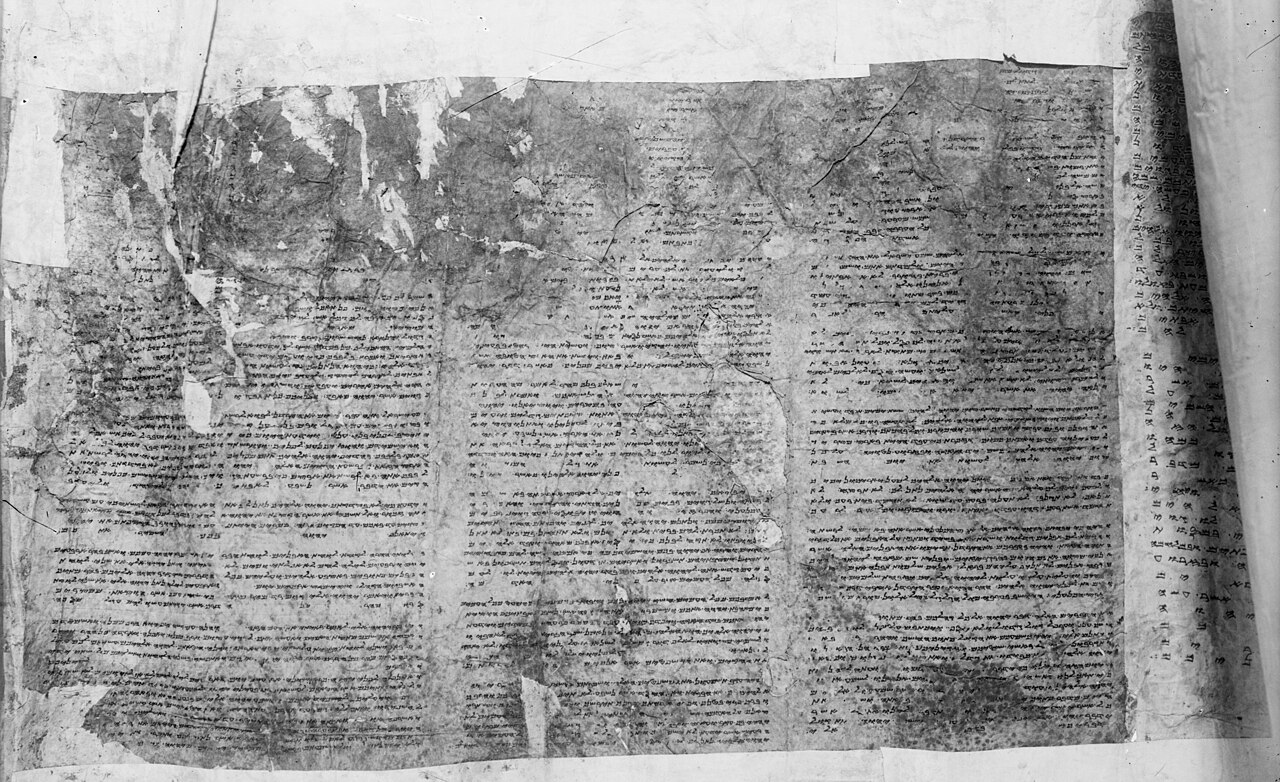
| 4Q27 (4QNum-b) | Hebrew manuscript, fragmentary | 1st century BC | Many chapters in fragments; shares several Samaritan-type expansions and readings with the Greek |
| Other Qumran fragments | Hebrew and Greek manuscripts | 2nd c. BC – 1st c. AD | Including 4QLXXNum, among the oldest Greek copies |
| Murabbaʿat and Nahal Hever | Hebrew manuscripts | 1st–2nd century AD | Close to the later Masoretic Text |
| Samaritan Pentateuch | Separate Hebrew tradition | Ancient tradition; copies from the Middle Ages (Nablus MS 6, 1204) | The longer, harmonized text |
| Septuagint | Greek translation tradition, many manuscripts | Translated c. 3rd century BC; great codices 4th–5th c. AD | A Hebrew text of its translators' day, with its own variants |
| Vulgate; Syriac Peshitta | Latin and Syriac translations | c. AD 400; 2nd–5th c. AD | Mostly follow a Hebrew text close to the Masoretic |
| Leningrad Codex | Masoretic Hebrew manuscript | AD 1008 | The complete standard Hebrew text |
None of these copied from another surviving witness. They are related through lost copies, so the site's passage pages draw no direct copying arrows between them.
The Samaritan expansions
In Deuteronomy 1–3, Moses retells the journey, sometimes with words that Numbers lacks. The Samaritan Pentateuch copies those passages back into Numbers at the matching points. Ingrid Hjelm (2020) counts sixteen major Samaritan variants in Numbers: five in chapters 10–14, nine in chapters 20–27, and two in cultic passages (4:14 and 31:20). Ten are reported found or reconstructed in 4Q27; six fall where no text of 4Q27 survives. 4Q27 shows that this kind of expanded text was not a Samaritan invention but part of a wider Jewish textual tradition the Samaritans kept.
Unicorns
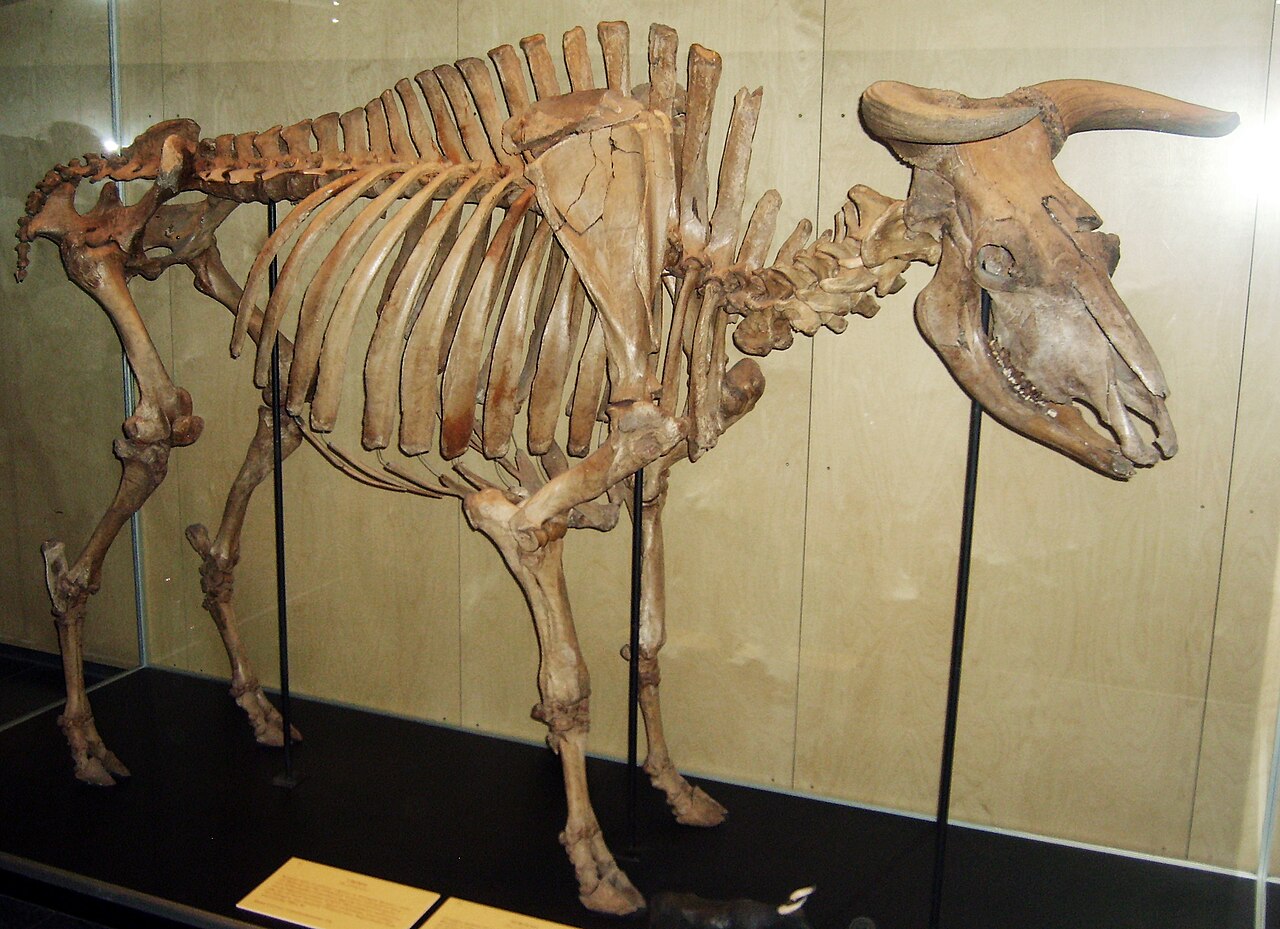
The King James Version says God has "as it were the strength of an unicorn" (23:22; 24:8). The Hebrew re'em is the wild ox, the aurochs, a huge horned animal hunted by Assyrian kings. The Greek translators rendered it monokerōs, "one-horned"; the Latin said unicornis; and the KJV followed. Modern translations read "wild ox." That is a translation difference, not a manuscript variant.
Other translation choices
- "Fiery serpents" (21:6): Hebrew seraphim, "burning ones," the same word for the creatures around God's throne in Isaiah 6.
- "Giants" (13:33): Hebrew Nephilim, the same word as Genesis 6:4.
- "Thousands" (eleph): unit or number? See the first census.
- "Star… Sceptre… a man" (24:17): see the passage page.
- Chapter and verse numbers: Hebrew 17:1–15 is English 16:36–50; Hebrew 30:1 is English 29:40. Some French and Greek editions divide chapters 12–13 differently too. These are numbering differences, not textual ones.
Where the copies differ
| Passage | What differs | Kind of difference |
|---|---|---|
| Numbers 3:28 | Kohathites 8,600 (Hebrew) or 8,300 (some Greek manuscripts) | Manuscript variant affecting a total |
| Numbers 4:14 | Samaritan and Greek add the covering of the laver | Expansion shared by two traditions |
| Numbers 6:24–26 | Ketef Hinnom's shorter wording | An inscription, not a manuscript |
| Numbers 10:34–36 | Inverted nuns; Greek order of the verses | Scribal marking and transposition |
| Numbers 10–31 | Samaritan and 4Q27 insertions from Deuteronomy | Harmonizing expansions |
| Numbers 22:5 | "Land of the children of his people" or "of Ammon" | Manuscript variant |
| Numbers 24:7 | "Agag" (Hebrew, Latin) or "Gog" (Samaritan, Greek) | Manuscript variant with large consequences |
| Numbers 24:17 | "Sceptre" or "a man" | Translation and interpretation |
| Numbers 23:22; 24:8 | "Wild ox" or "unicorn" | Translation difference |
The sixteen major Samaritan variants
Each unit below was read in the Samaritan and Greek texts of the site's library. The fifth column records the status of the 4Q27 reading for that unit. We have not yet collated the physical fragments and Jastram's restorations unit by unit, so every row is marked reading_not_transcribed: the Samaritan reading is shown on its lesson or passage page, the 4Q27 evidence is cited to its edition, and no 4Q27 wording is supplied until it has been checked.
| Unit | Source of the added material | Samaritan (library text) | Greek (library text) | 4Q27 status |
|---|---|---|---|---|
| 4:14 | Not from Deuteronomy: the laver covered with purple cloth and skin | Expanded | Expanded | reading_not_transcribed |
| 10:10 | Deuteronomy 1:6–8: "Ye have dwelt long enough in this mount" | Expanded | Shorter | reading_not_transcribed |
| 12:16 | Deuteronomy 1:20–23: the people ask to send scouts | Expanded | Shorter* | reading_not_transcribed |
| 13:33 | Deuteronomy 1:27–33: the people murmur; Moses answers | Expanded | Shorter | reading_not_transcribed |
| 14:40 | Deuteronomy 1:42: "Go not up" | Expanded | Shorter | reading_not_transcribed |
| 14:45 | Deuteronomy 1:44: "as bees do" | Expanded | Shorter | reading_not_transcribed |
| 20:13 (a) | Deuteronomy 3:24–28: Moses asks to cross; Joshua to be charged | Expanded | Shorter | reading_not_transcribed |
| 20:13 (b) | Deuteronomy 2:2–6: turn north; do not provoke the sons of Esau | Expanded | Shorter | reading_not_transcribed |
| 21:12 | Deuteronomy 2:9: do not distress Moab | Expanded | Shorter | reading_not_transcribed |
| 21:21 | Deuteronomy 2:24–25: cross the Arnon; Sihon given | Expanded (gaps in library text) | Shorter | reading_not_transcribed |
| 21:22 | Deuteronomy 2:27–29: offer to buy food and water | Expanded (gaps in library text) | Shorter | reading_not_transcribed |
| 21:23 | Deuteronomy 2:31: "I have begun to give Sihon" | Expanded | Shorter | reading_not_transcribed |
| 27:23 | Deuteronomy 3:21–22: Moses charges Joshua | Expanded | Shorter | reading_not_transcribed |
| 31:20 | Within Numbers 31:21–24: Moses instructs Eleazar | Expanded | Shorter | reading_not_transcribed |
| Unit 15 | Counted by Hjelm in chapters 20–27; not yet identified on this site | Not yet located | Not checked | reading_not_transcribed |
| Unit 16 | Counted by Hjelm in chapters 20–27; not yet identified on this site | Not yet located | Not checked | reading_not_transcribed |
* The site's Greek text (Giguet's French translation of the Septuagint) numbers the verses of chapters 12–13 differently, so 12:16 appears empty there. That is a numbering difference in our data, not a missing verse in the Septuagint.
Composition: how scholars have explained it
Moses kept records of the journey and the laws (33:2), which were preserved and arranged. Supporters point to the borders of chapter 34, the ancient itinerary form, archaic poems, and the absence of later kings or Jerusalem.
In the classic Documentary Hypothesis, most of Numbers is Priestly (P), with stories from J and E (the spies, Balaam). Many scholars see the Balaam oracles and the songs of chapter 21 as very old poetry inserted into later prose. There is no consensus on the exact sources.
Thomas Römer, Reinhard Achenbach and others, including scholars associated with the Zurich school, argue that Numbers was among the last parts of the Torah to be completed, in the Persian period, bridging Leviticus and Deuteronomy and gathering materials that did not fit elsewhere.
Many believing scholars see early traditions, poems and records shaped by later inspired editors, with updating of names ("Dibon-gad").
How Numbers became Scripture
As part of the Torah, Numbers is Scripture for Jews, Samaritans and every Christian church, and it is the same book in every canon. Its Hebrew name is Bemidbar, "in the wilderness," and the rabbis also called it "the book of the counted" (Chumash ha-Pekudim), from which the Greek and English "Numbers" comes. The New Testament draws on it constantly: the bronze serpent (John 3), the rock (1 Corinthians 10), the wilderness generation (Hebrews 3–4), Balaam (2 Peter, Jude, Revelation), and Korah (Jude). Its canon status is shared; its text, as this lesson shows, came down in more than one form.
Research status for Numbers
| Area | Status | What remains |
|---|---|---|
| Chapter coverage (1–36) | Research complete | All chapters are covered in 28 lessons |
| Ketef Hinnom, Deir Alla, Mesha, Timna, Kadesh records | Research complete | Image identity and rights still to be checked for each photograph |
| Numbers 3:28, 6:24–26, 13:33, 20:13, 24:7, 24:17 passage pages | Research complete | Greek manuscript sigla for 3:28 to be confirmed in a critical apparatus |
| Samaritan variants | Evidence unresolved | Two of Hjelm's sixteen units not yet located; library text has gaps at 21:21–22; collation with Florentin and Tal (2025) outstanding |
| 4Q27 readings | Evidence unresolved | Fragment-by-fragment comparison with DJD XII not yet done |
| Septuagint | Evidence unresolved | Checked in a translation; a Greek critical edition comparison is outstanding |
| Emar comparison for the Booths bulls | Evidence unresolved | To be checked against the published Emar text |
| Chapter-specific primary citations | Research outstanding | Some Research sections still cite general works rather than chapter-level sources |
Under the site's standard, Numbers is not marked fully complete until the unresolved and outstanding items above are closed. The Bonn project Mapping Variant Textuality of Numbers is currently studying the same questions.
Toward Deuteronomy
Numbers ends on the plains of Moab, and Deuteronomy begins there: Moses' last speeches, retelling the journey this book recorded. The Samaritan expansions show that ancient scribes already read the two books side by side. The next book of the site will follow that retelling and set the two accounts next to each other.
What the evidence shows
- The Ketef Hinnom amulets quote a form of the priestly blessing; they are not a manuscript of Numbers.
- 4Q27 shares harmonizing expansions with the Samaritan Pentateuch.Source: N. Jastram, "4QNumb," DJD 12 (1994); "A Comparison of Two 'Proto-Samaritan' Texts from Qumran" (1998); N. R. Jastram, "4QNumbers-b," in Qumran Cave 4.VII: Genesis to Numbers, DJD XII (1994), 205–267, plates XXXVIII–LIX; 4Q27 (4QNumbers-b), Leon Levy Dead Sea Scrolls Digital Library, Israel Antiquities Authority ↗
- Hjelm counts sixteen major Samaritan variants in Numbers, ten attested or reconstructed in 4Q27.Source: I. Hjelm, "The Samaritan and Jewish Versions of the Pentateuch: A Survey," Religions 11 (2020) ↗
- Every Samaritan expansion is earlier than the shorter Masoretic text. Most specialists regard them as secondary harmonizations.
- The KJV's "unicorn" translates re'em, the wild ox.
- Numbers was completed in the Persian period.Source: T. Römer, "Israel's Sojourn in the Wilderness and the Construction of the Book of Numbers" (2007); R. Achenbach, Die Vollendung der Tora (2003)
- The Balaam oracles are among the oldest Hebrew poetry.Source: W. F. Albright, "The Oracles of Balaam," JBL 63 (1944)
- Numbers is inspired Scripture.
Continue the journey
Journey of a PassageNumbers 3:28: The Kohathites: 8,600 or 8,300?Numbers counts the three Levite clans at 7,500, 8,600 and 6,200, which make 22,300, yet the total in 3:39 is 22,000.More from this lesson
Investigations
Optional deep dives: the ancient sources, the physical evidence, and every interpretation side by side, including unconventional ones, each labeled for what it is.
Balaam Son of Beor at Deir AllaInscription: authentic · Name and role: match Numbers · Events of Numbers: not mentioned
Does a plaster inscription from the Jordan valley prove that the Bible's Balaam was real?
In 1967 Dutch archaeologists found fragments of an ink inscription on plaster at Tell Deir Alla, east of the Jordan: "the book of Balaam son of Beor, who was a seer of the gods." Conventionally dated about 800 BC (some prefer the 8th century, as late as 750–700 BC), it is the first text outside the Bible to name a prophet known from the Bible. It shows Balaam was a famous seer in the region's own tradition. It does not confirm the events of Numbers.
Open the full investigation →The Silver Scrolls of Ketef HinnomAmulets: authentic and excavated · Date: c. 600 BC (supported, debated) · A copy of Numbers: no · Proof of the whole Torah: no
Are two tiny silver amulets from a Jerusalem tomb really the oldest known writing of words found in the Bible?
Found in 1979 in a burial cave across from Jerusalem's Old City, two rolled silver amulets carry the priestly blessing of Numbers 6 and words close to Deuteronomy 7:9. Usually dated about 600 BC, a date supported by a 2004 imaging study but challenged by Nadav Na'aman in 2011, they are the oldest known texts that also appear in the Hebrew Bible.
Open the full investigation →Why this matters to the rest of Scripture
- Moses begins to speak "on this side Jordan… in the land of Moab."
- The bronze serpent.
- "These things were our examples."
- The wilderness generation.
- Cain, Balaam and Korah.
Sources to explore
- 4Q27 (4QNumbers-b), Leon Levy Dead Sea Scrolls Digital Library, Israel Antiquities Authority ↗
- I. Hjelm, "The Samaritan and Jewish Versions of the Pentateuch: A Survey," Religions 11 (2020) ↗
- M. Florentin and A. Tal, The Samaritan Pentateuch: An English Translation with a Parallel Annotated Hebrew Text (Open Book Publishers, 2025), based on Nablus MS 6 (1204) ↗
- Mapping Variant Textuality of Numbers (University of Bonn research project) ↗
Overviews are a starting point. Each links onward to the primary sources and specialist studies behind it.