Era 4 · Covenant and WildernessNumbers
A Star out of Jacob
"How shall I curse, whom God hath not cursed?"
From the high places of Baal, Balaam sees the edge of Israel's camp. "How shall I curse, whom God hath not cursed?… Lo, the people shall dwell alone… Who can count the dust of Jacob… Let me die the death of the righteous, and let my last end be like his!"
From the top of Pisgah: "God is not a man, that he should lie; neither the son of man, that he should repent… Behold, I have received commandment to bless: and he hath blessed; and I cannot reverse it… Surely there is no enchantment against Jacob."
From Peor, the Spirit of God comes on him: "How goodly are thy tents, O Jacob, and thy tabernacles, O Israel!… Blessed is he that blesseth thee, and cursed is he that curseth thee." Balak claps his hands in anger and tells him to flee home.
Balaam's last word: "I shall see him, but not now: I shall behold him, but not nigh: there shall come a Star out of Jacob, and a Sceptre shall rise out of Israel, and shall smite the corners of Moab." He speaks of Edom, Amalek, the Kenites, and ships from Kittim, "and Balaam rose up, and went and returned to his place."
Ancient poetry
The oracles are written in an old style of Hebrew poetry. William F. Albright (1944) argued that their language and spelling are among the oldest in the Bible, perhaps 13th–12th century BC in origin; others date them to the monarchy. Their mention of Edom, Moab and Amalek fits the early history of Israel's neighbors.
Star and scepter in translation
The Hebrew has "a star" and "a scepter." The Greek Septuagint renders the second as "a man shall rise up out of Israel" (anthrōpos), reading the oracle as about a person. The Aramaic Targum Onqelos says "a king shall arise from Jacob, and the Messiah shall be anointed from Israel." Follow the passage to see every version.
"Ma tovu"
"How goodly are thy tents, O Jacob, and thy tabernacles, O Israel" (Ma tovu ohalekha Yaakov) is the prayer many Jews say on entering a synagogue: the blessing of a hired foreign seer became Israel's own words of worship.
Agag or Gog?
In the third oracle (24:7), the Hebrew text says Israel's "king shall be higher than Agag." Agag is the name of the Amalekite king Saul spared (1 Samuel 15), which may point to Israel's first kings. The Samaritan Pentateuch reads "Gog" instead, and so does the Greek Septuagint, which renders the whole verse differently: "There shall come a man out of his seed, and he shall rule over many nations; and the kingdom of Gog shall be exalted." Gog is the great enemy of the last days in Ezekiel 38–39. The difference is one letter in Hebrew (אגג / גוג), and it changes the oracle from a memory of Saul's time into a vision of the end. The Vulgate and the King James Bible follow the Hebrew "Agag."
Ships from Kittim
Balaam's last words (24:24) speak of ships "from the coast of Chittim" that will afflict Asshur and Eber. Kittim first meant Cyprus (from the city of Kition). Daniel 11:30 uses the phrase for a Roman fleet, and the Dead Sea Scrolls call the Romans "the Kittim." Some modern writers go further and claim Balaam foretold specific modern nations or events. Those readings are interpretations: the text itself names only ancient peoples.
The Case for the Biblical Account
Scripture's account
Balaam's four oracles bless Israel and foresee a star and scepter from Jacob (Numbers 23–24).
What evidence would we expect?
Archaic poetic features; later interpretation of the star prophecy.
The discoveries
Archaic Hebrew forms in the oracles; the star prophecy in the Septuagint, Targums, Dead Sea Scrolls (4QTestimonia, Damascus Document, War Scroll), the Bar Kokhba revolt, and the Gospels.
Testing the discoveries
The poetry's antiquity is debated; its later messianic reading is well documented.
The strongest reconstruction
Ancient oracles, probably among Israel's oldest poems, foresaw a ruler from Israel, and became a central messianic text.
What remains possible
That the star first referred to David (who defeated Moab and Edom, 2 Samuel 8), and ultimately to the Messiah; or to a single future king.
Then and Later
The star prophecy, then and later
- WildernessNumbers 24:17. A star out of Jacob, a scepter out of Israel.
- c. 1000 BCDavid. Defeats Moab and Edom, as the oracle foresaw.
- 3rd c. BCSeptuagint. "A man shall rise up out of Israel."Journey of the passage →
- 1st c. BCQumran. 4QTestimonia, the Damascus Document and the War Scroll read the star and scepter as messianic leaders.
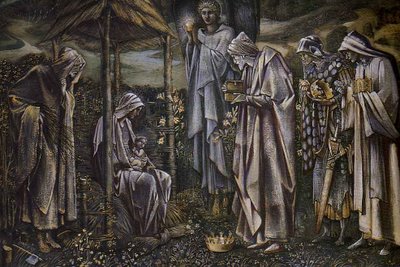
- c. 5 BCThe Magi. "We have seen his star in the east, and are come to worship him."
- AD 132Bar Kokhba. Rabbi Akiva hails Simon bar Kosiba as "Bar Kokhba," "son of the star," leader of the revolt against Rome.
- 1st–2nd c.Revelation. "I am the root and the offspring of David, and the bright and morning star."
What the evidence shows
- The Septuagint renders "scepter" in Numbers 24:17 as "a man."
- Qumran texts and Rabbi Akiva read Numbers 24:17 messianically.Source: 4QTestimonia (4Q175); Damascus Document (CD) 7:18–21; Jerusalem Talmud, Taanit 4:5; "Star Prophecy" (Numbers 24:17 in later Jewish and Christian tradition) ↗
- Balaam's oracles are among the oldest poems in the Bible.Source: W. F. Albright, "The Oracles of Balaam," JBL 63 (1944)
- The Masoretic text reads "Agag" in 24:7; the Samaritan Pentateuch and the Septuagint read "Gog." Checked in the site's library texts.
- Balaam's oracles foretell specific modern nations or events. A modern interpretation; the text names Edom, Moab, Amalek, the Kenites, Asshur, Eber and Kittim.
- "There shall come a Star out of Jacob."
Continue the journey
Journey of a PassageNumbers 24:17: A star, a scepter, or a man?Balaam's last oracle sees "a star out of Jacob, and a scepter out of Israel." The Greek translators wrote "a man" for the scepter, the Aramaic Targum "the Messiah," the Dead Sea Scrolls and Rabbi Akiva read it of coming leaders, and Matthew's Magi follow a star.More from this lesson
Why this matters to the rest of Scripture
- The Magi follow the star.
- "The bright and morning star."
- "Until the day dawn, and the day star arise in your hearts."
- "The sceptre shall not depart from Judah."
- "Blessed is he that blesseth thee."
- "The ships of Chittim."
- Agag, king of the Amalekites.
- Gog, of the land of Magog.