Era 4 · Covenant and WildernessNumbers
Inheritance and Joshua
"The daughters of Zelophehad speak right"
The daughters of Zelophehad of the tribe of Manasseh stand before Moses, Eleazar, the leaders and the congregation at the door of the tent: "Our father died in the wilderness… and had no sons. Why should the name of our father be done away from among his family, because he hath no son? Give unto us therefore a possession among the brethren of our father."
Moses brings their case before the LORD. "The daughters of Zelophehad speak right: thou shalt surely give them a possession of an inheritance… If a man die, and have no son, then ye shall cause his inheritance to pass unto his daughter."
"Get thee up into this mount Abarim, and see the land which I have given unto the children of Israel. And when thou hast seen it, thou also shalt be gathered unto thy people, as Aaron thy brother was gathered."
Moses answers: "Let the LORD, the God of the spirits of all flesh, set a man over the congregation… that the congregation of the LORD be not as sheep which have no shepherd." God names Joshua, "a man in whom is the spirit." Moses lays his hands on him before Eleazar and all the people and gives him a charge.
Joshua is not given all Moses' authority: "thou shalt put some of thine honour upon him… And he shall stand before Eleazar the priest, who shall ask counsel for him after the judgment of Urim before the LORD: at his word shall they go out, and at his word they shall come in." Moses "laid his hands upon him, and gave him a charge."
Their names on ancient pottery
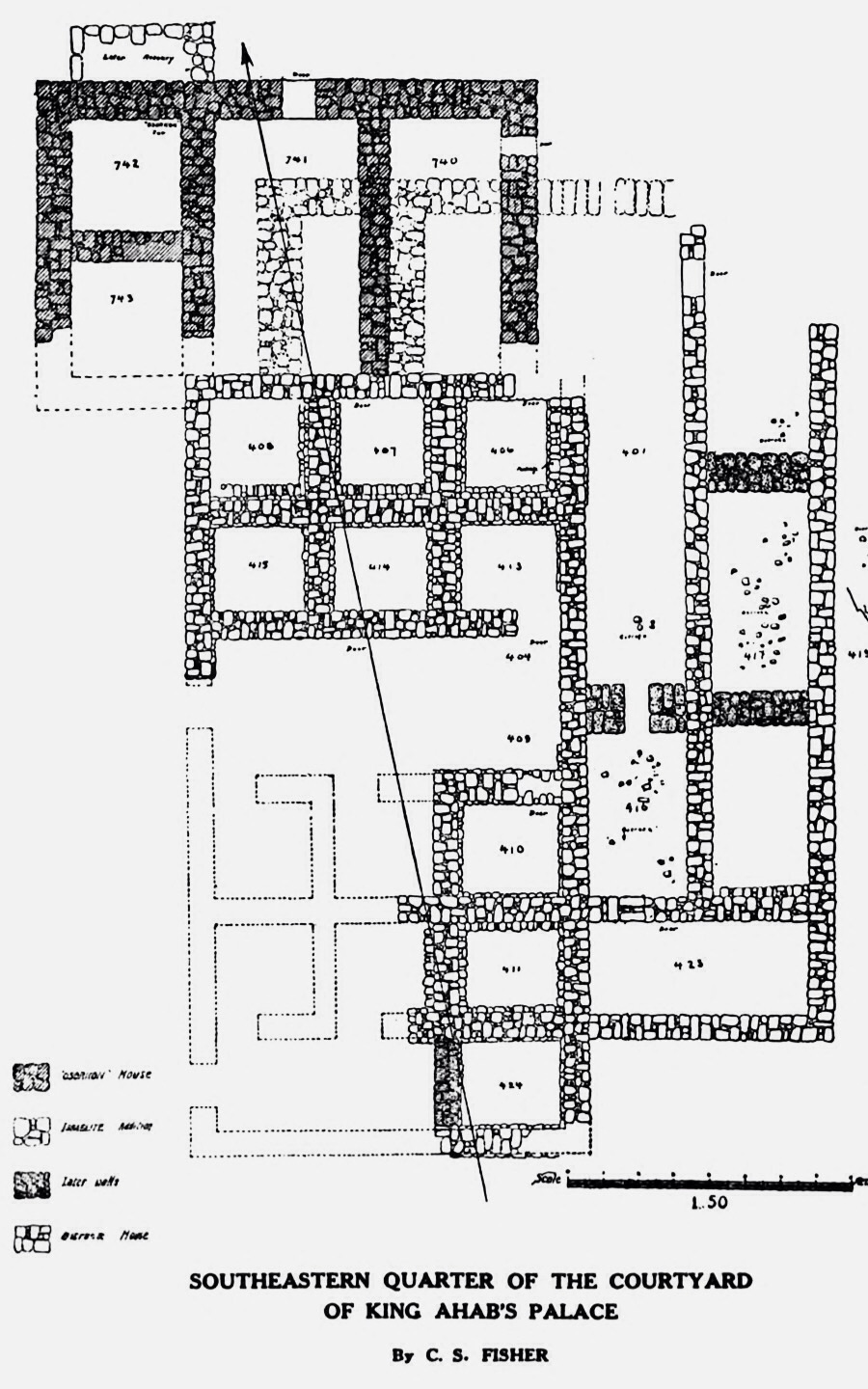
In 1910 George Reisner's Harvard expedition found 102 inscribed potsherds in the royal palace of Samaria, the capital of the northern kingdom; about 63 can be read. Dated by regnal years, most likely of Jeroboam II (8th century BC), they record deliveries of "old wine" and "fine oil" from clan districts of Manasseh. The districts named include Abiezer, Shemida, Helek, Asriel, Hoglah and Noah: the clans of Manasseh in Numbers 26:30–33 and Joshua 17:2–3, and two of the daughters of Zelophehad.
Tirzah, another daughter, is the name of a city that was the first capital of the northern kingdom (1 Kings 14:17; 16:23), identified with Tell el-Farah North. The daughters' names were also the names of places in Manasseh's territory, showing that the genealogies of Numbers preserve the real clan geography of the region.
Daughters as heirs elsewhere
In some ancient societies a father without sons could legally make his daughter an heir. Documents from Nuzi (15th–14th centuries BC) and Emar (13th century BC) record fathers declaring daughters to be "male and female" heirs to keep property in the family. Numbers turns this into a general rule for Israel.
Women's agency in a patriarchal law
The law of Numbers assumed land passed through sons. The sisters do not ask for that system to end; they argue within it, for their father's name, and win a new rule: daughters inherit when there is no son. Numbers 36 later limits their freedom to marry outside the tribe, so the gain is real but bounded. Both sides are presented as they are written.
The laying on of hands
Moses' laying hands on Joshua (semikhah) became the model for ordaining rabbis and, in the church, for commissioning elders and ministers (Acts 6:6; 1 Timothy 4:14). The Hebrew name Joshua (Yehoshua) and the Greek Jesus (Iēsous) are the same name.
The Urim
The Urim and Thummim were kept in the high priest's breastpiece (Exodus 28:30). How they worked is not described. Many think they were lots giving yes or no answers (1 Samuel 14:41 in the Greek has "give Urim… give Thummim"). Numbers 27 makes the new leader depend on the priest's inquiry, a division of powers between Joshua and Eleazar. After the time of David the Urim are rarely mentioned, and Ezra 2:63 waits for "a priest with Urim and with Thummim" who never comes.
The Samaritan Pentateuch at 27:23
After Moses lays his hands on Joshua, the Samaritan Pentateuch adds Moses' words from Deuteronomy 3:21–22: "Thine eyes have seen all that the LORD your God hath done unto these two kings: so shall the LORD do unto all the kingdoms whither thou passest. Ye shall not fear them: for the LORD your God he shall fight for you." The "charge" that Numbers mentions is given its words.
The Case for the Biblical Account
Scripture's account
Zelophehad's daughters receive their father's inheritance; Joshua is commissioned (Numbers 27).
What evidence would we expect?
Manasseh's clan names in the region's geography; ancient laws on daughters inheriting.
The discoveries
The Samaria ostraca (8th-century BC administrative records) naming Abiezer, Shemida, Helek, Asriel, Hoglah and Noah as districts; Tirzah as a city; Nuzi and Emar daughter-heir documents.
Testing the discoveries
The ostraca are 8th century BC and show the names were real geographic units then. They do not date the events or the text of Numbers.
The strongest reconstruction
Numbers preserves authentic clan names of Manasseh and a legal tradition protecting daughters' inheritance.
What remains possible
Whether the clans were named after ancestors, as the genealogies present them, or the genealogies were built from place names.
Then and Later
Daughters' inheritance, then and later
- Plains of MoabNumbers 27. Five sisters win their father's land.
- ConquestJoshua 17. The sisters receive their portion.
- 8th c. BCSamaria ostraca. Hoglah and Noah are districts sending wine and oil to the palace.
- c. 500 BCJob. Job gives his daughters an inheritance among their brothers.
- RabbinicThe sisters praised. The Talmud calls them wise, learned in the law, and righteous (Bava Batra 119b).
What the evidence shows
- The Samaria ostraca name Hoglah and Noah as clan districts of Manasseh.Source: G. A. Reisner, Harvard Excavations at Samaria (1924); I. T. Kaufman, The Samaria Ostraca (1966); "Samaria Ostraca" (overview) ↗
- Nuzi and Emar documents allow daughters to be designated heirs.Source: On daughters as heirs at Nuzi and Emar: Z. Ben-Barak, Inheritance by Daughters in Israel and the Ancient Near East (2006)
- The Samaritan Pentateuch adds Deuteronomy 3:21–22 at 27:23. Read in the site's Samaritan text.
- The Urim and Thummim were lots giving yes-or-no answers.
- "The daughters of Zelophehad speak right."
Continue the journey
Connected elsewhere in ScriptureManasseh and Zelophehad's DaughtersJoshua 17:3–6: The daughters receive land.More from this lesson
Why this matters to the rest of Scripture
- The daughters receive land.
- Manasseh's clans.
- Job's daughters inherit.
- "Heirs according to the promise."
- The persistent widow.
- "Be strong and of a good courage."
- "As sheep having no shepherd."
- The apostles lay hands on the seven.