Era 4 · Covenant and WildernessNumbers
Miriam and Aaron Against Moses
"With him will I speak mouth to mouth"
"And Miriam and Aaron spake against Moses because of the Ethiopian [Cushite] woman whom he had married… And they said, Hath the LORD indeed spoken only by Moses? hath he not spoken also by us? And the LORD heard it. (Now the man Moses was very meek, above all the men which were upon the face of the earth.)"
God calls the three to the tent: "If there be a prophet among you, I the LORD will make myself known unto him in a vision, and will speak unto him in a dream. My servant Moses is not so, who is faithful in all mine house. With him will I speak mouth to mouth, even apparently, and not in dark speeches; and the similitude of the LORD shall he behold."
When the cloud lifts, Miriam is "leprous, white as snow." Aaron pleads with Moses, and Moses cries out to God: "Heal her now, O God, I beseech thee." She is shut out of the camp seven days, "and the people journeyed not till Miriam was brought in again."
Who was the Cushite wife?
- A Nubian or Ethiopian woman (Cush is the region south of Egypt), a second wife of Moses. Josephus tells a legend of Moses as an Egyptian general who married an Ethiopian princess.
- Zipporah herself: Habakkuk 3:7 pairs "Cushan" with Midian, suggesting a Midianite people called Cushan.
Either way, the complaint seems to be about family and status as much as about the marriage. Readers have often noted the irony of Miriam turning "white as snow" after objecting to a dark-skinned wife, though the text does not draw that conclusion.
Miriam the prophet
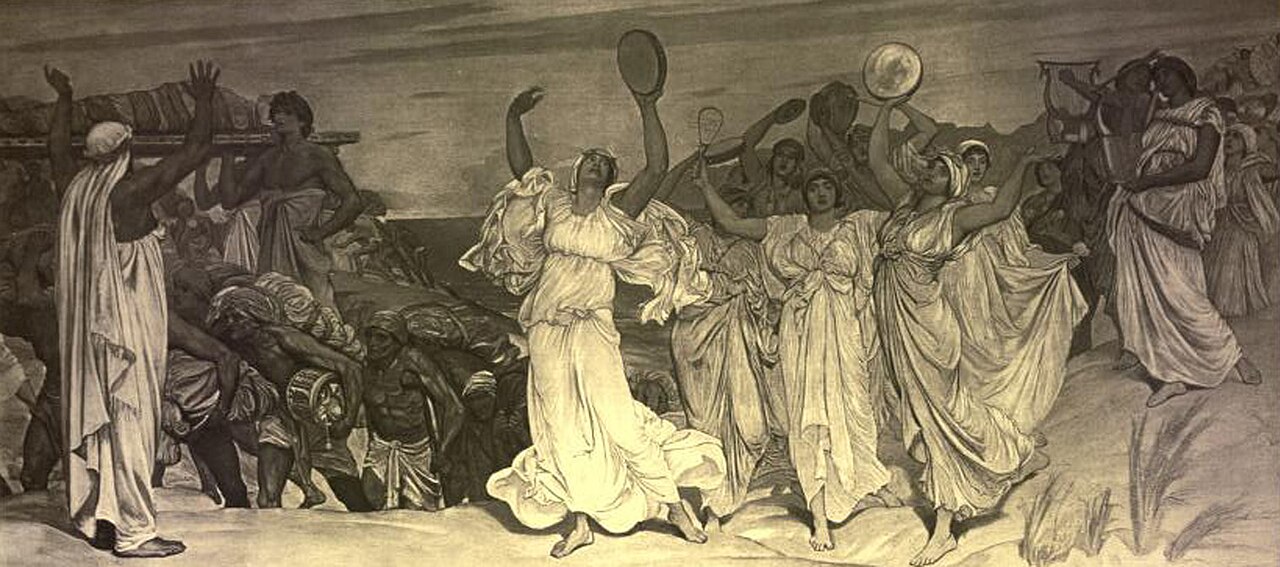
Miriam is called a prophetess (Exodus 15:20), and Micah lists her as one of Israel's three leaders out of Egypt (Micah 6:4). Her death at Kadesh opens Numbers 20; right after, the water fails. Jewish tradition told of "Miriam's well," a rock that gave water while she lived.
The Case for the Biblical Account
Scripture's account
Miriam and Aaron challenge Moses; God affirms Moses' unique role; Miriam is temporarily excluded (Numbers 12).
What evidence would we expect?
Contacts between Egypt, Midian and Cush; prophecy through dreams and visions in the ancient Near East.
The discoveries
Extensive Egyptian-Nubian contact in the New Kingdom; prophecy by dreams and visions at Mari and in Assyria.
Testing the discoveries
The setting is plausible; the event is known only from the Bible.
The strongest reconstruction
The chapter defines Moses' prophetic authority as unique: direct speech, not dreams.
What remains possible
The identity of the Cushite woman remains open.
What the evidence shows
- Egypt had extensive contact with Cush (Nubia) in the New Kingdom.
- Moses' Cushite wife was Zipporah.
- God spoke with Moses "mouth to mouth."
Continue the journey
Connected elsewhere in ScriptureMoses Is BornExodus 2:21: Moses marries Zipporah.More from this lesson
Why this matters to the rest of Scripture
- Moses marries Zipporah.
- "There arose not a prophet since in Israel like unto Moses."
- Moses faithful in all God's house; Christ as a Son over it.
- "Remember what the LORD thy God did unto Miriam."
- An Ethiopian official comes to faith.