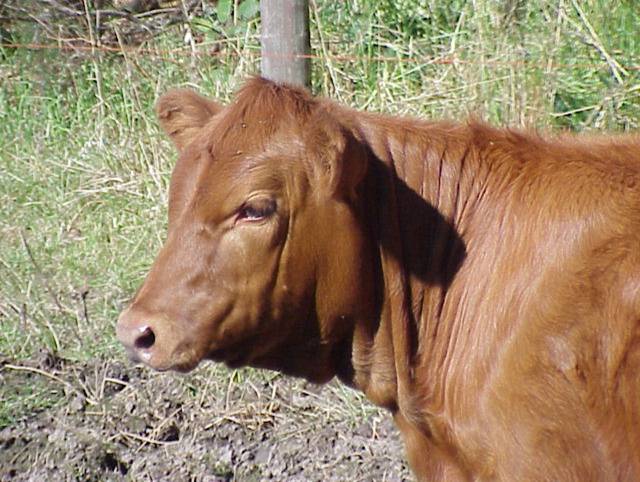
"This is the ordinance of the law… bring thee a red heifer without spot, wherein is no blemish, and upon which never came yoke." Eleazar the priest takes it outside the camp; it is slaughtered, and he sprinkles its blood toward the tabernacle seven times. The whole animal is burned, with cedar wood, hyssop and scarlet thrown into the fire.
A clean man gathers the ashes and keeps them outside the camp, "for a water of separation." Whoever touches a corpse, a bone or a grave is unclean seven days; on the third and seventh days he is sprinkled with water mixed with the ashes, and on the seventh he washes and is clean.
Strangely, everyone who prepares the ashes becomes unclean until evening, while the ashes make the unclean clean.
The law without a reason
Jewish tradition called this a chok, a statute without a stated reason, and it became the classic example. A midrash says that even King Solomon, who understood everything, could not understand it. The paradox that the ashes purify the impure but defile the pure fascinated interpreters.
How many red heifers?
The Mishnah (Parah 3:5) says the ashes were renewed rarely: one heifer in Moses' time, one by Ezra, and five, or seven, in the rest of the Second Temple period. Maimonides added that the tenth would be made by the Messiah. Without a Temple, no ashes have been made since AD 70.
In 2022 a group in Israel brought red heifers from a ranch in Texas, hoping one would qualify for a renewed ritual on the Mount of Olives. The effort has drawn wide attention, and controversy, because of what it could mean for the Temple Mount.
The Case for the Biblical Account
Scripture's account
The ashes of a red heifer purify those defiled by contact with the dead (Numbers 19).
What evidence would we expect?
Purification rites using ash, water and plants; concern with corpse impurity; practice in the Temple period.
The discoveries
Hittite and Mesopotamian purification rites with ash, cedar and scarlet; Second Temple stone vessels (immune to impurity) and the Mishnah's tractate Parah; Hebrews 9:13.
Testing the discoveries
The ritual elements are ancient and widespread. The rite's later practice is attested in rabbinic and New Testament sources.
The strongest reconstruction
An ancient purification rite became the remedy for Israel's most serious impurity.
What remains possible
How often the rite was performed before the Second Temple.
Then and Later
The red heifer, then and later
- WildernessNumbers 19. Eleazar burns the first red heifer.
- Second TempleThe Mishnah's count. A few heifers over centuries, burned on the Mount of Olives.
- 1st centuryHebrews. "If… the ashes of an heifer sprinkling the unclean… how much more shall the blood of Christ… purge your conscience."
- 12th centuryMaimonides. The tenth heifer will be prepared by the Messiah.
- 2022Texas heifers. Red cows flown to Israel for a hoped-for renewed rite.
What the evidence shows
- The Mishnah records the number of red heifers prepared in Temple times.Source: Mishnah Parah 3:5 (the red heifers prepared from Moses to the Temple's destruction)
- Ash, cedar, hyssop and scarlet appear in other ancient purification rites.
- A qualifying red heifer is a sign that the end times or a Third Temple are near. A modern prophetic interpretation, not a claim of Numbers 19.
- Purification from death comes from God.
Continue the journey
Connected elsewhere in ScriptureTzara'at: Not LeprosyLeviticus 14:4–7: Cedar, scarlet and hyssop in another cleansing.More from this lesson
Why this matters to the rest of Scripture
- Cedar, scarlet and hyssop in another cleansing.
- "Purge me with hyssop."
- The ashes of an heifer and the blood of Christ.
- Jesus "suffered without the gate."