Numbers 10:35–36
Two verses between upside-down letters
In Hebrew Bibles, Moses' two prayers when the ark moved and rested are set apart by inverted nun letters. The rabbis debated whether the passage was out of place or a book of its own. Some Greek manuscripts put the verses in a different order.
Manuscript variant: witnesses differ in wording
The family tree
Each row is a language or text tradition. Witnesses in the same row may share ancestry, revise one another, or have an uncertain relationship; the line under each box says which. A solid arrow appears only where direct copying or a documented revised edition is established. Order by date never implies copying. Scroll sideways on a phone.
✓ contains it · ✕ does not · ❝ quotes part of it · ⓘ reports on manuscripts · ▢ pages lost · – no copy survives
- Same line, through lost copies
- Translation
- Related (shared ancestry)
Three explanations
- Out of place
- The passage belongs after the camp arrangement (2:17) and was marked to show it (Sifre; Talmud).
- A separate book
- Rabbi Judah the Prince: the Torah has seven books; these two verses are one of them.
- Emphasis
- Modern scholars often see an ancient scribal sign marking an inserted or special unit, like brackets.
Every witness, in order
Unknown (debated)
Original Numbers
No original survives.
Monarchy (debated)
Psalm 68:1
How the site knows this: Read in the site's library text: Westminster Leningrad Codex, a digital transcription of the Leningrad Codex, quoted here in English.
Let God arise, let his enemies be scattered: let them also that hate him flee before him.
The psalm opens with Moses' first prayer.
Translated c. 250 BC
Septuagint
How the site knows this: Known here only through a translation.
Many Septuagint manuscripts place verse 34 (the cloud over them by day) after verses 35–36, so the order differs from the Hebrew. Giguet's French Septuagint in our library follows the Hebrew order.
c. AD 250
Sifre Numbers 84
How the site knows this: Reported in scholarship; not checked by the site.
Says the passage is marked with points (nekudot) above and below, "because it is not in its place."
c. AD 500
Babylonian Talmud, Shabbat 115b–116a
How the site knows this: Reported in scholarship; not checked by the site.
Two views: the signs show the passage belongs elsewhere (after the camp arrangement, 2:17); or Rabbi Judah the Prince: it is "a book in its own right," so the Torah has seven books (Genesis, Exodus, Leviticus, Numbers 1:1–10:34, 10:35–36, Numbers 10:37–36:13, Deuteronomy).
AD 1008
Masoretic Text (Leningrad Codex)
How the site knows this: Read in the site's library text: Westminster Leningrad Codex, a digital transcription of the Leningrad Codex.
׆ וַיְהִי בִּנְסֹעַ הָאָרֹן וַיֹּאמֶר מֹשֶׁה קוּמָה יְהוָה וְיָפֻצוּ אֹיְבֶיךָ… וּבְנֻחֹה יֹאמַר שׁוּבָה יְהוָה רִבְבוֹת אַלְפֵי יִשְׂרָאֵל׃ ׆
(inverted nun) And when the ark set forward, Moses said, Rise up, LORD… And when it rested, he said, Return, O LORD, unto the many thousands of Israel. (inverted nun)
The Masoretes replaced the ancient dots with inverted nuns. They appear nine times in the Bible: here and seven times in Psalm 107.
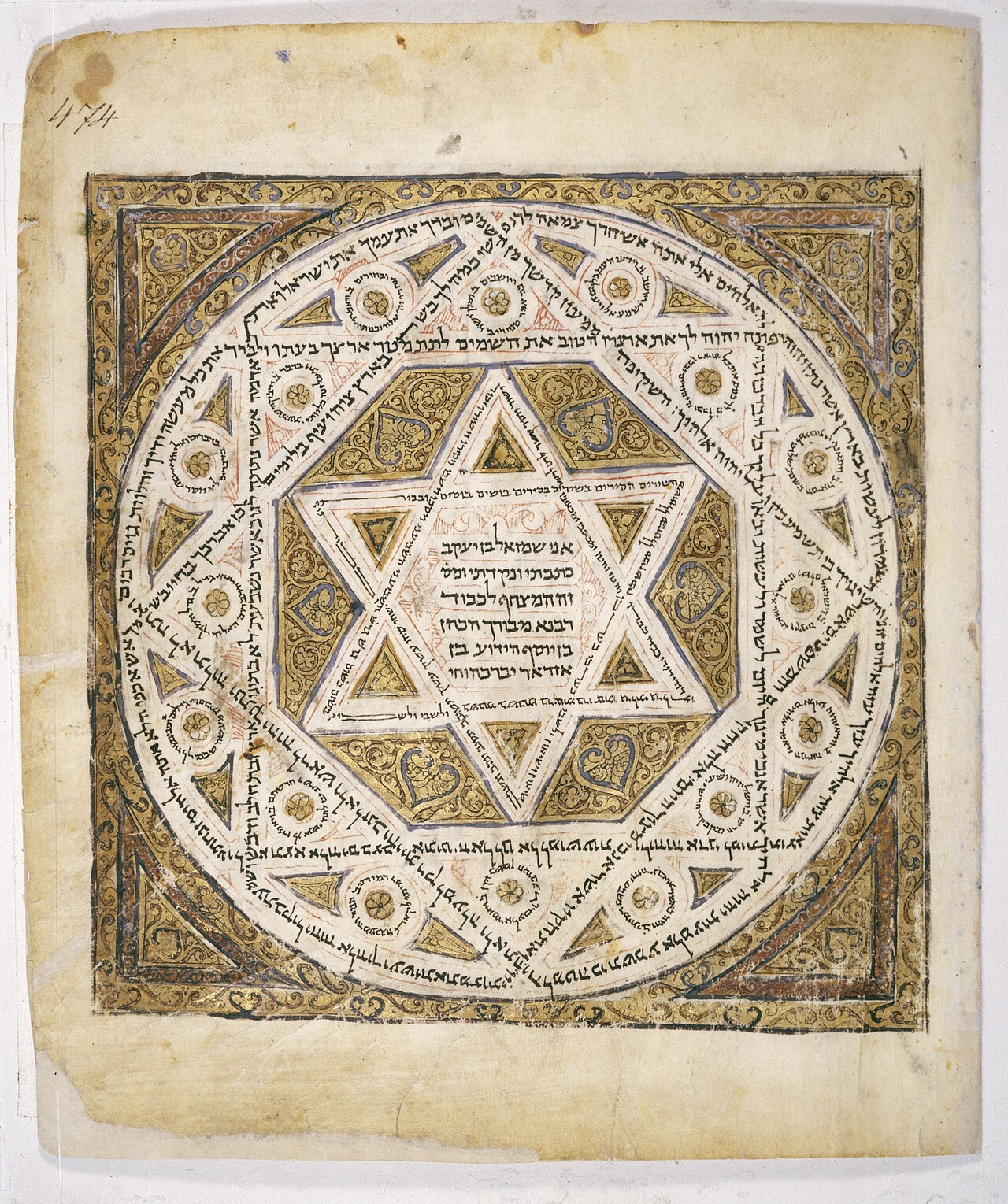
Historical manuscriptImage credit Pictured: a decorated page from the codex, not Numbers 10.
Ancient tradition; medieval copies
Samaritan Pentateuch
How the site knows this: Read in the site's library text: Samaritan Pentateuch, Kennicott's 1780 text digitized by A. Sigalov.
The same order as the Masoretic Text, without the special marks.
1611
King James Bible
How the site knows this: Read in the site's library text: King James Version (1769 text).
Rise up, LORD, and let thine enemies be scattered; and let them that hate thee flee before thee… Return, O LORD, unto the many thousands of Israel.
English Bibles do not show the scribal marks.
What changed, and why
The marks are old: the Sifre and the Talmud already discuss them. They show that ancient scribes noticed something special about these two verses and preserved that observation rather than "fixing" the text. The Greek order shows that the arrangement of verses 34–36 varied.
What the evidence shows
- Numbers 10:35–36 is bracketed by inverted nuns in the Masoretic tradition.
Source: "Inverted nun" ↗
- Many Septuagint manuscripts order verses 34–36 differently.
Source: E. Tov, Textual Criticism of the Hebrew Bible, 3rd ed. (Fortress, 2012)
- The passage was originally a separate book.
Sources
- E. Tov, Textual Criticism of the Hebrew Bible, 3rd ed. (Fortress, 2012)
- Babylonian Talmud, Shabbat 116a (Sefaria) ↗
Related lessons
- The Cloud Moves →Men made unclean by a death ask to keep Passover, and God gives a second date. The cloud over the tabernacle tells Israel when to move. Two silver trumpets call the people. After nearly a year at Sinai the ark sets out, and Moses' two short prayers are marked in Hebrew Bibles with strange upside-down letters.
- How Numbers Came to Us →The date of the story, the age of its traditions, the shaping of the book and the age of its copies are four different questions. Here are the answers we can give for each: Moses and the scholars, silver amulets that are not a copy of Numbers, Dead Sea Scrolls that are, a Samaritan Torah with sixteen major expansions, Greek, Latin and Syriac translations, and what remains unchecked.