Numbers 6:24–26
The priestly blessing: from silver to scroll to synagogue
The oldest known writing of words that also appear in the Bible: two silver amulets, usually dated about 600 BC, carry the priestly blessing in a shorter form. They are quotations of the blessing, not copies of the book of Numbers. Every later witness preserves the three-line blessing with remarkable stability.
Stable text: no manuscript differences in meaning
The family tree
Each row is a language or text tradition. Witnesses in the same row may share ancestry, revise one another, or have an uncertain relationship; the line under each box says which. A solid arrow appears only where direct copying or a documented revised edition is established. Order by date never implies copying. Scroll sideways on a phone.
✓ contains this verse · ▢ pages lost · – no copy survives
- Same line, through lost copies
- Translation
- Related (shared ancestry)
- The blessing given to AaronUnknown (debated)
- Kuntillet Ajrud inscriptionsc. 800 BC
- Ketef Hinnom amulet 1 (KH1)c. 600 BC (debated)Descends, through lost copies, from The blessing given to Aaron
- Ketef Hinnom amulet 2 (KH2)c. 600 BC (debated)Descends, through lost copies, from The blessing given to Aaron
- Masoretic Text (Leningrad Codex)AD 1008Descends, through lost copies, from The blessing given to Aaron
What changed, and what didn't
- Ketef Hinnom (c. 600 BC)
- Bless, keep, face shine, peace: two of the three lines, shortened.
- Every later witness
- The full three lines, with only spelling and translation differences.
- Unchanged
- The divine name, the verbs "bless" and "keep," the shining face, and the gift of peace.
Every witness, in order
Unknown (debated)
The blessing given to Aaron
No original survives.
c. 800 BC
Kuntillet Ajrud inscriptions
How the site knows this: Reported in scholarship; not checked by the site.
"…may he bless you and keep you, and may he be with my lord"
Ink inscriptions on storage jars at a desert way station in Sinai use the same pair of verbs, "bless" and "keep," with the name YHWH: the blessing's language was in common use.
c. 600 BC (debated)
Ketef Hinnom amulet 1 (KH1)
How the site knows this: Reported in scholarship; not checked by the site.
Badly damaged. Its last lines preserve parts of a blessing with YHWH, "bless" and "keep"; much of the wording must be restored.
Silver, about 27 × 97 mm, in the Old Hebrew script. It also contains covenant language close to Deuteronomy 7:9. Because so much is restored, we do not print a full reading of the blessing for KH1: see Barkay et al. (2004) for the edition and its restorations.
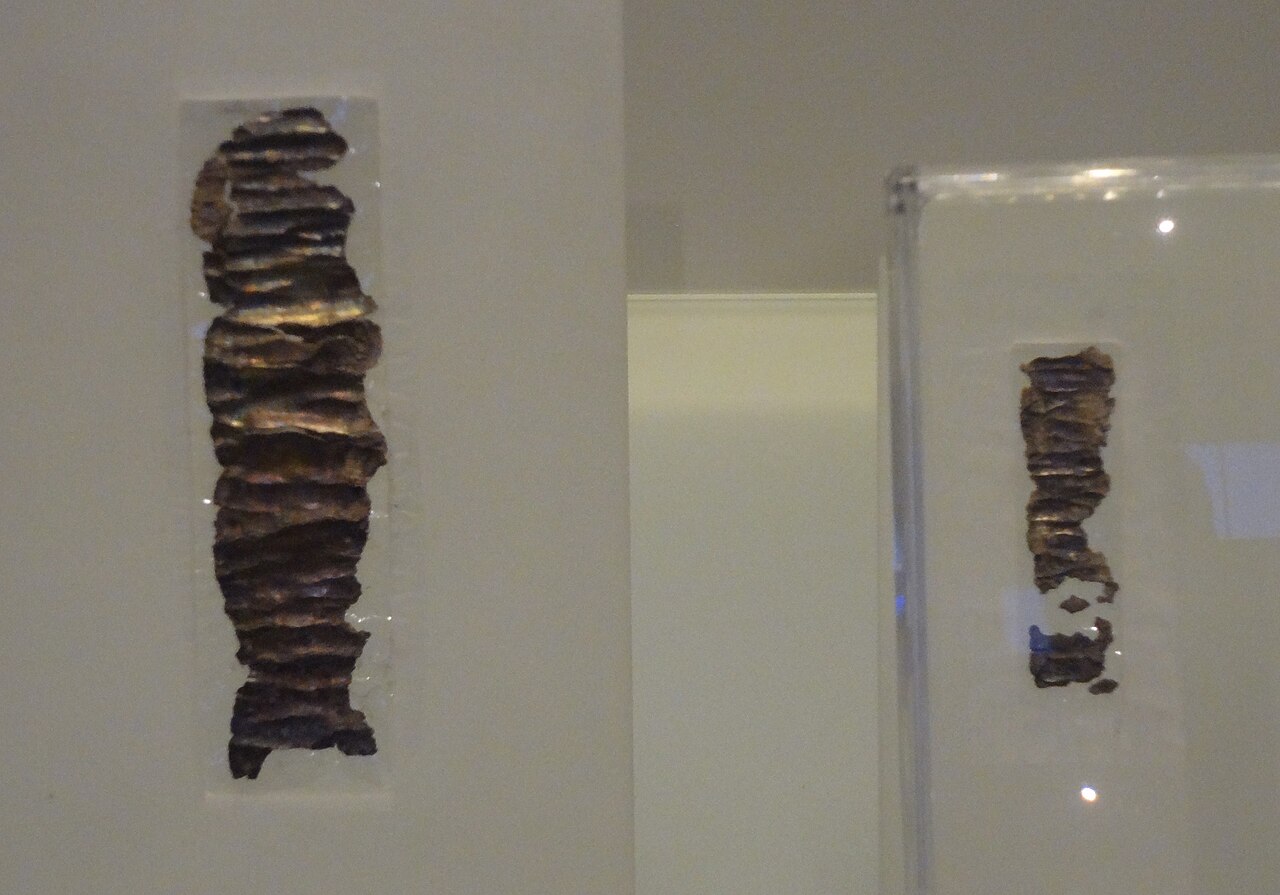
Authentic ancient artifactImage credit Check which amulet a photograph shows; line drawings are modern reconstructions, not the original.
Source: G. Barkay et al., "The Amulets from Ketef Hinnom: A New Edition and Evaluation," BASOR 334 (2004) ↗; J. D. Smoak, The Priestly Blessing in Inscription and Scripture (Oxford, 2015) ↗
c. 600 BC (debated)
Ketef Hinnom amulet 2 (KH2)
How the site knows this: Reported in scholarship; not checked by the site.
יברך יהוה ישמרך יאר יהוה פניו אליך וישם לך שלם
May YHWH bless you, keep you; may YHWH make his face shine upon you and give you peace.
Silver, about 11 × 39 mm. The clearer of the two; some letters are still restored in editions. It lacks "be gracious unto thee" and "lift up his countenance upon thee." Whether this is an earlier form of the blessing or an abbreviation for an amulet is debated. Barkay et al. date it about 600 BC; Na'aman (2011) argues for the late 6th or early 5th century BC.
Source: G. Barkay et al., "The Amulets from Ketef Hinnom: A New Edition and Evaluation," BASOR 334 (2004) ↗; N. Na'aman, "A New Appraisal of the Silver Amulets from Ketef Hinnom," IEJ 61 (2011) ↗
Translated c. 250 BC
Septuagint
How the site knows this: Known here only through a translation.
The Lord bless thee and keep thee; the Lord make his face shine upon thee, and have mercy on thee; the Lord lift up his countenance upon thee, and give thee peace.
All three lines. Giguet's French Septuagint in our library: "Que le Seigneur te bénisse et te garde…"
c. AD 400
Jerome's Vulgate
How the site knows this: Read in the site's library text: Clementine Vulgate (1592 edition).
Benedicat tibi Dominus, et custodiat te. Ostendat Dominus faciem suam tibi, et misereatur tui. Convertat Dominus vultum suum ad te, et det tibi pacem.
Jerome's Latin keeps all three lines.
AD 1008
Masoretic Text (Leningrad Codex)
How the site knows this: Read in the site's library text: Westminster Leningrad Codex, a digital transcription of the Leningrad Codex.
יְבָרֶכְךָ יְהוָה וְיִשְׁמְרֶךָ׃ יָאֵר יְהוָה פָּנָיו אֵלֶיךָ וִיחֻנֶּךָּ׃ יִשָּׂא יְהוָה פָּנָיו אֵלֶיךָ וְיָשֵׂם לְךָ שָׁלוֹם׃
Three lines of 3, 5 and 7 Hebrew words, growing like a crescendo. Four centuries later than Ketef Hinnom, the core words are the same.
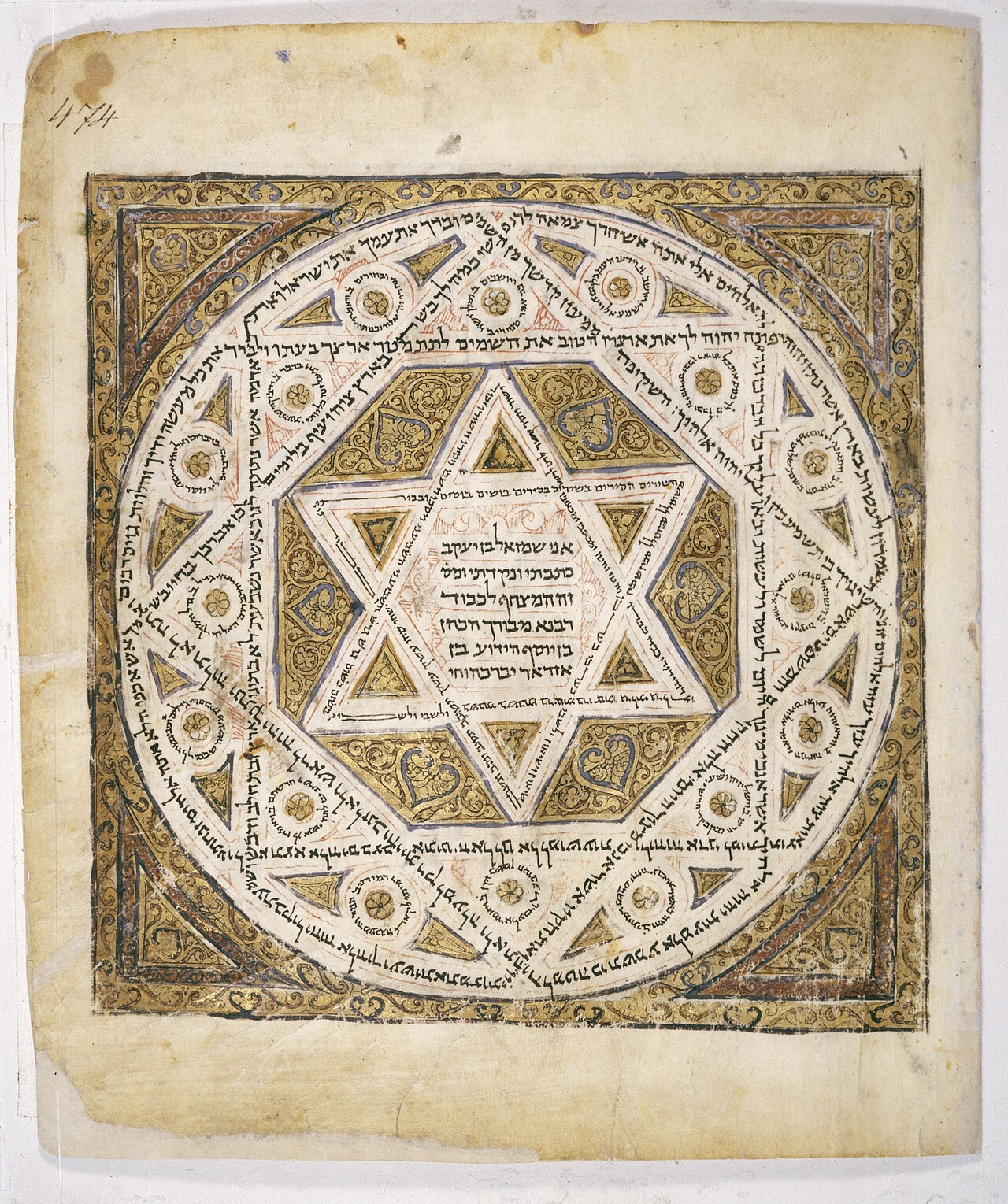
Historical manuscriptImage credit Pictured: a decorated page from the codex, not Numbers 6.
Ancient tradition; medieval copies
Samaritan Pentateuch
How the site knows this: Read in the site's library text: Samaritan Pentateuch, Kennicott's 1780 text digitized by A. Sigalov.
יברכך יהוה וישמרך יאיר יהוה פניו אליך ויחנך ישא יהוה פניו אליך וישם לך שלום
The full blessing, identical in wording to the Masoretic Text apart from spelling.
1611
King James Bible
How the site knows this: Read in the site's library text: King James Version (1769 text).
The LORD bless thee, and keep thee: The LORD make his face shine upon thee, and be gracious unto thee: The LORD lift up his countenance upon thee, and give thee peace.
Follows the Masoretic Text.
What changed, and why
The silver scrolls are not a copy of the book of Numbers but a quotation of the blessing for personal protection. Their shorter form may be the amulet-maker's abbreviation or an earlier form of the words. Either way, they show the blessing in use in Jerusalem before the Babylonian exile, and its central words have not changed in 2,600 years.
What the evidence shows
- The Ketef Hinnom amulets date to about 600 BC. Na'aman (2011) proposes the late 6th–early 5th century BC.
Source: G. Barkay et al., "The Amulets from Ketef Hinnom: A New Edition and Evaluation," BASOR 334 (2004) ↗; N. Na'aman, "A New Appraisal of the Silver Amulets from Ketef Hinnom," IEJ 61 (2011) ↗
- KH1 preserves the complete blessing of Numbers 6:24–26. It is badly damaged and partly restored.
- Their blessing is shorter than the text of Numbers 6:24–26.
Source: G. Barkay et al., "The Amulets from Ketef Hinnom: A New Edition and Evaluation," BASOR 334 (2004) ↗
- The full three-line blessing is stable in all later witnesses.
Sources
Related lessons
- Purification, Vows, and the Written Blessing →Three laws for the camp: those with certain impurities go outside it; whoever wrongs a neighbor confesses and repays with a fifth added; and a wife suspected of adultery undergoes an ordeal at the sanctuary. Then the Nazirite vow, open to men and women, and three short lines Aaron is to speak over Israel, lines found engraved on two tiny silver amulets from Jerusalem.
- How Numbers Came to Us →The date of the story, the age of its traditions, the shaping of the book and the age of its copies are four different questions. Here are the answers we can give for each: Moses and the scholars, silver amulets that are not a copy of Numbers, Dead Sea Scrolls that are, a Samaritan Torah with sixteen major expansions, Greek, Latin and Syriac translations, and what remains unchecked.