Numbers 13:33
The spies' report, expanded from Deuteronomy
In the Samaritan Pentateuch, Numbers 13:33 continues with Moses' later speech from Deuteronomy 1:27–33, so that the story and the retelling match. A Dead Sea Scroll of Numbers shows this kind of harmonizing was older than the Samaritans.
Disputed addition: some witnesses include it, some do not
The family tree
Each row is a language or text tradition. Witnesses in the same row may share ancestry, revise one another, or have an uncertain relationship; the line under each box says which. A solid arrow appears only where direct copying or a documented revised edition is established. Order by date never implies copying. Scroll sideways on a phone.
✓ includes the disputed words · ✕ does not include them · ❝ quotes part of them · ⓘ reports on manuscripts · ▢ pages lost · – no copy survives
- Same line, through lost copies
- Translation
- Related (shared ancestry)
Why the expansion?
- The problem
- Deuteronomy 1 quotes words of the people and of Moses that Numbers 13–14 never records.
- The scribal solution
- Copy them into Numbers, so that Moses' retelling quotes something that is actually in the story.
- Who did it
- A Jewish scribal tradition (seen in 4QNum-b), later kept by the Samaritans.
Every witness, in order
Unknown (debated)
Original Numbers
No original survives.
Within the Torah
Deuteronomy 1:27–33
How the site knows this: Read in the site's library text: Westminster Leningrad Codex, a digital transcription of the Leningrad Codex, quoted here in English.
And ye murmured in your tents, and said, Because the LORD hated us, he hath brought us forth out of the land of Egypt, to deliver us into the hand of the Amorites… Dread not, neither be afraid of them.
Moses' retelling forty years later, with details the Numbers story does not include.
Translated c. 250 BC
Septuagint
How the site knows this: Reported in scholarship; not checked by the site.
The shorter text, like the Masoretic (numbered 13:34 in the Greek).
1st century BC
4QNumbers-b (4Q27)
How the site knows this: Reported in scholarship; not checked by the site.
This Qumran scroll contains several of the same Deuteronomy-based expansions found in the Samaritan Pentateuch elsewhere in Numbers (for example at 20:13 and 27:23), showing that this expanded form circulated among Jews before the Samaritans adopted it.
Source: N. Jastram, DJD 12 (1994)
c. AD 400
Jerome's Vulgate
How the site knows this: Read in the site's library text: Clementine Vulgate (1592 edition).
The shorter text.
AD 1008
Masoretic Text (Leningrad Codex)
How the site knows this: Read in the site's library text: Westminster Leningrad Codex, a digital transcription of the Leningrad Codex.
וְשָׁם רָאִינוּ אֶת־הַנְּפִילִים בְּנֵי עֲנָק מִן־הַנְּפִלִים וַנְּהִי בְעֵינֵינוּ כַּחֲגָבִים וְכֵן הָיִינוּ בְּעֵינֵיהֶם׃
And there we saw the Nephilim, the sons of Anak, from the Nephilim; and we were in our own eyes as grasshoppers, and so we were in their eyes.
The verse ends here.
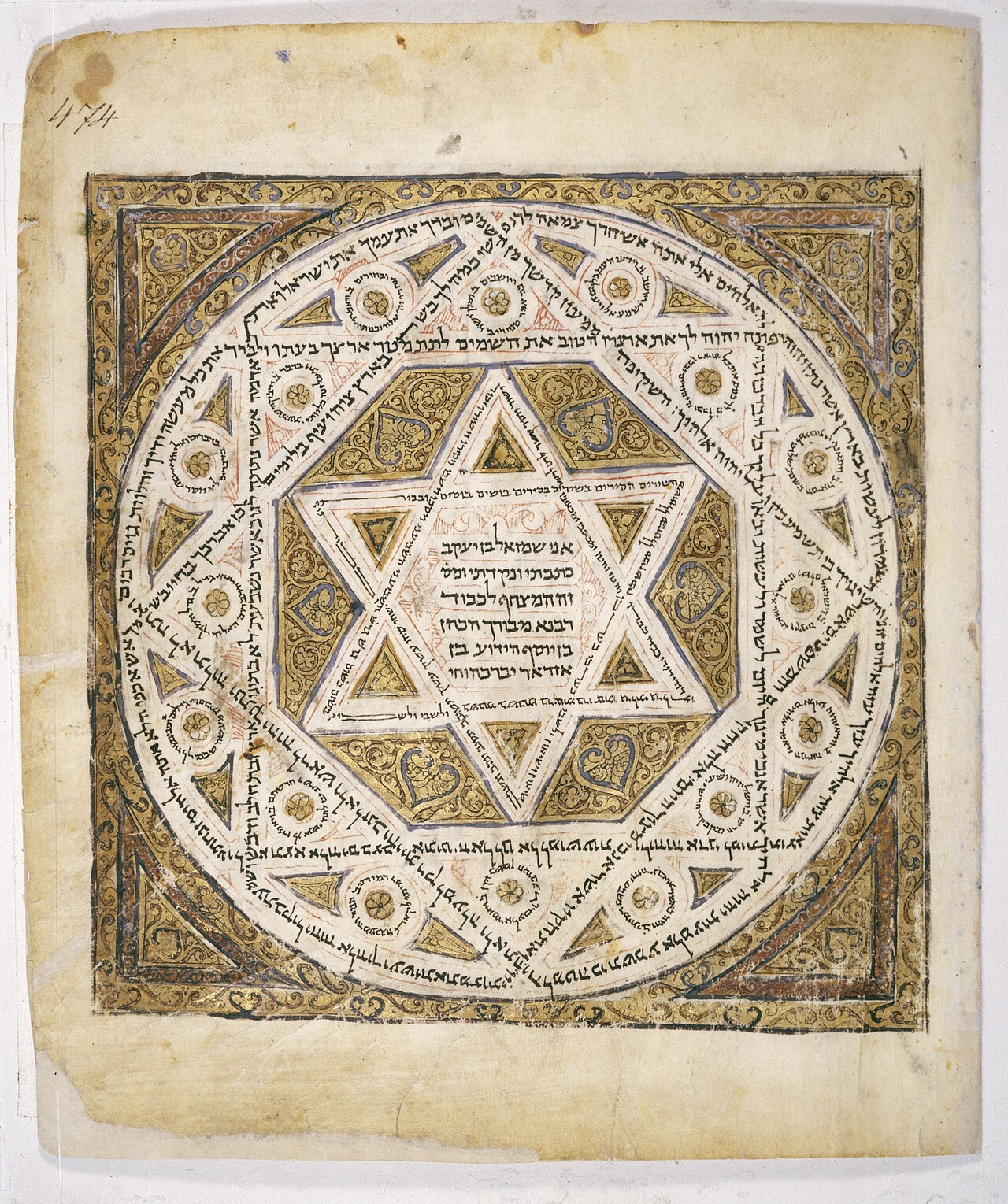
Historical manuscriptImage credit Pictured: a decorated page from the codex, not Numbers 13.
Ancient tradition; medieval copies
Samaritan Pentateuch
How the site knows this: Read in the site's library text: Samaritan Pentateuch, Kennicott's 1780 text digitized by A. Sigalov.
…ונהי בעינינו כחגבים וכן היינו בעיניהם וירגנו בני ישראל באהליהם ויאמרו בשנאת יהוה אתנו הוציאנו מארץ מצרים… ויאמר משה לבני ישראל לא תערצון ולא תיראון מהם…
…and so we were in their eyes. And the children of Israel murmured in their tents and said, Because the LORD hated us he brought us out of the land of Egypt… And Moses said to the children of Israel, Dread not, neither be afraid of them…
The verse runs on with Deuteronomy 1:27–33. Checked against the Samaritan Pentateuch in our library (about 140 words where the Masoretic has 20).
1611
King James Bible
How the site knows this: Read in the site's library text: King James Version (1769 text).
And there we saw the giants, the sons of Anak, which come of the giants: and we were in our own sight as grasshoppers, and so we were in their sight.
"Giants" translates Nephilim.
What changed, and why
This is an addition, not a loss: the shorter Masoretic text is generally considered earlier. The expanded text adds nothing new; it copies material already in Deuteronomy. It shows how some ancient scribes valued consistency between the books of Moses.
What the evidence shows
- The Samaritan Pentateuch inserts Deuteronomy 1:27–33 after Numbers 13:33.
- 4QNum-b shares Samaritan-type harmonizing expansions in Numbers.
Source: N. Jastram, DJD 12 (1994)
- The shorter text is the earlier one.
Source: E. Tov, Textual Criticism of the Hebrew Bible, 3rd ed. (Fortress, 2012)
Sources
- E. Tov, Textual Criticism of the Hebrew Bible, 3rd ed. (Fortress, 2012)
Related lessons
- The Twelve Spies →Twelve tribal leaders scout Canaan for forty days and bring back a cluster of grapes so large two men carry it on a pole. All agree the land is good. Ten say its people are too strong; Caleb says, "Let us go up at once."
- Refusing the Promised Land →Israel weeps all night and plans to return to Egypt. Moses intercedes and God pardons, but the generation that refused will wander forty years until it dies out. The next morning the people attack anyway and are beaten back to Hormah.
- How Numbers Came to Us →The date of the story, the age of its traditions, the shaping of the book and the age of its copies are four different questions. Here are the answers we can give for each: Moses and the scholars, silver amulets that are not a copy of Numbers, Dead Sea Scrolls that are, a Samaritan Torah with sixteen major expansions, Greek, Latin and Syriac translations, and what remains unchecked.